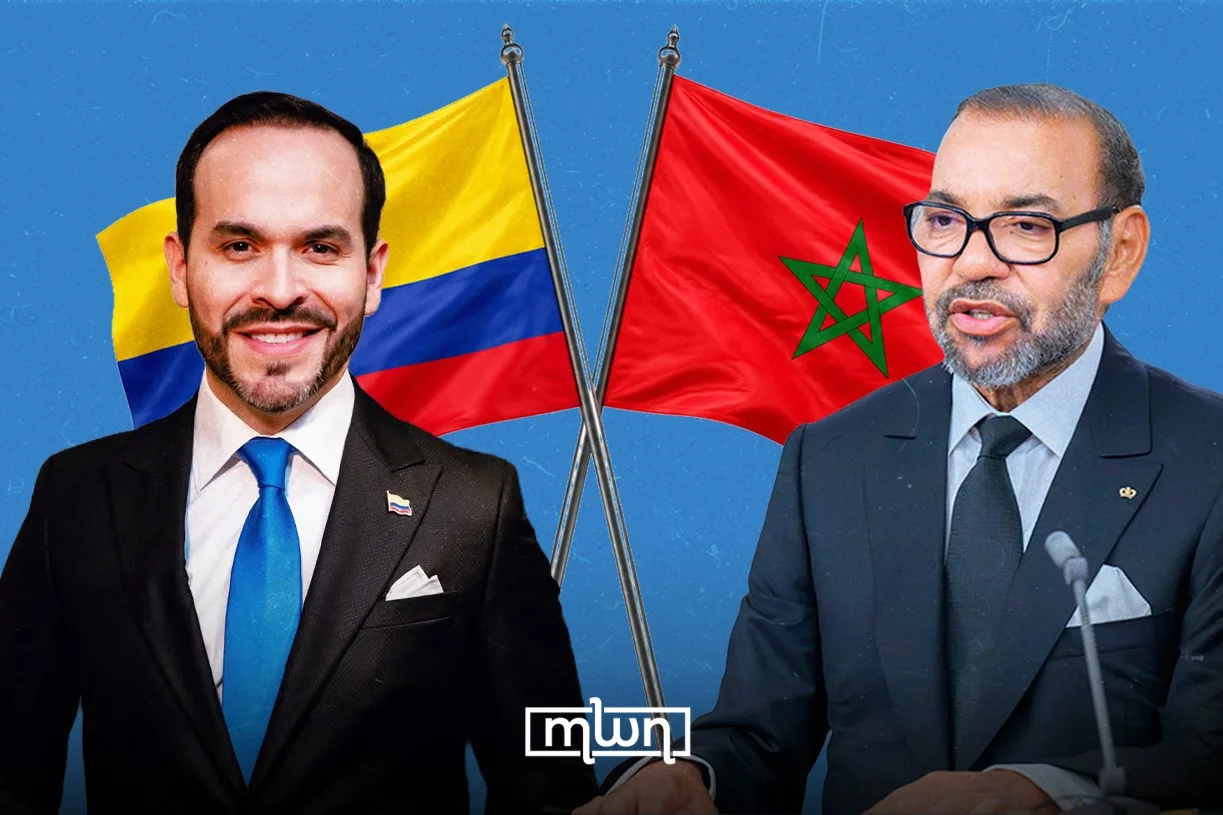
Rabat – Colombia has officially changed its position on the Western Sahara dispute, recognizing Morocco’s sovereignty over its southern provinces.
The announcement came Friday after a meeting between Moroccan Foreign Minister Nasser Bourita and Colombian Vice President José Manuel Restrepo. Also present during the high-level meeting was Colombian Foreign Minister Omar Bula Escobar.
Colombia “recognizes Morocco’s sovereignty over its Sahara,” Escobar said during the meeting, marking a new direction in Bogota’s position on the lingering territorial dispute.
Restrepo described the move as “a new beginning” in relations between Colombia and Morocco, calling Morocco “Colombia’s first ally in Africa.” He also expressed his country’s interest in establishing a strategic partnership with Morocco.
Bourita described Colombia’s decision to withdraw its recognition of the self-proclaimed SADR and recognize Moroccan sovereignty over the Sahara as “historic.” He said the decision could give “a major boost” to bilateral relations between the two countries.
The Moroccan foreign minister also said Morocco and Colombia could serve as economic platforms for each other by making use of their respective positions in Africa and Latin America.
Bourita is currently in Cali, where he is representing King Mohammed VI at the inauguration of Colombia’s new president, Abelardo de la Espriella. He said his presence reflects Morocco’s intention to support the new momentum in bilateral relations and take them to a higher level.
Morocco’s growing diplomatic support
Colombia’s new position comes as Morocco has gained wider international backing for its position on the Western Sahara dispute in recent years.
More than 130 countries now support Morocco’s Autonomy Plan, either as the most realistic, credible, or viable framework for resolving the dispute.
The momentum has included countries from Europe, Africa, Latin America and other regions. In July, Romania said genuine autonomy under Moroccan sovereignty could constitute a viable solution, while Bulgaria described the Autonomy Plan as a possible basis for resolving the dispute.
Canada also recognized the Moroccan Autonomy Plan in April as a “credible and serious” basis for resolving the dispute.
The diplomatic shift has also involved countries previously recognizing the self-proclaimed SADR. In April, Mali formally withdrew its recognition of the entity and said Morocco’s Autonomy Plan was the only serious and credible basis for resolving the dispute. Ecuador had suspended its recognition of the SADR in 2024 and later reaffirmed its support for autonomy under Moroccan sovereignty.
The trend has increasingly left Algeria and the Polisario Front facing a narrower circle of diplomatic support. Only around 12 of the African Union’s 54 member states still maintain recognition of the SADR.
The shift has been reinforced by UN Security Council Resolution 2797, adopted in October 2025, which placed Morocco’s Autonomy Plan at the center of the political process and called on the parties to engage in negotiations on that basis.
Against this backdrop, Colombia’s decision represents another diplomatic gain for Rabat and another setback for the Polisario Front and its main regional backer, Algeria.