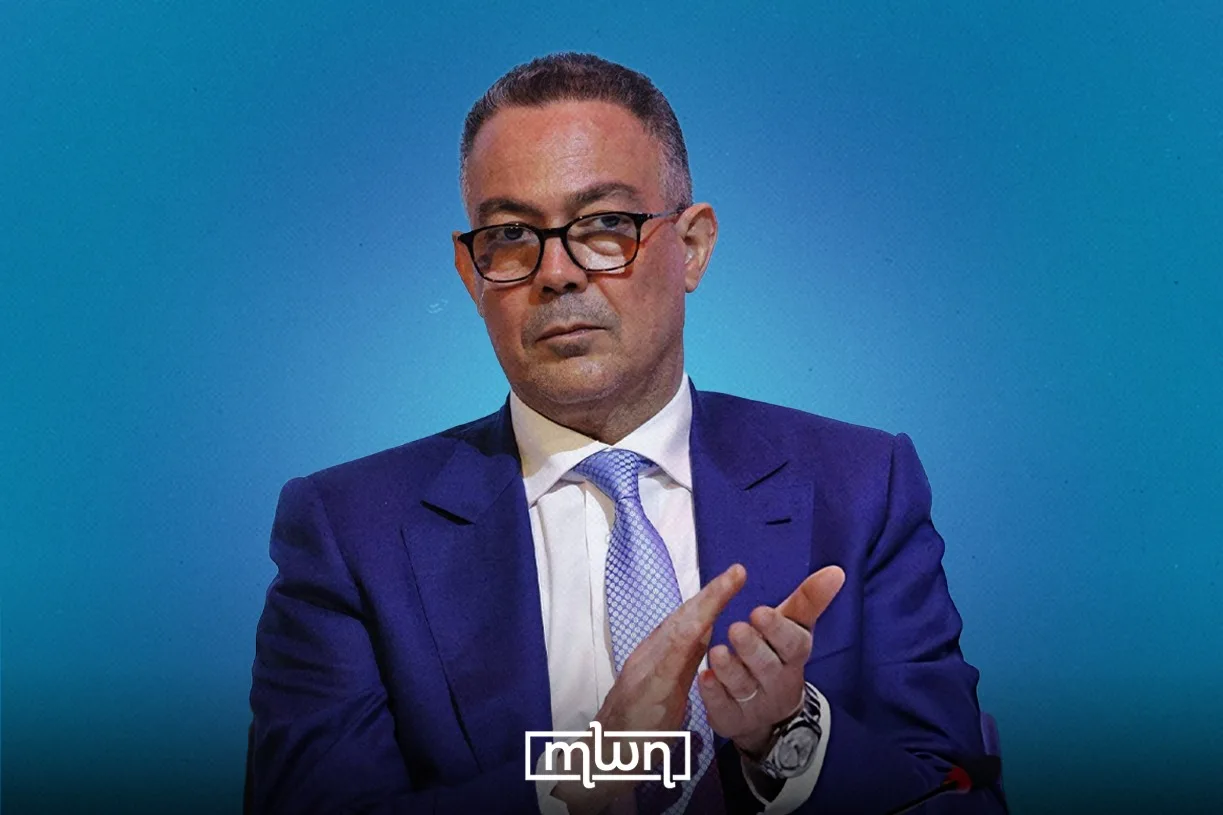
This past July 25, Fouzi Lekjaa — Morocco’s Minister Delegate for the Budget and, since 2014, president of the Royal Moroccan Football Federation (RMFF) — formally joined the Party of Authenticity and Modernity (PAM), taking an immediate seat on its Political Bureau. PAM’s national coordinator Fatima-Zahra El Mansouri announced the news during the party’s National Council in Salé, ending weeks of speculation and instantly becoming one of the most consequential political stories of Morocco’s pre-electoral season.
It arrived seven weeks before the legislative elections of 23 September 2026, which PAM has openly declared its ambition to finish first. Le Monde captured the moment by describing Lekjaa as “putting on the suit of a prime-ministerial contender,” and Moroccan outlets have floated the idea, however speculative, of a future “World Cup 2030 government” led by the FRMF chief.
This essay’s central claim is that such Lekjaa’s PAM move should not be read merely as a celebrity signing a party membership card. It is better understood as a symptom of a deeper shift in how Moroccan elites are recruited: away from career politicians defined by decades of partisan militancy, and toward technocrats whose authority rests on administrative competence and visible results. Lekjaa is a particularly rich case study of this shift because he combines four distinct forms of capital rarely found in one person — technocratic, managerial, popular, and now partisan — at the exact moment Morocco is gearing up to co-host football’s biggest stage.
Constitutional caution first. Any discussion of Lekjaa as a future head of government must be anchored in Article 47 of the 2011 Constitution, which requires the King to appoint the Head of Government from within the party that wins the most seats, “in light of their results.” No royal decision, no advance “designation,” and no guarantee follows automatically from party membership.
For Lekjaa to become Prime Minister, PAM would need to win the election (or lead a dominant coalition), Lekjaa would need to stand as a candidate, win his seat, and only then would a royal appointment become constitutionally possible. As such, this essay insists on separating three analytically distinct levels: the factual (he joined PAM), the political (this materially increases his electoral relevance), and the prospective (he could, under the right conditions, become compatible with the premiership). Yet much breathless commentary has made the error of collapsing the third into the first.
Interestingly, PAM’s own bylaws appear to leave the door open regardless of internal titles: reporting suggests the party’s statutes would permit Lekjaa to be designated head of government in the event of a PAM victory even without holding a formal leadership post inside the party apparatus, since nothing in the Constitution itself forecloses this. This procedural detail matters because it shows that the “premiership hypothesis” is not purely a media construct; it has a plausible institutional pathway. But a pathway is not a decision, and the essay repeatedly cautions against mistaking the existence of a mechanism for evidence that it will be used.
Why PAM wanted him, and why he needed PAM
For PAM, recruiting Lekjaa is an act of political capital acquisition: a nationally beloved figure, unconnected to the party’s internal scandals and leadership disputes, who can be marketed as proof that PAM is the party of competence and delivery rather than of factional infighting.
Under the party’s own bylaws, any sitting minister who joins automatically earns a Political Bureau seat — which is why Lekjaa’s promotion inside PAM was near-instantaneous even though he holds no formal leadership title in the party.
For Lekjaa, the calculation runs the other way: joining a party converts years of technocratic and sporting prestige into electoral currency, the one form of capital he previously lacked.
Tellingly, even as PAM published its list of candidates constituency by constituency, Lekjaa’s own candidacy in his hometown of Berkane had not yet been confirmed at the time of writing — a reminder that his personal electoral test still lies ahead.
The political salience of football
Since Lekjaa took over the RMFF in 2014, Moroccan football has been rebuilt from a domestic pastime into an instrument of national branding and soft power, culminating in the Atlas Lions’ historic 2022 World Cup semi-final run. That success supplied Morocco — and Lekjaa personally — with a reservoir of collective emotion that ordinary technocrats never accumulate.
FIFA’s December 2024 decision to confirm Morocco, alongside Spain and Portugal, as co-host of the 2030 World Cup (with Argentina, Paraguay, and Uruguay hosting centenary matches) transformed that reservoir into a governing asset. Morocco’s official portal now describes the tournament’s organization as a “strategic project” tied to the royal vision, demanding exactly the skills a head of government needs: interministerial coordination, multi-year budgeting, security planning, diplomacy, transport and tourism policy, and the ability to hit externally imposed deadlines.
Lekjaa, uniquely among Moroccan officials, already possesses hands-on experience in most of these areas, through joint Morocco–Spain–Portugal coordination commissions the RMFF helped establish as early as February 2025 of last year.
The technocrat with a fan base
Drawing on the concept of “rituals of power” and on the account of the structurally asymmetrical relationship between Moroccan parties and the monarchy, the essay situates Lekjaa within a political system where royal centrality has never been in question, but where technocrats have long served as intermediaries between the palace’s strategic priorities and day-to-day administration. Citing research on technocratic loyalty under authoritarian rule, the essay argues that technocrats are typically appointed for a blend of competence and reliability; but that they usually suffer from a popularity deficit that limits their independent political weight. Lekjaa inverts this pattern. Football gives him what career technocrats have almost never had: an emotional bond with ordinary citizens.
As Le Monde’s Alexandre Aublanc noted recently, Moroccans judge Lekjaa more by the national team’s results than by the state of public finances he actually oversees as Budget Minister. The essay calls this a hybrid of technocracy and “sporting populism”: not ideological populism, but the capacity to reach mass audiences through an intensely emotional, unifying domain, reinforcing a broader pattern in which Moroccan governance leans on symbolic capital and strategic communication.
Can a football manager run a country?
The essay is careful not to overstate the transferability of Lekjaa’s skills. Running a sports federation is sectorally bounded, with a narrow and largely technical mandate; running a government means arbitrating between competing social interests, negotiating with unions, absorbing economic shocks, and building durable coalitions across sectors with no shared metric of success — tasks with no real equivalent on a football pitch.
The claim that sporting success predicts governing success is dismissed outright as a category error the essay wants to guard against. Yet it would be equally wrong to minimize the skills that genuinely do transfer: multi-year budget management, cross-institutional coordination, high-stakes diplomatic negotiation, and communication under public pressure are common to both domains. Lekjaa’s simultaneous role as Budget Minister since October 2021 gives him a genuinely unusual hybrid résumé — part financial technocrat, part sports executive, part international negotiator. This combination explains his rise more convincingly than his sporting fame alone.
Critics have nonetheless described his move into PAM as a “parachuting” into a party weakened by judicial scandal and leadership disputes, with some suggesting support from beyond the party’s own ranks. The essay treats this allegation as unverified circulating speculation rather than established fact, consistent with its broader insistence on not confusing plausibility with proof.
PAM’s gamble
For a party trying to brand itself as the home of competence and major national projects, absorbing a star technocrat carries obvious upside but a real structural risk: over-reliance on a single personality can substitute for, rather than build, genuine party institutionalization.
If PAM’s appeal becomes inseparable from Lekjaa himself, the party’s organizational transformation remains incomplete and reversible. Moroccan press coverage has already flagged this tension, describing persistent “questions” behind the National Council’s display of unanimity.
Is a ‘World Cup government’ even desirable?
The essay treats the phrase primarily as shorthand for a governance model — one organized around a fixed, externally imposed 2030 World Cup deadline, capable of aligning ministries around infrastructure, tourism, transport, security, and urban planning. Handled well, this could catalyze administrative reform far beyond football itself, much as the 2025 Africa Cup of Nations already demonstrated.
Handled poorly, it risks privileging photogenic infrastructure — stadiums, highways, airports — over slower, less visible reforms in education, healthcare, and public administration that matter more for long-term development. The essay’s proposed test is simple: what remains of the World Cup in 2031? Modern but underused stadiums would signal a squandered opportunity; durably improved mobility, tourism, employment, and euro-Mediterranean integration would signal a genuine turning point.
Five structural risks
The essay catalogs the vulnerabilities of what it calls the “Lekjaa model.” First, personalization: a single figure’s failure could be read as the failure of an entire national strategy, since a heavily individualized model of governance is structurally fragile regardless of the individual’s own qualities.
Second, category confusion between technical project management and the redistributive, representative work of politics — public policy cannot be reduced to delivering infrastructure on schedule; it also involves social justice, negotiation, and democratic legitimacy that a project-management mindset does not automatically supply.
Third, a thin partisan base, since Lekjaa is entering electoral politics late in his career and must build territorial roots, activist networks, and a full policy program almost from scratch before September.
Fourth, inflated public expectations that leave little room for error: the more Lekjaa is cast publicly as a “super-manager” capable of fixing the country’s structural problems, the less tolerance the public and the press will have for any stumble.
Fifth, an unresolved question of institutional separation, since simultaneously holding senior political office and senior sporting leadership raises legitimate governance concerns about the clarity of responsibilities, even absent any proven conflict of interest to date.
The real test is 2026, not 2030
The essay insists that Lekjaa’s first and most consequential test is the September 2026 election itself, not the World Cup four years later. National popularity does not automatically translate into a local parliamentary seat, especially in a system where clientelist networks and territorial organization matter enormously.
Lekjaa must convert celebrity into an actual campaign; PAM must convert his arrival into collective momentum rather than a one-man marketing exercise. If PAM finishes first, the premiership hypothesis becomes far more serious. If it does not, Article 47 becomes the decisive obstacle regardless of Lekjaa’s personal popularity.
The calendar itself does much of the argumentative work here. A government seated in the autumn of 2026 would have almost exactly four years to prepare the country for kickoff in 2030 — enough time to make World Cup readiness a defining thread of the entire legislative term, but not so much time that the connection between electoral choice and tournament outcome becomes abstract to voters.
This is precisely the alignment that gave rise to the “World Cup 2030 government” label in the first place: not a literal cabinet of football administrators, but a governing team whose legitimacy and performance would be measured, in part, against a fixed, internationally visible deadline that leaves no room for the usual excuses about slow institutional timelines.
A generational shift, or a personalist detour?
Looking beyond Lekjaa individually, the essay situates him within a possible broader transition in Moroccan elite recruitment — from politicians shaped by party careers to leaders drawn from administration, business, diplomacy, and elite sport, evaluated on delivery rather than ideology.
This mirrors a wider global trend in which citizens increasingly judge governments by tangible outputs rather than ideological coherence, making politics partly a matter of managing complexity rather than winning arguments.
Lekjaa’s distinctive asset is versatility: he can speak the language of public finance, international sports diplomacy, and major infrastructure projects simultaneously, a combination the essay argues matters more than his popularity alone, and one that could make him a template for how Morocco’s political system recruits its next cohort of senior officials regardless of his own individual fate in September.
A closing paradox
The essay ends on what it calls the central paradox of Lekjaa’s trajectory: his political strength has always rested on appearing non-political — a competent manager rather than a partisan operator. Formal PAM membership strips away that neutrality; every future decision he makes will now be read through an explicitly political lens.
His campaign rhetoric will have to shift from football to social policy, from stadiums to schools and hospitals, in order to prove he has a governing vision beyond his sporting portfolio. Success would make him a textbook case of technocratic capital converted into durable electoral capital; failure would recast his PAM membership as an opportunistic conversion of sporting fame into power, without a genuine program behind it.
Bottom line
The essay’s overarching argument is that the “World Cup 2030 government” is, for now, a hypothesis with real analytical value, not an established fact. What is empirically verifiable is a striking convergence: Lekjaa’s individual career, Morocco’s structural governance needs, and the World Cup’s institutional calendar all point in the same direction at the same moment — elections in September 2026, a new government shortly after, an intensifying four-year run-up to 2030, and the tournament itself.
Whether or not Lekjaa personally becomes Prime Minister, this convergence signals something larger: a Moroccan political system that is increasingly rewarding demonstrated execution capacity as a source of legitimacy in its own right, alongside the more traditional sources of legitimacy — partisan loyalty, activist longevity, and royal favor — that have historically defined access to power in the Kingdom.
Should Lekjaa reach the premiership, his defining challenge would be translating the logic of sporting victory into the logic of durable public results — better schools, hospitals, jobs, and social justice, not just stadiums and highways that photograph well for international television audiences. Organizing a World Cup is one achievement; governing a country while organizing one is an altogether different test, and it is this test — not the tournament itself — that will determine whether the “Lekjaa model” becomes a genuine template for Morocco’s next generation of leadership or merely a well-timed political moment that faded once the final whistle blew.
In that sense, the essay closes not with a prediction but with a reframed question: the object of interest is less whether one man reaches the premiership than whether Morocco’s political system as a whole is quietly redefining what kind of achievement counts as a legitimate claim to govern.