
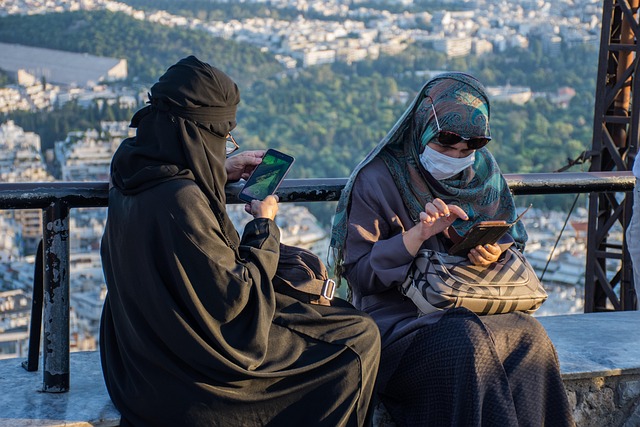
Agadir – Portugal has adopted a law banning face-covering garments in public spaces, a measure that has drawn criticism from some groups and is widely viewed as targeting Muslim women who wear the niqab or burqa (face covering garment except the eyes).
President António José Seguro issued the legislation after it was approved by parliament on July 17 with support from the governing Social Democratic Party (PSD), far-right Chega, the Liberal Initiative (IL), and CDS-PP. Left-wing parties voted against the measure, while PAN abstained.
The legislation prohibits people from wearing clothing intended to conceal or obstruct the display of their faces in public spaces. It also prohibits coercing another person to conceal their face for reasons related to gender, religion, age, or origin.
The measure was initially proposed by Portugal’s right-wing populist Chega party and became known in Portuguese media as the “burqa law.” The party’s proposal was later amended during parliamentary negotiations, with supporters framing the legislation primarily as a security and public-order measure.
Under the final rules, violations can result in fines ranging from €150 (MAD 1621) to €750 (MAD 8,106) in cases of negligence and from €400 (MAD 4323) to €3,000 (MAD 32427) when committed intentionally. The law includes exceptions for circumstances such as health, professional, artistic, and weather-related reasons, as well as certain settings including places of worship, diplomatic missions, and aircraft.
The legislation has faced criticism from rights organizations, which argue that restrictions on face veils can disproportionately affect Muslim women who choose to cover their faces for religious reasons.