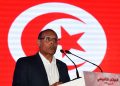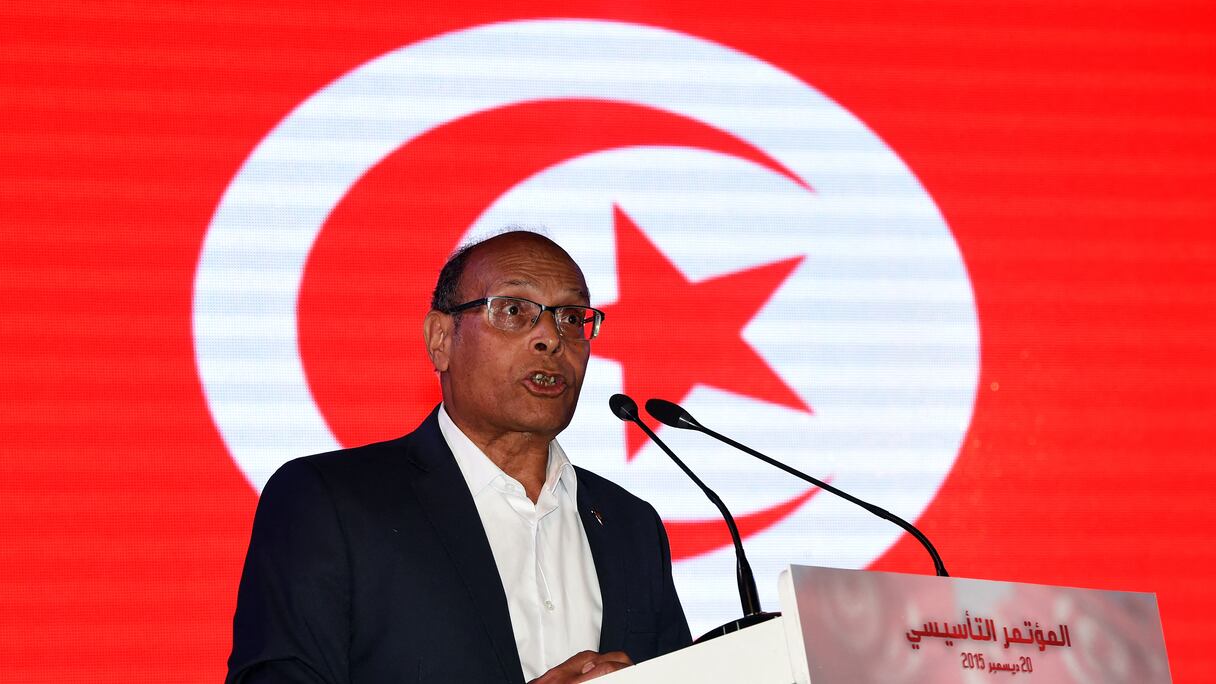
Marrakech – Former Tunisian president Moncef Marzouki has leveled a blunt charge at Algiers, arguing that Algeria’s handling of the Western Sahara dispute drove the Arab Maghreb Union into what he called its “clinical death.”
In remarks to Al-Quds Al-Arabi, Marzouki tied the bloc’s paralysis directly to Algerian policy, casting it as the primary driver of regional stagnation rather than any Moroccan intransigence.
“Algeria’s policy in this issue is the cause of the clinical death of the Arab Maghreb Union and more poverty and suffering for our peoples,” Marzouki argued, adding that the same policy amounts to “trading in the pain of the Sahrawis held in Tindouf for generations.”
He warned that the Algerian approach, “hostile to the interests of our peoples,” risks pushing brotherly nations toward war while arms budgets climb on both sides of the border.
Marzouki spoke as he pushed back against accusations from Abdelaziz Rahabi, Algeria’s former culture and information minister, who charged him with steering Tunisian diplomacy in the service of France and Morocco.
Rahabi had also alleged that Marzouki floated a “deal” – accepting Morocco’s autonomy plan for Western Sahara in exchange for granting Algeria an outlet on the Atlantic Ocean.
The former president rejected the notion that he answers to Rabat or Paris. Since leaving office, he insisted, he has held “no contact or relationship at any level” with French or Moroccan authorities. He also dismissed rumors that he carries French and Moroccan passports, countering that he holds “neither of these two citizenships” and will never claim anything but Tunisian nationality.
Marzouki likened the Algerian media campaign against him to Nazi propaganda, invoking what he described as the Goebbels principle of repeating lies until something sticks. He argued that anyone branding him a Moroccan agent should revisit his own condemnation of Rabat’s normalization with Israel – a stance that, by his account, chilled his relations with Morocco for years.
On the Atlantic outlet proposal, Marzouki did not disown the idea. He framed it instead as a dividend of “historic reconciliation,” a gesture meant to bind the region together rather than a concession traded away in secret. He recalled that in 2012 he sought to convene the five Maghreb states to revive the union project, and that every capital agreed – “except Algeria.”
That refusal, in his telling, fits a pattern. Marzouki contended that the veto Algiers placed on Tunisia’s democratic experiment, and on him as a figure of the Arab Spring, mirrors the veto it applies to any reconciliation with Morocco. He also challenged Rahabi’s claim that he broke with the “positive neutrality” Tunisia has maintained since 1975 on the Sahara file.
The exchange grew personal when Marzouki turned to Tunisia’s domestic collapse. He charged that he sealed the constitution later overturned by President Kais Saied – whom he cast as a proxy of the Algerian system – and that he defended freedoms and independence that Saied surrendered “with all impudence and disregard for the dignity of Tunisians.”
The clash caps months of mounting Algerian hostility toward Marzouki. After his France 24 interview in July, the Algerian press launched an unprecedented offensive, accusing him of working for foreign powers and calling for the destabilization of Tunisia.
The daily El Khabar splashed his photo across its front page under the label “Trojan horse for the axis of evil,” while the French-language El Massa accused him of serving an Arab and regional state.
Rahabi, for his part, placed Marzouki alongside Morocco’s UN envoy Omar Hilal and writer Tahar Ben Jelloun, alleging a common source behind their criticism of Algeria. He also traced a 2014 bid by Marzouki to host a Maghreb summit built around the same Sahara-for-Atlantic bargain.
Through it all, Marzouki held his line: Algeria’s rigidity on the Sahara, not Morocco’s autonomy offer, is what left the Maghreb Union lifeless.
Read also: Former Tunisian President: ‘Time for A Historic Reconciliation’ Between Morocco, Algeria