
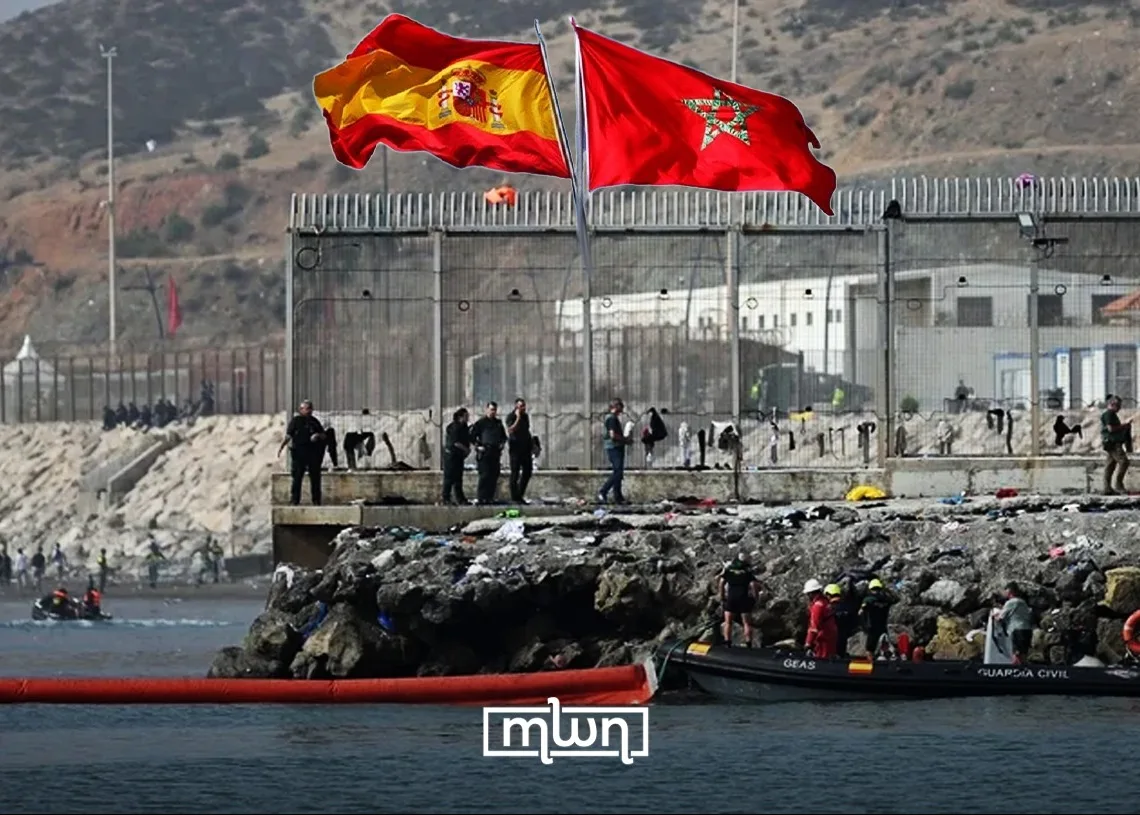
Casablanca – Spain’s government said Tuesday that “the time has come” for King Felipe VI to visit the occupied city of Ceuta, signaling Madrid’s willingness to move ahead with a trip that could carry significant symbolic weight for its relations with Morocco.
Government spokesperson Elma Saiz confirmed the executive had not blocked a visit by the King. “We have not vetoed it; on the contrary, we consider that the time has come for that visit to take place,” Saiz said following Tuesday’s Council of Ministers meeting.
The government has not yet set a date or finalized the itinerary. Prime Minister Pedro Sánchez indicated Monday that Felipe VI would visit Ceuta and Melilla when conditions were appropriate, arguing that there were “reasons and arguments” for such a trip.
The announcement comes after a period of heightened tensions surrounding Ceuta. Spain declared the situation in the Spanish-held city to be a matter of national security interest following a mass influx of migrants from Morocco at the end of July.
Since the first day of the crisis, Moroccan authorities have reinforced security along the border, deploying additional forces and water cannons to prevent further crossings. Rabat also coordinated with Madrid on the return of migrants who had entered Ceuta, while maintaining direct contact between the two countries’ interior ministries.
Spanish Foreign Minister José Manuel Albares later hailed Morocco’s response, saying Rabat had offered its cooperation from the outset to help stem the influx and continued working with Spain to facilitate the return of those who had entered irregularly.
Read also: Spain Says Albares Speaks Daily with Morocco’s Bourita on Ceuta, Melilla
During an August 11 visit to Ceuta, Albares said “every last person” who had entered irregularly would return to Morocco and confirmed that he was holding daily talks with his Moroccan counterpart, Nasser Bourita, while pointing to Rabat’s “total willingness” to facilitate the returns.
Morocco has also attributed the mass crossings to human-trafficking networks and online disinformation, saying its authorities were working to prevent irregular departures, dismantle criminal networks and strengthen coordination with Spanish and European counterparts. On Monday, Prime Minister Pedro Sánchez ruled out Moroccan involvement in triggering the crisis.
A visit by Felipe VI would therefore carry a dual message. Domestically, it would represent a highly visible reaffirmation of the Spanish state’s commitment to Ceuta, particularly after the recent migration crisis.
Internationally, however, it could test the careful balance Madrid has sought to maintain with Rabat, which has long regarded Spain’s continued control of Ceuta and Melilla as a colonial legacy and maintains sovereignty rights over both cities.
The last Spanish royal visit to Ceuta and Melilla took place in November 2007, when King Juan Carlos I and Queen Sofía traveled to both cities. Morocco strongly objected to that visit at the time, illustrating the diplomatic sensitivity surrounding the territories.
Felipe VI has not visited either city since becoming king in 2014. He did, however, receive Ceuta President Juan Jesús Vivas at the Marivent Palace on August 6, after which Vivas said the King had expressed his intention to visit.