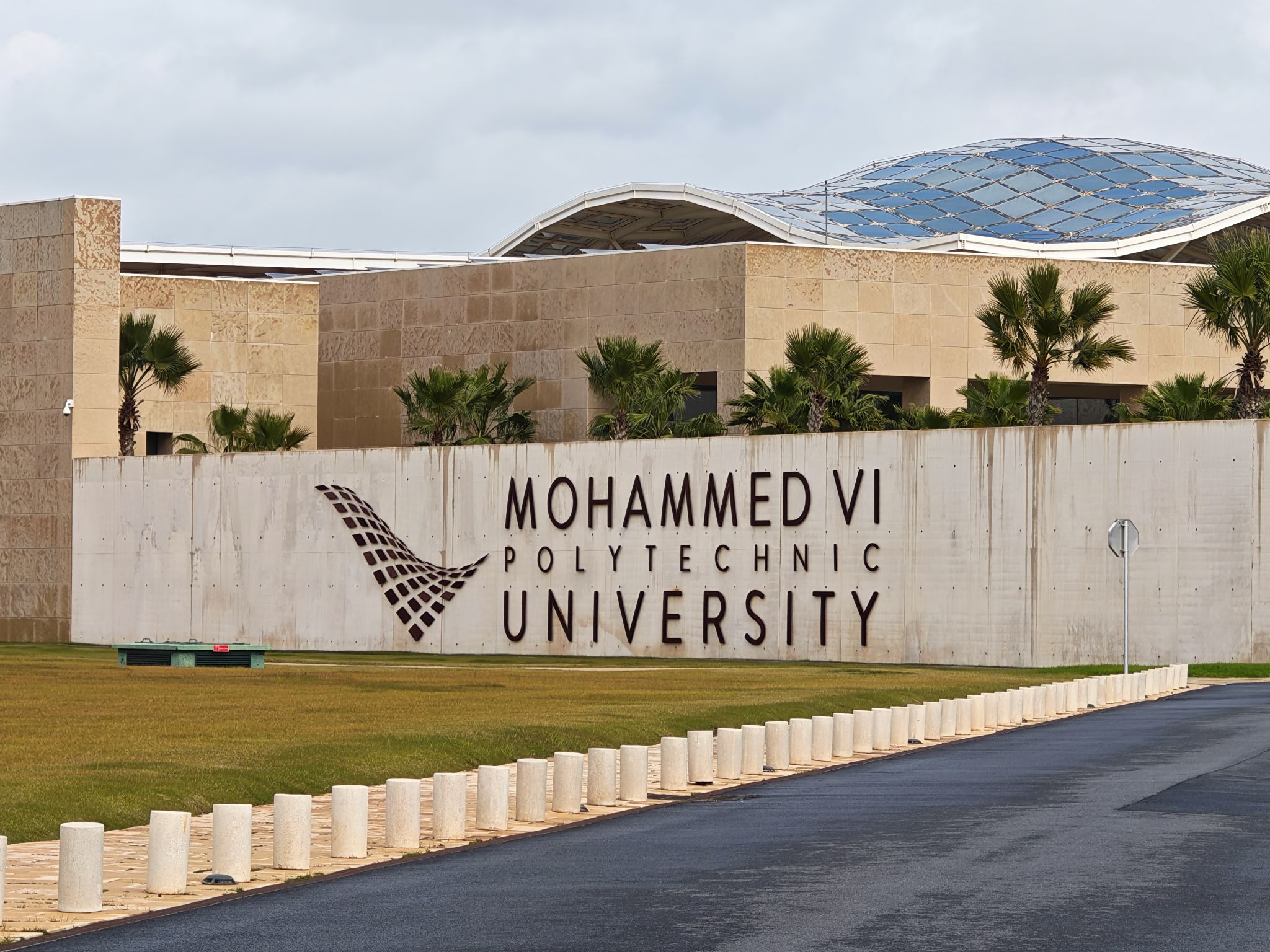
Marrakech – Mohammed VI Polytechnic University (UM6P) announced Monday that its Faculty of Governance, Economics, and Social Sciences (FGSES), based in Rabat, has joined the Alliance for Data, Evaluation, and Policy Training (ADEPT).
Through the membership, students in the faculty’s master’s program in Economic Analysis and Public Policy (MEAPP) now gain access to the MITx MicroMasters in Data, Economics, and Design of Policy (DEDP).
The step extends a long-standing partnership between UM6P and the Abdul Latif Jameel Poverty Action Lab (J-PAL). That relationship already includes the Morocco Innovation and Evaluation Lab (MEL), created with J-PAL at MIT and Harvard University’s Center for International Development, along with the UM6P-J-PAL Applied Lab for Agriculture (UJALA). The ADEPT membership now widens the cooperation from research into teaching and training.
Karim El Aynaoui, Executive Vice-President of UM6P’s Social Sciences, Economics, and Humanities Cluster and Dean of FGSES, described the certificate as a way for MEAPP students to complete their training with the DEDP program and reinforce its practical, applied character.
He called it “a strategic lever” that adds value to their profiles internationally, while reaffirming the standing of FGSES and UM6P among leading institutions focused on public policy.
Esther Duflo, the 2019 Nobel laureate in economics, co-founder of J-PAL, and academic co-director of ADEPT, framed the expansion as “an important step” toward broader access to high-quality training in economics, quantitative methods, and evidence-based public policy for students worldwide.
By partnering with leading institutions such as UM6P, she added, the network can strengthen local capacity while helping talented students build the skills to address policy challenges “in their own countries and beyond.”
For MEAPP students, the DEDP MicroMasters certificate carries several concrete benefits.
Academically, it consolidates innovative teaching methods such as the flipped classroom and equips students with tools for the impact evaluation of public policy. The credential should also interest those planning to apply to MIT’s DEDP master’s or to the growing network of ADEPT partner universities.
On employability, it responds to rising employer demand for analytical, quantitative, and practical skills. Internationally, it opens new networking opportunities and raises the global profile of graduates’ academic paths.
FGSES sits within UM6P’s Social Sciences, Economics, and Humanities Cluster, alongside the Africa Institute for Research in Economics and Social Sciences (AIRESS), dedicated to research, and the Public Policy School (PPS), which trains public and private sector decision-makers.
The cluster operates within Morocco’s New South vision, working to strengthen public policy and train qualified professionals across the African continent.
Convened by J-PAL, Community Jameel, and its institutional members, ADEPT builds academic pathways in policy evaluation and data analysis and cultivates a global network of evidence-based policy professionals.
The ADEPT membership follows other recent recognition for UM6P. In February, FGSES became the first institution from Africa and the MENA region to join the Association of Professional Schools of International Affairs (APSIA).
Later in the year, UM6P entered the Shanghai Academic Ranking of World Universities (ARWU) 2026 for the first time, placing among the world’s top 1,000 institutions.