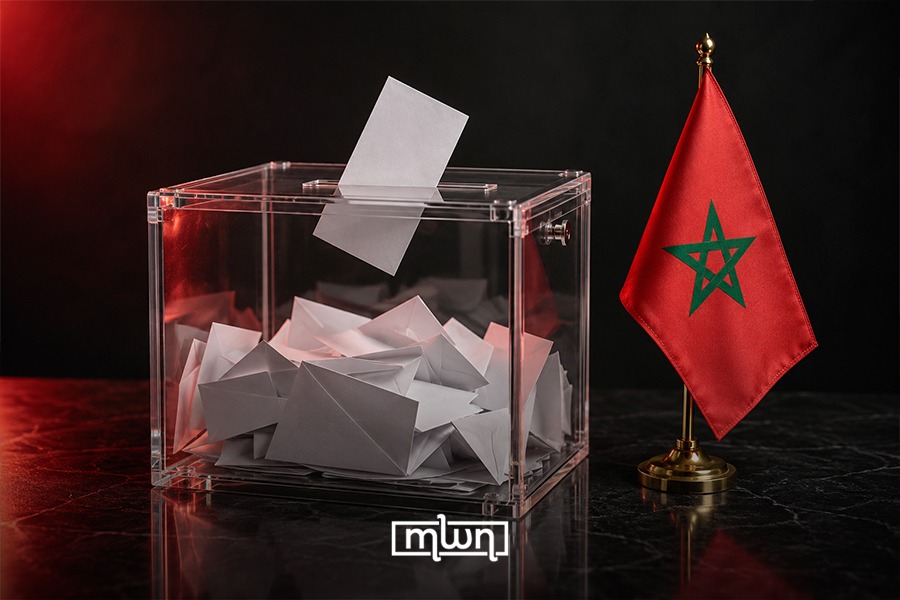
Morocco’s legislative elections of September 23, 2026 do not constitute merely another competition among political formations for control of the House of Representatives. They take place at a particular moment in the Kingdom’s political history, marked simultaneously by considerable economic and institutional modernization, Morocco’s growing international profile, the gradual consolidation of the social state, and the acceleration of major infrastructure projects. Yet at the same time, a persistent crisis of confidence continues to affect relations between part of the population and representative institutions. This year’s elections therefore raise a question that goes well beyond the distribution of the 395 parliamentary seats: what kind of political society is Morocco becoming?
Official data suggest that 15.8 million voters registered to vote, 27 political parties are officially participating in the competition, 395 seats are to be filled, and the campaign ran from 10 to 22 September, before voting takes place today. Meanwhile, the number of candidacies — 1,850 lists and 7,288 candidates — testifies to substantial electoral competition. Yet the existence of pluralist electoral competition is not, by itself, sufficient to determine the depth of democratization. Representative democracy is not measured solely by the number of candidates or parties; it also depends on the capacity of institutions to transform votes into effective representation, programs into public policies, and electoral participation into a genuine sense of citizenship.
It is here that the question of neo-tribalism re-emerges. Employing this concept does not mean predicting a literal return to the precolonial tribe. Rather, neo-tribalism refers to the reactivation, within the framework of the modern state, of forms of solidarity, belonging, personal loyalty, and social mediation based on family, territory, village, neighborhood, region, professional, or economic networks, and interpersonal relationships. From this perspective, technological, urban, and economic modernity does not necessarily produce complete political individualization. A citizen may be extremely modern in the use of digital technology while remaining politically embedded in family, territorial, or communal networks.
The real significance of these elections therefore lies in the following tension: will Morocco’s modernization produce a more individualized and institutionalized citizenship based on universal rights, or will modern institutions continue to be inhabited by older logics of proximity, notability, clientelism, and belonging?
The 2011 constitution: the Promise of an institutionally modern Morocco
Any reflection on Morocco’s democratic future must begin with the 2011 Constitution, which represents a major stage in the institutional evolution of the Kingdom. Adopted in the context of the 20 February Movement and the upheavals of the regional Arab Spring, it introduced a new legal and political architecture, notably by defining the monarchy as constitutional, democratic, parliamentary, and social. Formally, it strengthened the role of the Head of Government and Parliament; it recognized Amazigh as an official language; and it enshrined advanced regionalization.
Article 47 constitutes a particularly important innovation, since it provides that the Head of Government is appointed from within the party that comes first in elections to the House of Representatives. This provision establishes a constitutional link between electoral results and government formation. The Constitution thus sought to make elections a mechanism for determining the direction of government, while maintaining important royal prerogatives in strategic, religious, security, and diplomatic domains.
It would therefore be excessive to characterize the Moroccan system as devoid of democratic institutions. There is an elected Parliament, political parties, regular elections, electoral competition, constitutional review mechanisms, and an active civil society. Yet it would be equally reductive to regard the constitutional architecture alone as sufficient to establish a fully institutionalized democracy. Several analyses have precisely emphasized the hybrid character of the Moroccan model: the 2011 Constitution strengthened the government and Parliament while maintaining the King’s central constitutional position.
The essential question therefore becomes that of the gap between constitutional modernity and actual political practices. A Constitution may proclaim advanced regionalization, representative democracy, and equality among citizens; yet electoral practices, political parties, administrations, and territorial institutions must still translate these principles into everyday realities.
It is precisely at this level that the question of neo-tribalism becomes relevant.
Is the Moroccan model a return to the past or a hybridization of modernity?
Speaking of a “return to a neo-tribal Morocco” might suggest historical regression. Such an interpretation, however, would be too simplistic. The phenomenon is more complex: it is less a return to the past than a modernization of older forms of solidarity.
James Liddell’s work on Moroccan notables has demonstrated the persistence of patronage and clientelist relationships in political life, particularly during legislative elections. According to this analysis, political parties may function as coalitions of elites and networks rather than as genuinely structured ideological organizations, thereby giving notables an important role in electoral mobilization.
This issue remains particularly relevant in 2026. Candidate selection is not necessarily limited to ideological adherence to a program. It may also depend on an individual’s capacity to mobilize a constituency, a family, a professional network, a territory, or a set of social relationships. In this context, the contemporary notable is no longer necessarily the traditional caïd or intermediary. He or she may be an entrepreneur, local elected official, lawyer, physician, civil servant, association leader, or digital personality. Political capital derives from the combination of several resources: reputation, financial means, social networks, territorial embeddedness, and mobilization capacity.
The paradox, rather strikingly, is thus that institutions may modernize more rapidly than the social mechanisms of representation.
Contemporary elections can thus combine a modern ballot with communal mobilization; digital social networks with family networks; national programmatic discourse with territorial loyalties; and representative democracy with clientelism. It is this hybridization that should be described as neo-tribal rather than imagined as a resurrection of the ancient tribe.
I have emphasized this distinction in my own work on Moroccan neo-tribalism; I notably argue that neo-tribalism is not the intact survival of older structures but their recomposition within the framework of the modern state. Family, territory, personal relationships, economic networks, and even digital networks can therefore become the new infrastructures of political solidarity, sometimes competing with institutional forms of mediation.
As such, the problem is not the existence of family or territorial solidarities. These are part of the social fabric of Morocco and are not inherently incompatible with democracy. Instead, the problem arises when access to public resources, employment, services, or political representation depends more heavily on proximity to an intermediary than on the universal application of rules.
From citizen to client: the central question of clientelism
Clientelism probably represents the most sensitive point of intersection between neo-tribalism and electoral democracy. In an institutionalized democracy, citizens vote on the basis of political preferences, programs, values, or collective interests and know that their rights are protected by impersonal institutions. In a clientelist system, the political relationship tends to become more personalized: the candidate offers mediation, assistance, or access, while the voter provides political support.
The problem is therefore less moral than institutional. It is not enough to denounce clientelism; one must understand why it can remain rational for some citizens. When public administration is perceived as distant, slow, or unequally accessible, turning to a person capable of intervening becomes an understandable social strategy. Symbolically summarizing this logic is the expression “bak sahbi,” which essentially boils down to the idea that a personal relationship can facilitate access to a resource.
Genuine democratization therefore requires a transformation of the political relationship: from networks to rights, from favor to rules, from intermediary to institution, and from notable to citizen.
This is why Morocco’s democratic modernization cannot be reduced to the regular organization of elections. It also requires the construction of a state sufficiently effective that citizens do not need a political patron to obtain what they are legally entitled to receive.
This issue is particularly important in peripheral territories. When schools, hospitals, transportation, employment opportunities, or administrative services are distant, the political representative may become a kind of territorial mediator between the state and the population. Dependence on the notable may therefore be produced by institutional weakness itself. In such a context, combating electoral neo-tribalism paradoxically requires strengthening the rule of law and local institutions.
The center-periphery divide in Morocco
It is here that the notion of a “Morocco of Territories” acquires its full significance. Contemporary Morocco has experienced a spectacular transformation of its infrastructure, ports, highways, industrial zones, logistical platforms, and metropolitan areas. Yet national modernization does not automatically produce territorial convergence.
The New Development Model explicitly identified this issue by making economic transformation, human development, social inclusion, and the territorial dimension four major axes of transformation toward 2035. The OECD has likewise highlighted persistent disparities in employment, productivity, human capital, and economic participation, particularly among young people and women.
The territorial question has therefore become a democratic question in Morocco.
A citizen of Casablanca, Rabat, or Tangier may perceive the country’s modernization through infrastructure, transportation, investment, and new employment opportunities. In some rural, mountainous, or peripheral areas, the modernity of the state may be assessed differently: through the quality of schools, access to physicians, road conditions, water availability, digital connectivity, mobility, and employment prospects.
Representative democracy cannot be separated from this geography of opportunity.
In my analysis of a “Morocco of Territories,” I have argued for shifting the debate from electoral competition alone toward the state’s capacity to reduce territorial disparities and transform advanced regionalization into genuine territorial convergence. The fundamental question is therefore not only who will govern, but what Morocco will be governed and for which territories.
Youth as the Laboratory of Moroccan citizenship
The real test of democratization may nevertheless be found among young people. Available data are concerning: the country’s High Commission for Planning estimates that approximately 2.9 million young people aged 15 to 29 are neither employed nor in education or training, representing approximately one young person in three. Regional disparities are increasingly significant, and women account for nearly 72 percent of NEET youth.
This reality profoundly alters the political meaning of the election.
Moroccan youth are not necessarily asking for less politics; they may be asking for more effective politics. The problem of participation therefore does not lie solely in presumed political indifference. It may also result from the perception that institutional politics does not produce sufficient change in everyday life.
Official data indicate that those aged 18-24 represent only 4 percent of registered voters, while people aged 60 and above account for 29 percent. This demographic structure of the electorate deserves serious consideration.
The OECD had already identified the deficit of trust and participation among young people as a major governance challenge in Morocco. The question in 2026 is therefore whether young people will regard elections as an instrument capable of transforming their circumstances or as an institution distant from their concerns.
The GENZ212 phenomenon should also be situated within this context. Without reducing Moroccan youth as a whole to this movement, recent mobilizations have helped make visible concerns regarding employment, public services, and social conditions. The 2026 electoral campaign is therefore unfolding in a context in which the relationship between youth, the state, and political representation is particularly fraught.
Amazigh identity: between territorial citizenship and political representation
The Amazigh question likewise illustrates the tension between constitutional modernity and territorial logics. The 2011 Constitution recognizes Amazigh as an official language and enshrines the cultural plurality of Moroccan identity. This recognition represents a major institutional transformation.
Yet legal recognition alone does not produce effective equality.
A significant proportion of historically Amazigh-speaking territories are located in rural or mountainous regions facing particular difficulties in access to public services, employment, and infrastructure. The Amazigh question therefore necessarily intersects with the territorial question.
It would nevertheless be problematic to equate Amazigh solidarity with neo-tribal clientelism. Traditional Amazigh communal structures have also included mechanisms of deliberation, consensus, and collective responsibility. They cannot therefore be reduced to a mere survival of tribalism.
The challenge is precisely to transform communal solidarities into civic capital rather than instruments of electoral dependency.
In other words, Moroccan democracy does not necessarily need to destroy older forms of solidarity; it must institutionalize, universalize, and transform them into forms of civic participation.
Pluralism or dilution of responsibility?
The high number of political formations and candidacies reflects genuine pluralism, but pluralism does not automatically guarantee political clarity. With 1,850 lists and 7,288 candidates competing for 395 seats, voters face a particularly fragmented electoral offer.
Fragmentation can have two contradictory effects.
On the one hand, it allows for broader representation of political and territorial sensitivities. On the other hand, it can dilute responsibility: when several parties govern in coalition, it becomes more difficult for voters to identify precisely who is responsible for a given policy.
This situation may indirectly reinforce local politics. When national programmes appear insufficiently differentiated in the eyes of voters, the local candidate becomes more important than the party. Politics consequently becomes personalized, and the candidate’s personality, territorial embeddedness, and networks become decisive.
The risk, therefore, is not that Morocco will suddenly become “tribal;” it is rather that electoral modernity will be absorbed by older social mechanisms of representation.
Transforming the vote into citizenship
The real question surrounding the 2026 elections is therefore not whether Morocco will be modern or traditional. Such a dichotomy is too binary. Morocco is already profoundly modern and deeply rooted in older social structures. It is simultaneously digital and communal, globalized and territorial, institutional and personalized.
The real issue is the hierarchy between these two dimensions.
If public institutions become sufficiently effective, transparent, and accessible, personal solidarities may gradually lose their function as obligatory forms of mediation. If, on the contrary, access to resources remains strongly dependent on networks, economic and technological modernization may continue to coexist with political clientelism.
This is why Morocco’s democratic question is, above all, a question of institutional capacity.
The modern citizen is not simply someone who votes. It is someone who can exercise his or her rights without having to know someone personally. It is someone who can obtain a public service without a personal intermediary. It is someone who can challenge an administrative decision without fearing the loss of social relationships. It is someone who can change political preferences without jeopardizing economic or social interests.
This conception of citizenship makes it possible to move beyond the simplistic opposition between Westernized democracy and Moroccan tradition. Democracy can be deeply rooted in Moroccan society if it transforms older solidarities into civic participation and relations of proximity into public responsibility.
Neither a return to the past nor automatic modernity
These legislative elections will not, by themselves, definitively answer the question of whether Morocco will become more modern and democratic or return toward a neo-tribal model. An election cannot instantaneously transform a political culture, an administration, or a system of representation.
It can, however, reveal the direction in which these transformations are moving.
Morocco today possesses a far more elaborate constitutional framework than in the past, elected institutions, an active civil society, a diversified economy, and an ambitious development strategy. The 2011 Constitution also enshrined advanced regionalization, Amazigh identity, and the institutional strengthening of Parliament and government. The New Development Model, for its part, provides a strategic framework explicitly oriented toward economic, human, social, and territorial transformation.
Yet this modern architecture still encounters political practices based, in certain circumstances, on personalization, notability, networks, and clientelism. The academic literature on Moroccan notables demonstrates that these mechanisms are not new and can reproduce themselves within modern institutions.
The historical choice confronting Morocco is therefore not between tradition and modernity, but between two different ways of organizing modernity.
The first consists in constructing a form of citizenship based on equality before the law, institutional effectiveness, political accountability, effective decentralization, territorial convergence, and universal access to public services.
The second entails allowing modern institutions to operate through personal, territorial, and clientelist forms of mediation, so that citizenship remains partially dependent upon networks of belonging.
In the first case, Morocco could gradually transform its considerable capital of stability, infrastructure, and development into a more institutionalized form of political modernity. In the second, economic modernization could continue to coexist with a political system in which older solidarities reinvent themselves in new forms.
This is why the concept of a “neo-tribal Morocco” must be used with caution. It does not necessarily describe a return to the past. Rather, it describes the risk of an incomplete modernity in which contemporary institutions become new vehicles for older relationships. The real danger, therefore, is not that the tribe returns; it is that citizenship never becomes fully independent of belonging.
The answer to this difficulty may lie in a renewed conception of the Morocco of Territories. Advanced regionalization should not merely transfer administrative competencies; it should bring citizens closer to decision-making, strengthen the accountability of elected representatives, and reduce disparities between territories. It should transform social proximity into institutional proximity.
Likewise, young people should not be viewed merely as an electoral category to be mobilized. They should become actors of citizenship, with prospects for employment, education, mobility, participation, and representation. The figure of 2.9 million young NEETs reminds us that democratization cannot be separated from the social question.
Thus, the question surrounding this year’s elections is ultimately not: “Modern Morocco or neo-tribal Morocco?” It is a deeper question: “What kind of political modernity does Morocco want to build?”
A modernity based on impersonal institutions will not necessarily abolish family, regional, or communal solidarities. It will simply give them another function. They can become forms of civic, cultural, and territorial solidarity rather than mechanisms of electoral dependence.
The genuine democratic significance of the 2026 elections will therefore lie not merely in turnout, in the victory of a particular party, or in the composition of the next government. It will lie in the political system’s capacity progressively to move citizens from the status of beneficiaries to that of actors; from networks to rights; from favor to institution; from personal proximity to public accountability; and from the periphery toward territorial and political equality.
Modern Morocco will not be the Morocco that has destroyed its past. It will be the Morocco that has succeeded in transforming its social inheritances into civic resources and its constitutional institutions into everyday realities. It is in this transformation — more than in the mere arithmetic outcome of the electoral process — that an essential part of the Kingdom’s political future will be determined.