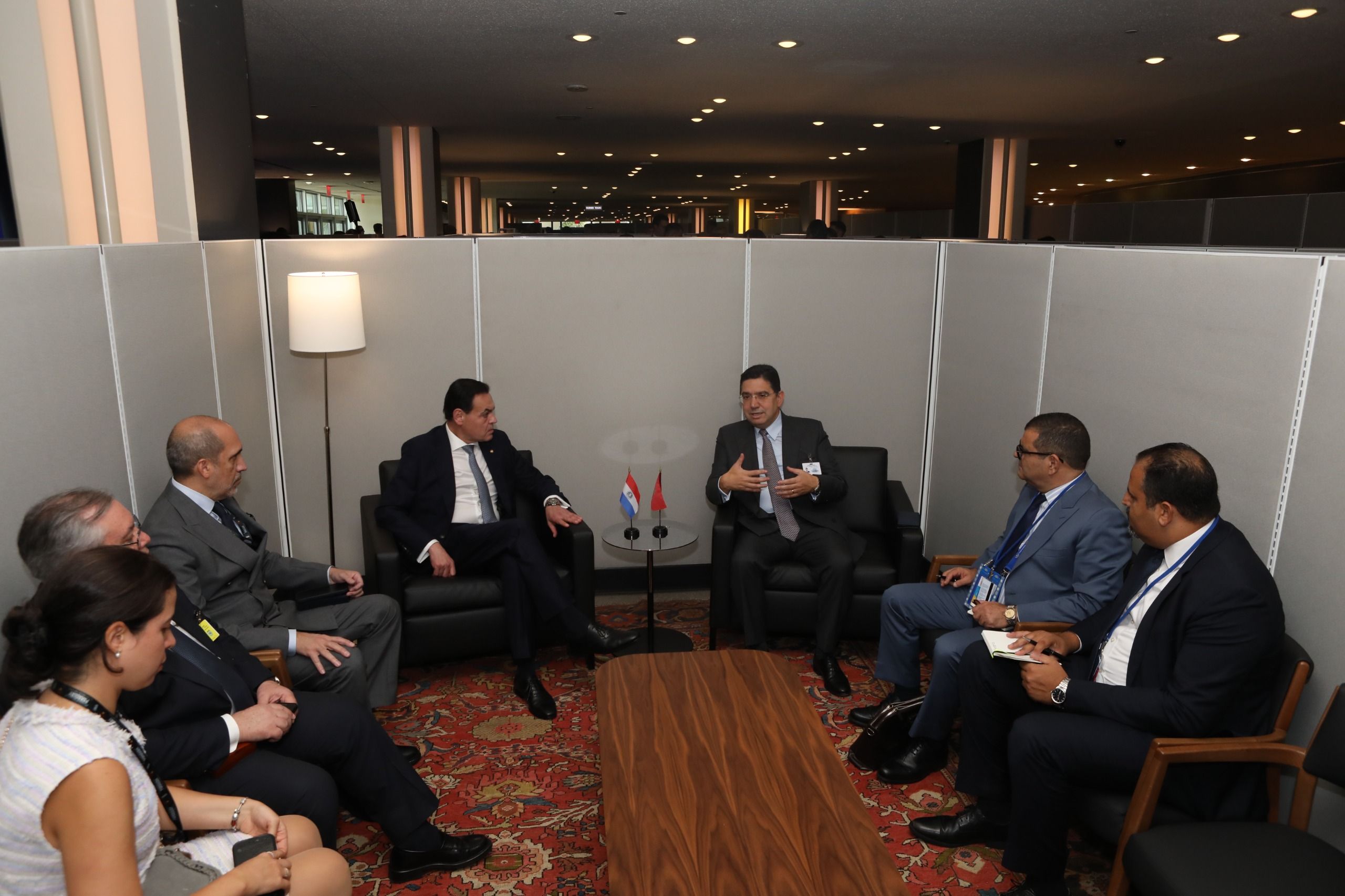
Marrakech – Moroccan diplomacy continues to harvest what years of patient, hard work have sown, with Paraguay reaffirming on Wednesday in New York its recognition of Morocco’s sovereignty over the Western Sahara – another concrete return on a long and deliberate diplomatic push.
Foreign Minister Rubén Darío Ramírez Lezcano delivered the message to reporters after meeting his Moroccan counterpart, Nasser Bourita, on the sidelines of the 81st session of the UN General Assembly.
He confirmed that Paraguay had recognized Morocco’s sovereignty over the territory and was “working at the level of the United Nations to reach a resolution enshrining this decision.”
The reaffirmation builds on a position Asunción first made official a year earlier. In September 2025, during the 80th General Assembly, Ramírez Lezcano and Bourita held a similar meeting at which Paraguay formally recognized Moroccan sovereignty over the Sahara and signaled its intent to open a consulate in the southern provinces.
That intent turned concrete weeks later. During an October 2025 visit to Rabat, Ramírez Lezcano announced Paraguay’s decision to open a Consulate General in the southern provinces and reaffirmed full support for Morocco’s 2007 Autonomy Plan, which he described as the only serious, credible, and realistic basis for settling the artificial dispute.
Paraguay’s trajectory reaches back further. Asunción broke with the Polisario’s self-styled “SADR” in 2014, withdrawing recognition of the self-proclaimed separatist entity kept afloat by Algerian patronage, and a run of joint declarations and political consultations since has hardened its alignment with Rabat.
The reversal stripped the front of one more foothold and exposed how thin its Latin American support has become. According to observers, the continent has moved past the old Third-Worldist reflexes that once sustained the front, discarding a Cold War-era, outdated cause as Algiers keeps pouring resources into propping up a phantom republic that recognition after recognition keeps repudiating.
The October talks framed the relationship as a strategic partnership rooted in the vision of King Mohammed VI and President Santiago Peña. Bourita pointed to Paraguay’s opening of an embassy in Rabat and its decision to inaugurate a consulate general in Dakhla as evidence of Asunción’s growing engagement with the African continent.
Bourita credited Paraguay’s “firm and constant” backing of the Autonomy Plan, calling it the only serious and credible path to a political solution and describing Paraguay as a reliable ally in Latin America. He also welcomed Asunción’s active role in MERCOSUR and its readiness to deepen ties between Morocco and the bloc through South-South cooperation.
Trade featured prominently. Both sides opened discussions on bilateral commercial agreements to expand them across Morocco and the wider MERCOSUR market.
In New York, Ramírez Lezcano tied the latest meeting to his recent working visit to Rabat, which gave fresh impetus to cooperation, and voiced Paraguay’s intention to raise the partnership to a higher level.