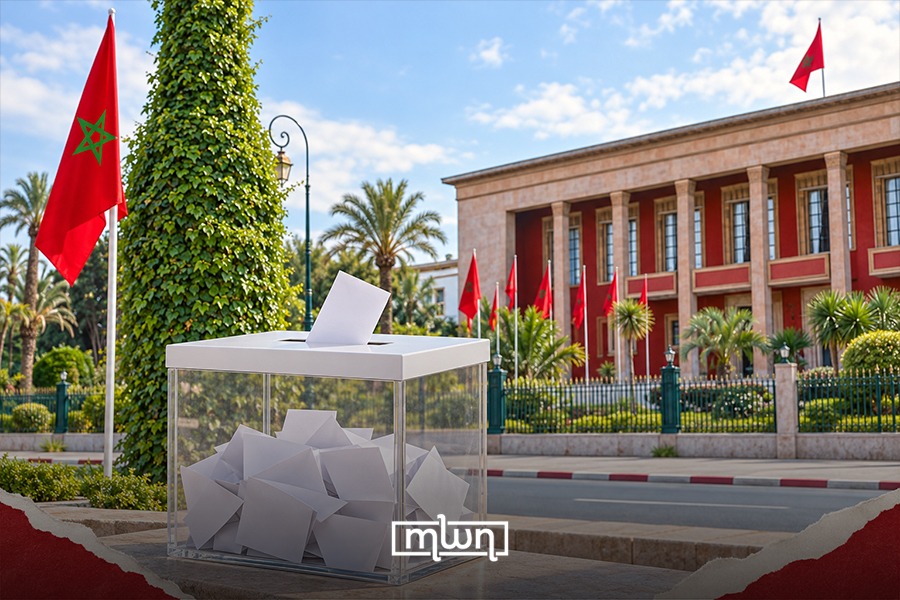
Marrakech – A delegation from the Parliamentary Assembly of the Council of Europe (PACE) found that Morocco’s September 23 parliamentary elections gave voters “a broad political choice” and “were efficiently administered.” Yet the observers warned that the vote exposed deeper problems for representative democracy, rooted in weak participation.
Turnout reached only 38.02% of registered voters, which PACE calculated as fewer than one in four Moroccans of voting age. Combined with a significant number of blank and invalid ballots, the delegation found that the figure raised a broader question about political trust and meaningful representation.
For the delegation, democracy is measured not only by how elections are run, but by whether institutions inspire enough confidence for citizens to take part.
“An election can be orderly and still reveal serious challenges for representative democracy,” according to delegation head Elisabetta Gardini of Italy. “When fewer than one in four adults cast a valid vote, such low participation cannot be overlooked. It raises important questions about participation, representation and citizens’ confidence in the political process.”
The delegation welcomed steps to widen participation, among them the 90 regional-list seats reserved for women. Still, it found that formal opportunities had yet to translate into real political influence. Youth disengagement remained a central concern, reflected in strikingly low participation among young people.
PACE repeated its long-standing call for automatic registration of all eligible citizens, arguing that the right to vote should not depend on a separate administrative application. It also urged Morocco to let its more than six million citizens abroad vote personally and secretly, warning that proxy voting cannot adequately protect individual choice or ballot secrecy.
Rebuilding confidence, in Gardini’s account, would take more than promises or new digital tools. “Trust cannot be rebuilt through electoral promises or digital services alone,” she added. “It grows when citizens can see that their vote has equal weight, that institutions are accountable, and that participation can genuinely shape public decisions.”
The observers also flagged persistent inequalities in the weight of votes, the effects of an electoral quotient based on registered voters, and a media environment where economic concentration and broad restrictions on expression can narrow genuine debate.
The next electoral reform, PACE argued, should place equal suffrage, political pluralism and open public debate at its center.
The delegation voiced concern over recurring allegations of vote-buying and of ballots directed through economic or hierarchical pressure. Such claims, it argued, require prompt and thorough investigation, with effective sanctions where violations are confirmed.
The 24-member, cross-party delegation deployed 12 teams across Rabat, Casablanca, Tangier, Fez and Marrakech and surrounding areas. It measured the process against Council of Europe standards and the commitments Morocco’s parliament undertook as a PACE Partner for Democracy. A final report will go before the Assembly in January 2027.
Interior Minister Abdelouafi Laftit said 3,006 observers monitored the elections, including 2,023 from civil society organizations, 783 from the National Council of Human Rights (CNDH), and 200 foreign observers representing NGOs and international and regional bodies.
The council had praised Morocco’s election preparations
The post-election findings followed an earlier visit. A five-member PACE delegation traveled to Rabat from August 31 to September 2, at the invitation of CNDH, meeting authorities, the head of Morocco’s delegation to PACE, and representatives of civil society, media and the diplomatic community.
That earlier mission welcomed legislative changes meant to make the vote more inclusive, along with the advanced state of preparations. It commended the 90 regional seats for women, financial incentives for lists headed by candidates aged 35 or under, the digitalization of some procedures, and new rules on online campaigning, disinformation and artificial intelligence.
The pre-election delegation also raised warnings. Around 15.8 million citizens had registered, well below previous elections and the estimated voting-age population, with young people accounting for only 3% of the roll.
It pressed all stakeholders to intensify voter information, especially among women and young people, and stressed that freedoms of expression, assembly and association must hold throughout the campaign.
The observation missions took place amid a politically charged atmosphere. The vote was the first since youth-led Gen Z protests nearly a year ago and a mass migration attempt at the occupied city of Ceuta that left dozens dead.
What comes next?
Provisional results from the Interior Ministry gave the Authenticity and Modernity Party (PAM) 97 of the 395 seats in the House of Representatives, Morocco’s lower house. The National Rally of Independents (RNI), which led the outgoing government, fell to 66 seats, followed by Istiqlal with 65.
The moderate Islamist Justice and Development Party (PJD) surged to 54 seats, up from 13 in 2021, after a campaign centered on fighting corruption. Its leader, former Head of Government Abdelilah Benkirane, claimed a “victory” but ruled out joining a PAM-led coalition, which he called “tainted by fraud.”
Observers read the PJD’s resurgence as a “sanction vote” against the outgoing government.
PAM, founded in 2008 by royal adviser Fouad Ali El Himma, will need to build a coalition, with the next head of government appointed by the king from its ranks.
PAM national coordinator Fatima Ezzahra El Mansouri, the mayor of Marrakech and minister of territorial planning, could become Morocco’s first woman prime minister, an outcome she called a “great honor.”
Another figure tipped for the post is Fouzi Lekjaa, budget minister and head of the Royal Moroccan Football Federation (FRMF). The PAM has pledged average annual growth of 5%, inflation of 2% and at least 1 million new jobs over five years.
Wednesday’s turnout was the lowest since 2007, when the figure stood at 36.8%. The frustrations behind the weak participation – unemployment, inequality and demands for better health and education – mirror the grievances that drove the Gen Z protest movement and the Ceuta crisis.
The next government will also steer billions in investment as Morocco prepares to co-host the 2030 World Cup alongside Spain and Portugal.