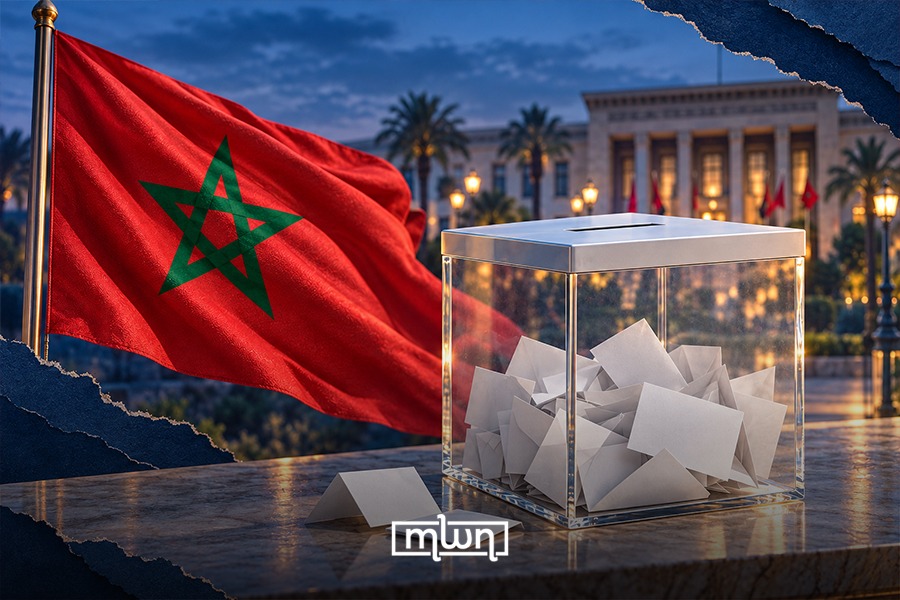
Morocco’s Interior Ministry confirmed polling stations’ results, announcing that the Authenticity and Modernity Party (PAM) has taken the lead in the 2026 legislative elections.
The Interior Ministry said that preliminary data show PAM won 97 seats, followed by the National Rally of Independents (RNI) with 66 seats and the Istiqlal Party with 65 seats.
The Justice and Development Party (PJD) came fourth with 54 seats.
The Interior Ministry earlier today announced that the turnout rate across Morocco reached 38%, emphasizing that the elections went normally, except for some incidents at polling stations.
According to the same data, about 15.8 million voters were registered for the 2026 legislative elections, with 28 political parties competing, including one alliance bringing together two parties. Approximately 6 million voters cast their ballots.
A total of 1,847 candidate lists were submitted, with more than 18 candidacies per seat on average.
Women accounted for 2,659 candidacies, or around 37% of all candidates. Of these, 1,783 were in regional constituencies and 876 in local constituencies, while 120 women headed local candidate lists.
According to data from Morocco’s Interior Ministry, the parties secured the following number of seats in the 2026 legislative elections:
Authenticity and Modernity Party (PAM): 97 seats
National Rally of Independents (RNI): 66 seats
Istiqlal Party: 65 seats
Justice and Development Party (PJD): 54 seats
Popular Movement Party: 29 seats
Socialist Union of Popular Forces (USFP): 26 seats
Party of Progress and Socialism (PPS): 19 seats
Constitutional Union Party: 17 seats
Left Alliance: 8 seats
Democratic and Social Movement Party: 8 seats
Democratic Forces Front Party: 2 seats
Equity Party: 2 seats
New Democrats Party: 1 seat
Unity and Democracy Party: 1 seat
Interior Minister Abdelouafi Laftit said authorities made sure to provide all the necessary guarantees to ensure the success of the electoral process and implement the law to ensure that the elections took place in a good atmosphere.
Laftit also highlighted turnout rates in the southern provinces, reaching 77% in Laayoune-Sakia El Hamra, 53.48% in Guelmim-Oued Noun, and 61% in Dakhla-Oued Eddahab, reflecting the population’s attachment to the southern provinces and Morocco’s territorial integrity.
He said the Interior Ministry activated monitoring committees to ensure the success of the electoral process and prevent anything that could affect or disrupt it.
Authorities maintained ongoing coordination with the National Human Rights Council (CNDH) to ensure access to resources and allow observers to monitor the electoral process, he said.
A total of 3,006 observers monitored the elections, including representatives of the international community, such as NGOs.
He also highlighted efforts to ensure the credibility of the polling records, stating that the Interior Ministry said that it dealt with all complaints received, Laftit said, adding that no issue affected the political process.
Laftit concluded that the elections took place normally, except for some isolated incidents that did not affect the electoral process, while commending political parties for their responsibility.
The next phase will include King Mohammed VI appointing a Head of Government from PAM. The party will also work on forming a government.