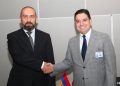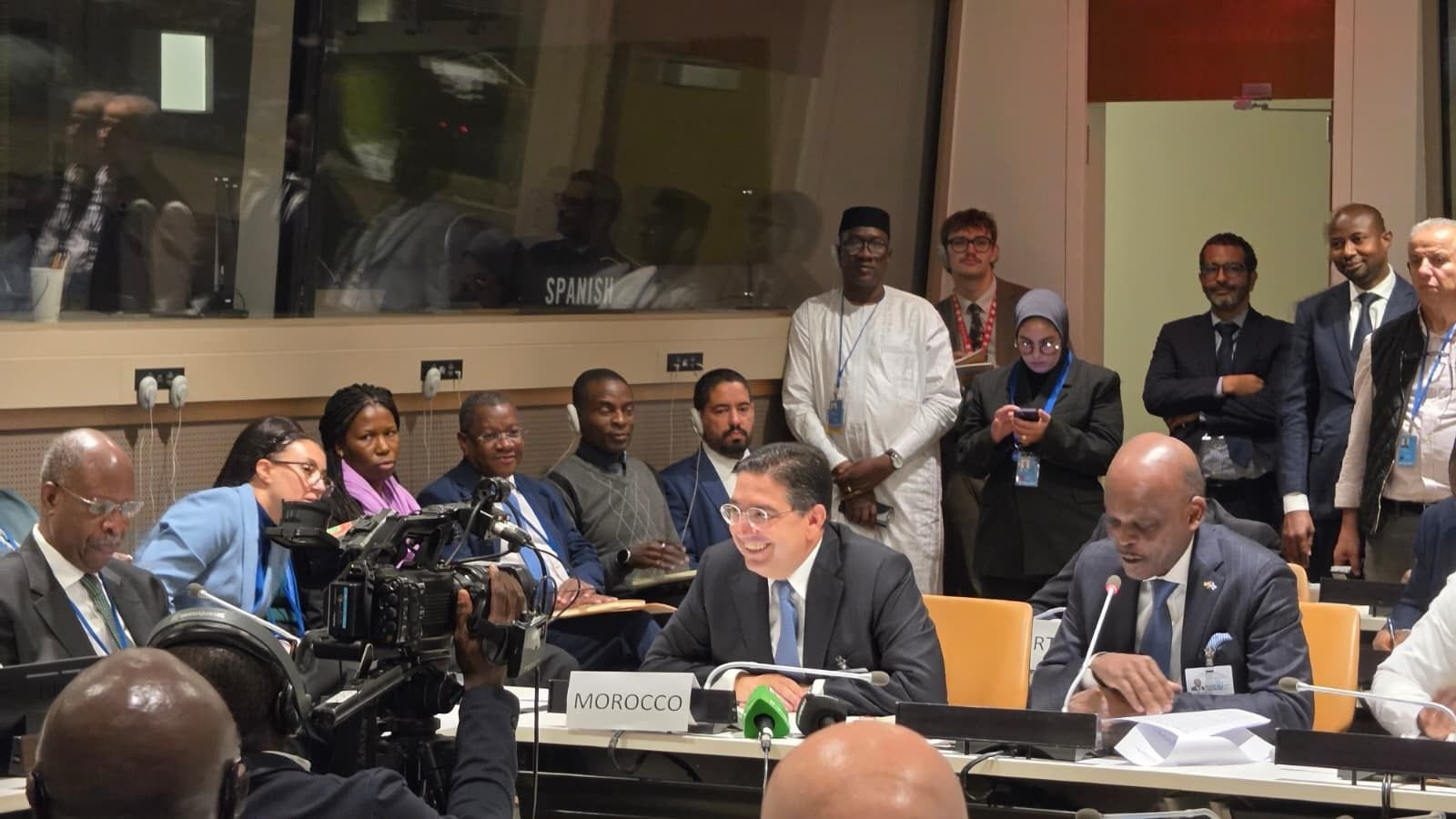
Marrakech – Africa featured prominently in Morocco’s dense diplomatic agenda at the 81st session of the United Nations General Assembly, as Foreign Minister Nasser Bourita spent Friday in New York chairing an Atlantic ministerial meeting and addressing a separate high-level event on the Sahel.
Bourita presided over the 8th meeting of foreign ministers of the Atlantic African States Process (PEAA), an encounter that followed earlier gatherings in Cotonou in July 2026 and in Cape Verde in May 2025. The meeting came as the African Atlantic Initiative, launched by King Mohammed VI, registered significant consolidation and gained in importance.
The gathering reflected the ownership by regional states of the King’s vision, which aims to equip the space with tools for economic, infrastructural, and energy empowerment toward harmonious and sustainable development.
Bourita described the process as an effort to turn the African Atlantic seafront into a zone of strategic dialogue and economic integration. In his reading, the vision rests on a collegial, mobilizing, and pragmatic form of governance meant to make Atlantic Africa an “indispensable actor” in the governance of the Atlantic Basin.
“Four years after the launch of the African Atlantic Initiative, in Rabat in June 2022, we can affirm with confidence that the prospects for integration in our space are strengthening with each step we take,” the chief of Moroccan diplomacy told the meeting. He maintained that the partnership had begun to bear fruit.
The Atlantic Ocean, in his framing, serves as a link between Atlantic African states and their partners and carries enormous cooperation potential. He observed that the royal initiative aspires to give Africa a first-order role in the governance and cooperation of the Atlantic Basin.
That role, according to the minister, would help the region confront its difficulties. “It is also a vision that will allow us to meet more effectively and with more assurance the challenges of our region, whether on the security or development level, on the basis of the convergence of views and interests,” he remarked.
Bourita also called for collective action. “The federation of our efforts is the only way to meet the multiple challenges facing the African Atlantic space and to take advantage of its enormous opportunities for cooperation,” he contended, adding that the involvement of various ministerial departments remained crucial given the scope of the partnership.
In a Ministerial Declaration adopted Friday, PEAA foreign ministers renewed their attachment to the vision and objectives of the process as laid out in the Rabat Ministerial Declaration of June 8, 2022.
While welcoming progress, they called for accelerating implementation on the basis of consultation, coordination, and complementarity of national actions. A meeting of senior officials on July 15 had prepared the ministerial encounter.
The same day, Bourita turned to the Sahel at a high-level event on “Security and Development in the Sahel,” held on the margins of the General Assembly. He recalled the historical ties binding Morocco to the region through routes crossing the Western Sahara, trade, and a shared human and spiritual heritage, which he cast as a living link between peoples.
The Sahel, he contended, should not be read only through the prism of its challenges. He pointed to the region’s youth, natural resources, and openings in agriculture, energy, and mining.
“The challenge consists of transforming this potential into concrete opportunities for the benefit of the populations of the Sahel,” Bourita noted, promoting the royal initiative to grant Sahel states access to the Atlantic Ocean.
He reaffirmed Morocco’s commitment in a spirit of solidarity, non-interference, and respect for sovereignty and national choices. Morocco’s engagement, in his words, was not merely a partnership but one “deeply rooted in history, nourished by bonds of fraternity and turned toward a shared future.”
For their part, the ministers of the Confederation of Sahel States – Mali, Burkina Faso, and Niger – which organized the event, paid tribute to King Mohammed VI for the audience the sovereign granted them in April 2025.
That audience, part of Morocco’s strong and long-standing relations with the three countries of the Alliance of Sahel States (AES), marked a “turning point in international support for the Confederation of Sahel States,” they said. The ministers also welcomed the monarch’s initiative to facilitate the Sahel countries’ access to the Atlantic.
Read also: The Sahel, the New Theatre of Algerian-Moroccan Rivalry: Two Competing Models of Influence