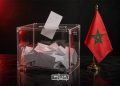
Marrakech – Morocco’s Interior Ministry confirmed on Friday that the final results of the September 23 parliamentary elections match the provisional count released earlier, leaving the Authenticity and Modernity Party (PAM) in first place with 97 seats.
According to the communiqué, regional and provincial counting commissions, chaired by judges across the kingdom’s prefectures, provinces, and regions, completed the vote count and declared the results for the election of House of Representatives members.
The minutes were deposited with the Constitutional Court, in line with legislative requirements. The ministry confirmed that the final figures announced by these commissions fully match the provisional general results made public before.
The communiqué then recalled the official results across local and regional electoral districts. PAM took 97 seats, followed by the National Rally of Independents (RNI) with 66 and the Istiqlal Party (PI) with 65. The Justice and Development Party (PJD) secured 54 seats, ahead of the Popular Movement (MP) with 29 and the Socialist Union of Popular Forces (USFP) with 26.
The Party of Progress and Socialism (PPS) won 19 seats and the Constitutional Union (UC) 17. The Democratic and Social Movement (MDS) and the Left Alliance each took 8. The Front of Democratic Forces (FFD) and the Equity Party (PE) each secured 2, while the Neo-Democrats Party (PND) and the Party of Unity and Democracy (PUD) each took 1.
The ministry also outlined the rights granted under Article 86 of the organic law on the House of Representatives. Every candidate concerned may consult the minutes of polling stations, central offices, and the provincial or regional counting commissions at the local administrative authority for eight full days, during official working hours, from the date they are deposited.
Candidates whose election is challenged may consult those same minutes and obtain copies within eight days from the date they receive the appeal petition.
The vote, held Wednesday, produced the lowest turnout in nearly two decades. Participation fell to 38.02%, down from 50% in 2021 and the lowest level since 2007.
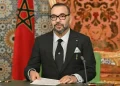
Under the 2011 constitution, King Mohammed VI appoints the head of government from the party that wins the most seats, placing PAM in line to lead the next government. Since no party holds an absolute majority, PAM will need to form a coalition. The palace traditionally retains key portfolios, including defense and foreign affairs.
PAM was founded in 2008 by Fouad Ali El Himma, an adviser to the king. It campaigned on a $37 billion platform promising 1 million jobs and new investment in healthcare, education, and social protection.
Two figures have emerged as possible prime ministers: Fatima Ezzahra El Mansouri, mayor of Marrakech and urban planning minister, and Fouzi Lekjaa, the budget minister and football federation (FRMF) head who joined PAM weeks before the vote. Mansouri set no “red lines” for coalition talks and framed the rift with the RNI as a page now “turned.”
The next government will oversee the final stages of a $20 billion push toward the 2030 World Cup, which Morocco will co-host with Portugal and Spain. It will also confront youth discontent seen in last year’s Gen Z-led protests and the mass border rush toward the occupied city of Ceuta.
Read also: Council of Europe: Morocco’s Election Ran Smoothly, 38% Turnout Raises Questions