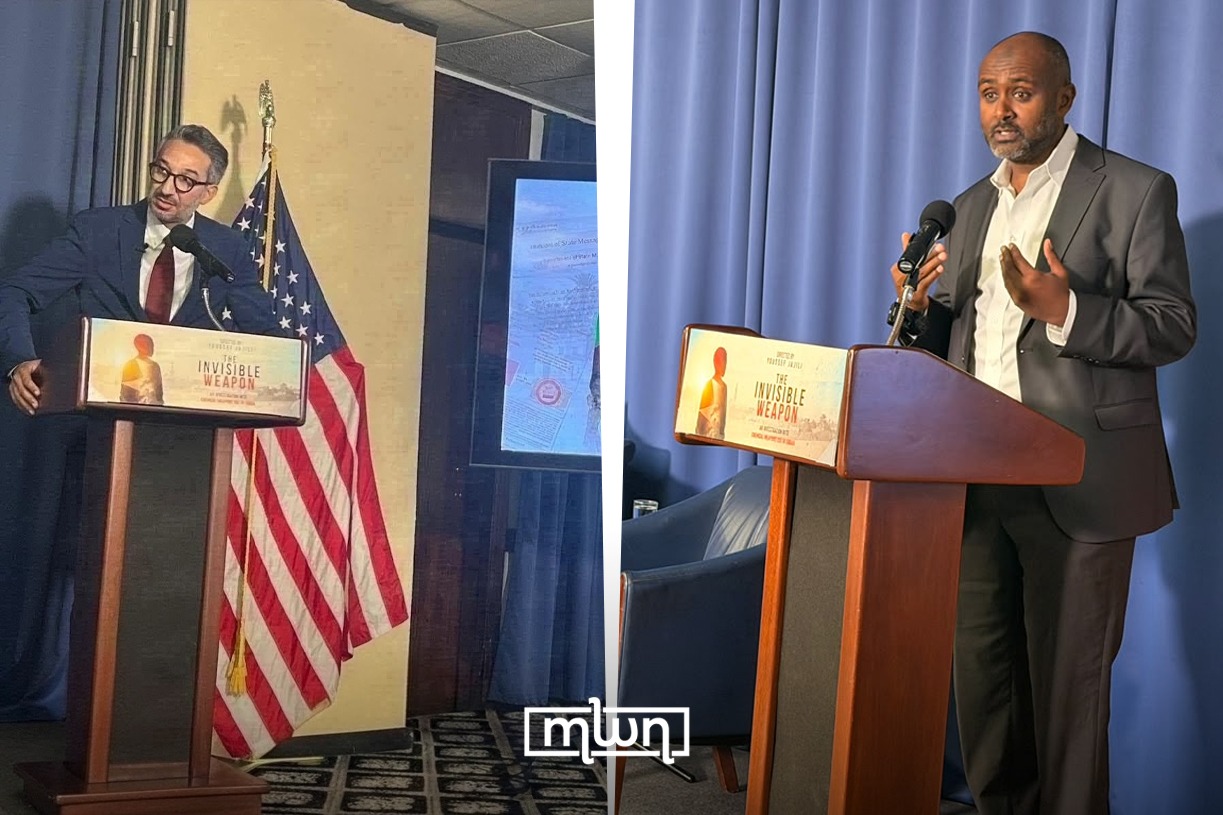
Casablanca – Moroccan journalist and documentary filmmaker Youssef Jajili presented his investigative film The Invisible Weapon at the National Press Club in Washington, D.C., on September 24. The 26-minute documentary examines allegations that chemical weapons were used during Sudan’s war between the Sudanese Armed Forces and the Rapid Support Forces.
The film draws on testimony from civilians affected by the conflict, medical accounts, open-source research, and information on chemical supply chains. It also looks at abuses attributed to the RSF, keeping the experiences of civilians at the center of the investigation.
US Senator Chris Van Hollen appears in the documentary, where he says the United States has determined that the Sudanese Armed Forces used chemical weapons. He calls for an independent investigation by the Organization for the Prohibition of Chemical Weapons to establish the facts and determine responsibility.
“Anyone responsible for using chemical weapons or committing any atrocities against civilians must be held accountable, regardless of which side they are on,” Van Hollen says in the film.
The documentary does not focus only on allegations involving the Sudanese Armed Forces. It also examines abuses attributed to the RSF and the wider impact of the conflict on civilians, including displacement.
The Washington screening was followed by a panel discussion involving Sudanese journalist Areej Elhag, Abdullahi Boru of Refugees International and Abby Schneiderhan of C4ADS. The discussion covered the impact of the war on civilians and displaced communities, as well as the methods used to examine allegations of chemical weapons use and chemical supply chains.
For Jajili, the screening marked his first documentary as both producer and director. He is an award-winning Moroccan journalist and documentary filmmaker based in the United States, where he founded and manages Off the Record LLC. He is also a member of the National Press Club.
Jajili’s documentary brings together witness accounts and other material concerning alleged chemical attacks, while leaving the question of responsibility to further investigation. His reporting focuses on people who describe exposure to toxic substances and on the evidence that could help establish what happened.
The National Press Club event brought those accounts before journalists, diplomats, policymakers, and others following the Sudan conflict. Jajili is now seeking to take The Invisible Weapon and the testimony featured in it to wider audiences.