
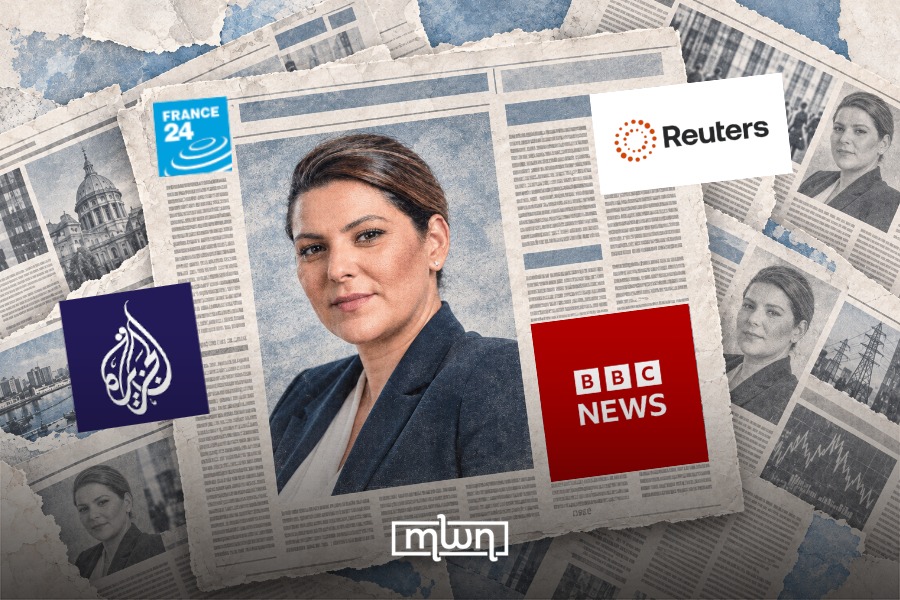
Rabat – The appointment of Fatima Ezzahra El Mansouri as Morocco’s new head of government has placed the country’s political transition under an international spotlight, with major media outlets focusing on the historic nature of her appointment and the responsibilities that come with it.
King Mohammed VI received Fatima Ezzahra El Mansouri yesterday at the Royal Palace, appointing her as head of government and entrusting her with the task of forming the next executive.
El Mansouri’s selection marks the first time a woman has headed Morocco’s government. Yet international coverage has also looked beyond the symbolism, with outlets examining her political record, her rise from Marrakech’s city hall to the government’s highest executive position, and the political arithmetic that will shape her next steps
The appointment comes after legislative elections that left the Party of Authenticity and Modernity (PAM) with 97 seats in the 395-member House of Representatives. El Mansouri must therefore build a parliamentary majority through negotiations with other parties before her government can take shape.
A historic appointment with a regional dimension
The historic character of El Mansouri’s appointment has dominated much of the initial international reaction.
The Associated Press describes her as Morocco’s first woman prime minister and places the appointment within the wider history of women’s political representation in the Arab world.
Al Jazeera’s report on the appointment highlights El Mansouri’s statement in which she described her selection as a “truly historic” moment. The outlet interprets her sentiment as underlining the significance of becoming Morocco’s first woman head of government, and an acknowledgement of the challenging political process that now awaits her.
The BBC also puts the appointment in the context of El Mansouri’s long political career, tracing her path through local government and national politics. Her election as mayor of Marrakech in 2009 marked an early milestone in that trajectory. She returned to the position in 2021 before taking on a ministerial role.
That background gives the appointment a distinctly political dimension beyond the gender breakthrough. El Mansouri arrives at the head of government office with experience at both the municipal and national levels.
From Marrakech to Morocco’s top political office
Several international outlets have used El Mansouri’s career in Marrakech to explain her rise.
Reuters identifies her as a lawyer, former housing minister, and former mayor of Marrakech. Her experience in the city, one of Morocco’s most prominent tourism and investment hubs, has formed a significant part of her public profile.
France 24 similarly presents El Mansouri’s political trajectory through her connection to Marrakech and her role within the PAM, whose performance in the legislative elections paved the way for the current government formation process.
Her move from local politics to the country’s top executive post also reflects the broader evolution of her political career. The new position now places her at the center of national questions that extend far beyond the municipal issues she previously managed.
Coalition talks will provide the first political test
While the symbolism of the appointment has attracted considerable attention, the immediate political challenge is practical: El Mansouri must assemble a governing coalition.
The PAM secured 97 of the 395 seats in the House of Representatives, leaving it short of the majority required to govern alone. El Mansouri will therefore have to negotiate with other political parties to build a parliamentary majority and form her government.
The coalition talks will help determine the composition of the next executive, including the distribution of ministerial portfolios and the government’s policy priorities.
The process marks the first major political step after the legislative elections and will shape the parliamentary base from which El Mansouri’s government will operate.
World Cup preparations add economic pressure
The international coverage also places the new government’s mandate within an ambitious economic context.
Bloomberg focuses more heavily on the economic challenges ahead, linking the political transition to Morocco’s large-scale investment plans and preparations for the 2030 FIFA World Cup, which Morocco will co-host with Spain and Portugal.
The World Cup forms part of a wider investment cycle that will require major public infrastructure and development projects. For Morocco’s next government, the challenge will extend beyond delivering these projects to addressing the economic concerns that affect households directly.
Bloomberg points in particular to employment, purchasing power, and the expectations of young Moroccans. These issues add a domestic dimension to an agenda that also includes major international-facing projects.
Reuters likewise places the new government’s mandate against the backdrop of World Cup-related investment, underscoring the scale of the economic program that awaits the incoming executive.
El Mansouri’s appointment comes as Morocco enters a new phase of political and economic development, while marking a new chapter in the country’s political landscape, where women have held senior government and public positions but have never before led the executive.