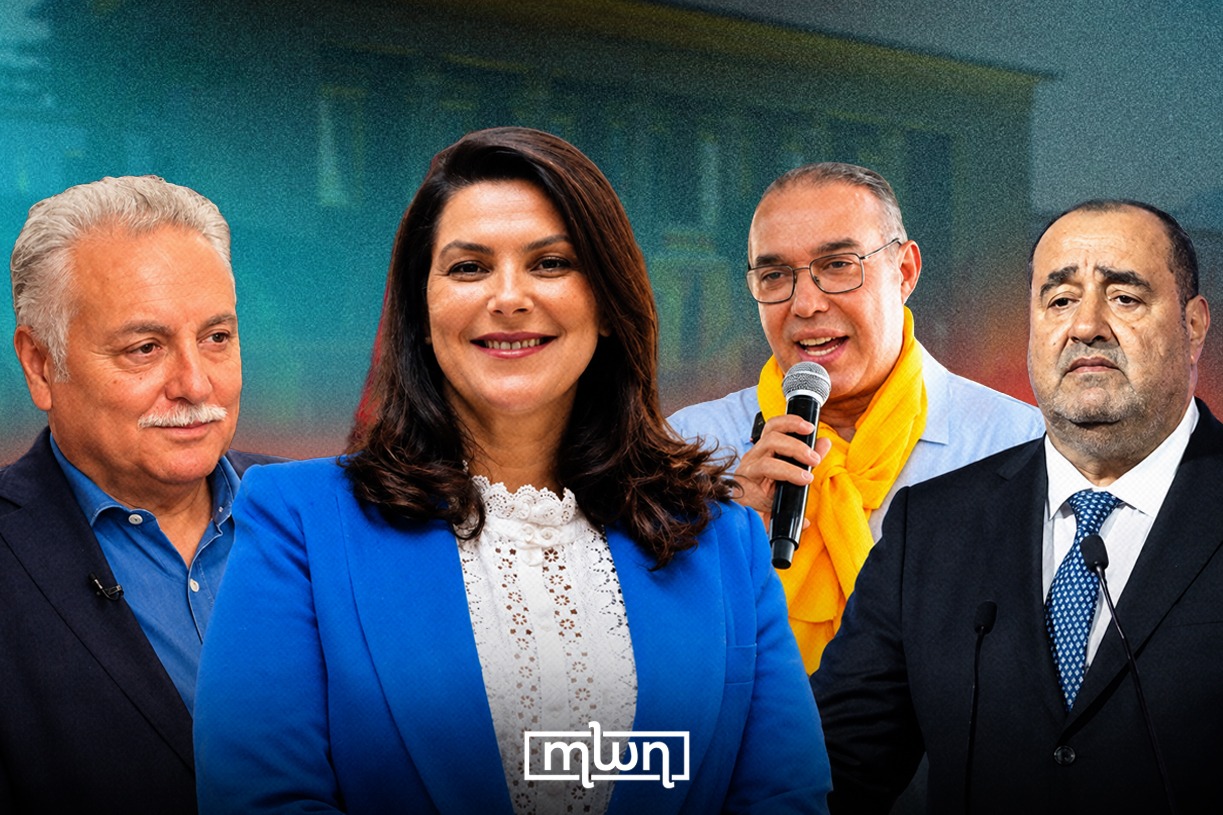
Marrakech – Morocco’s head of government-designate, Fatima Ezzahra El Mansouri, pressed ahead Wednesday with a first round of coalition talks in Rabat, receiving the Popular Movement, the Socialist Union of Popular Forces (USFP), and the Party of Progress and Socialism (PPS) as her Authenticity and Modernity Party (PAM) works to assemble a governing majority.
El Mansouri, the mayor of Marrakech and a former urban planning minister, became the first woman named to lead a Moroccan government when King Mohammed VI tapped her earlier this week.
PAM finished first in the September 23 elections with 97 of the 395 seats in the House of Representatives, well short of the 198 needed for an absolute majority. That gap leaves coalition-building as her opening task.
The day’s sessions followed earlier meetings with the National Rally of Independents (RNI) and the Istiqlal Party. RNI president Mohamed Chouki described exchanges marked by “clarity and frankness” and committed his party to the next stage in line with “the supreme interest of the homeland.”
Istiqlal’s Nizar Baraka said his party’s National Council will devote its session next Saturday to assessing the election results and weighing the possibility of joining the government, while pledging to keep backing “this political experience, whatever the position it occupies.”
Popular Movement (MP) secretary-general Mohamed Ouzzine then framed his party’s role as constant regardless of where it lands.
Positioning in the majority or the opposition is a matter of alternation, he told reporters, while defending the nation’s interests remains the fundamental constant. “What matters to us is the homeland,” he put it, adding that the party wants to “win for the homeland” from any position.
Ouzzine used the meeting to hear El Mansouri’s approach to current files, among them the situation of young people, integrated territorial development, and the kingdom’s geostrategic environment. He called for efficient alternatives for youth and a faster rollout of territorial development programs to avoid a “two-speed Morocco.”
The talks also touched on strategic dossiers, foremost the Autonomy Plan for Western Sahara under Moroccan sovereignty. He cast the moment as one requiring a “positive rupture” with the previous stage within what he termed a “new Morocco.”
Ouzzine read the appointment as respect for democratic methodology, the constitution, and the law, expressing hope it would widen women’s presence in decision-making posts. Former party leader Mohand Laenser and political bureau member Hicham Rahil joined him.
Where Ouzzine spoke openly about priorities, USFP first secretary Driss Lachgar kept the substance of his exchange under wraps, tying any disclosure to the end of El Mansouri’s rounds with the other parties. The consultations rest on “trust,” he told reporters, which requires holding back details until she finishes.
Lachgar welcomed the appointment as a “real qualitative leap” toward modernity and equality between women and men, recalling that the women’s question has long been central to his party. The meeting, he added, also revisited episodes from the USFP’s political path and its ties to other actors. Mustapha Ajab, president of the party’s national council, accompanied him.
If Lachgar withheld his hand, PPS secretary-general Nabil Benabdallah went further and left his party’s decision open, linking it not only to El Mansouri’s PAM membership but to “whom” PAM ends up allying with.
The party is holding an internal debate after the vote and has yet to settle its final stance, he told reporters, and will wait for the first round of contacts to close before the options become clear.
Benabdallah raised the election results and what he read as “anger” in the street, along with voter abstention that “questions the political society, the parties, and the political space.”
He pressed for a wider democratic space, stronger rights and freedoms, a “political opening” to rebuild confidence, and the moralization of public life, with citizens’ social conditions placed at the core of economic priorities. He also pointed to “points of convergence” between the PPS and PAM.
The consultations resume Thursday at PAM headquarters, with the Constitutional Union, followed by the Democratic and Social Movement (MDS), then the Justice and Development Party (PJD).
PAM’s 97 seats leave it 101 short of the 198 needed for a majority, so no single partner can carry it over the line. It must stitch together several parties at once. Behind PAM sit the RNI with 66 and Istiqlal with 65, the PJD with 54, the Popular Movement with 29, the USFP with 26, and the PPS with 19.
The PJD, which rebounded to 54 seats from 13 in the last election, has announced it will remain in opposition and ruled out joining a PAM-led government. PJD Secretary-General Abdelilah Benkirane nevertheless accepted an invitation to meet El Mansouri after receiving a phone call from her on Tuesday evening.