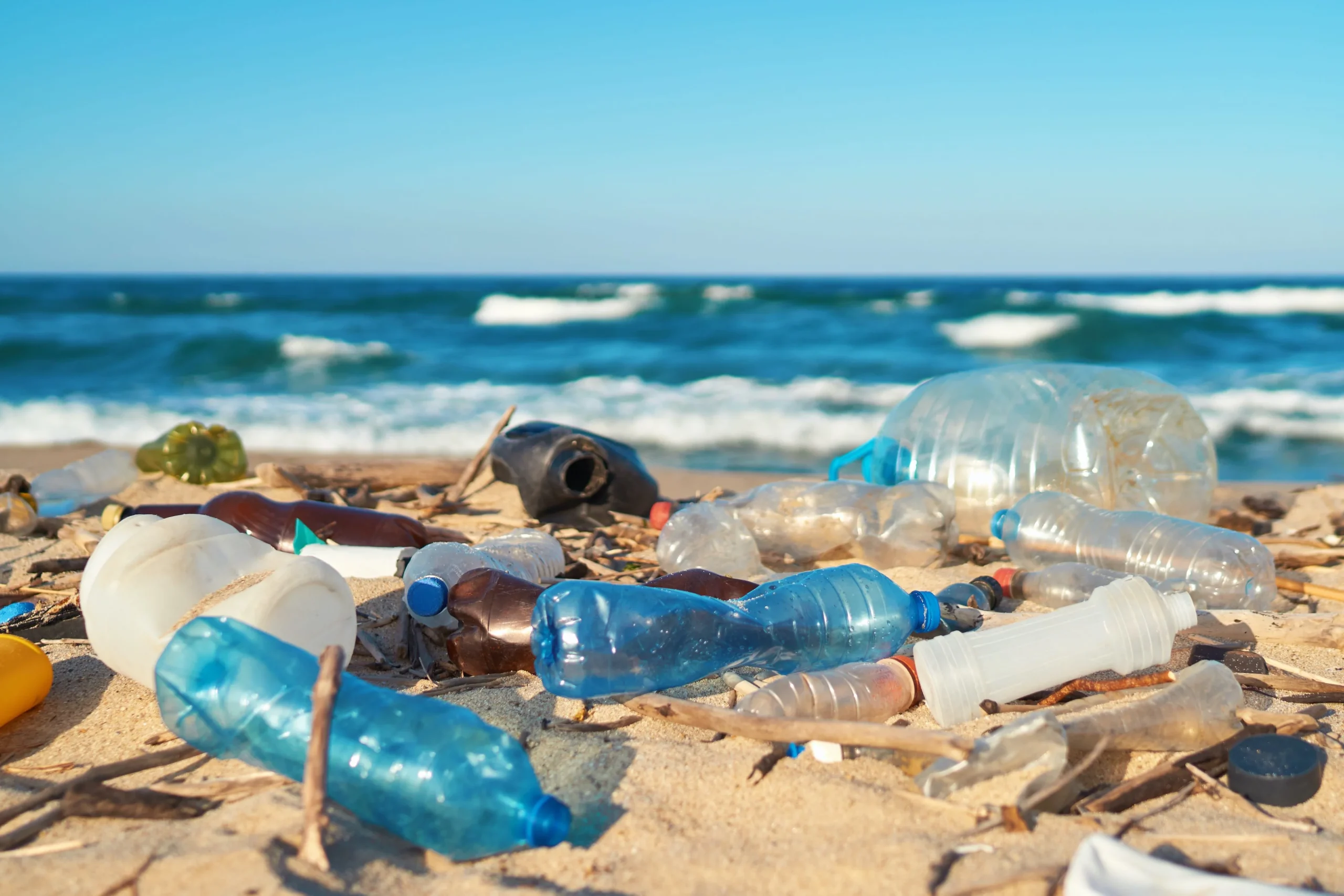
Marrakech – Plastic pollution is costing Morocco about MAD 12 billion ($1.2 billion) a year, equal to 0.8% of GDP, according to a Greenpeace Middle East and North Africa report released in September. The figure sits within a range of MAD 7.5 billion to MAD 25 billion ($0.75 billion to $2.5 billion), and it counts marine damage in the Mediterranean alone.
That limit matters for Morocco. Most of the country’s coast faces the Atlantic, with only Tétouan, Nador, and Tangier at the Strait on the Mediterranean.
Morocco has about 393 kilometers of Mediterranean coastline in the basin modelling, against 1,214 for Tunisia and 1,330 for Egypt. Because the estimate stops at the Mediterranean shore, the $1.2 billion figure is a floor, and the Atlantic bill is additional.
The report traces where that plastic comes from. Morocco generates 3.97 million tonnes of municipal solid waste a year, of which 422,000 tonnes is plastic. About 250,000 tonnes of that plastic is mismanaged, and 75,000 tonnes reaches the sea, 17.8% of everything the country generates. Across all waste, Morocco mismanages 59.4% of its municipal total.
Collection is a story of two Moroccos. Urban collection reached about 96% in 2019, while rural collection stood at about 10%. The rural gap is the clearest single opportunity in the Moroccan system, and closing it means extending a service that already works in the cities to communities beyond them.
The cost is already showing inside city budgets, though this is a separate measure from the marine damage and is not added to it. In a sample of urban municipalities, waste services absorbed 34% of recurrent budgets and 28% of total budgets, and arrears to waste contractors stood at about MAD 1.26 billion ($126 million) at the end of 2020.
Morocco’s industry and population sit where the damage lands. About 81% of Moroccan industry is on the coast, coastal areas contribute 59% of GDP and 52% of jobs, and 65% of the population lives within 100 kilometers of the sea.
On regulation, Morocco holds the longest record in the region. Law 22-10 of 2010 prohibited the manufacture, import, sale, and distribution of non-degradable plastic bags. Law 77-15 of 2015 extended this to a full ban, and Law 57-18 of 2020 added reporting requirements and clearer inspection roles.
Official reviews of the first two years identified 104 formal industrial units and 3,840 direct and indirect jobs in the bag subsector, supported through a MAD 200 million ($20 million) conversion fund.
The next constraint is capacity. Of 26 sorting centres planned nationally, 9 have been built, and 3 are operating. Only 15% of plastic waste goes uncollected, yet 73% of what is collected is not recycled. The bottleneck is sorting rather than collection, and 23 planned centres await commissioning.
Morocco’s plastics industry does not stand in the way of change. It imports 70% of its inputs and exports 9% of its output, so much of the value flows to foreign polymer suppliers, and reducing plastic use replaces imports rather than displacing an industry.
The report points instead to growth on the transition side: circularity in Morocco’s textile industry alone has been assessed at about MAD 19 billion ($1.9 billion) of investment potential and more than 30,000 jobs, driven by tightening European market requirements.
Left unaddressed, the bill compounds. The cumulative cost of delay for Morocco reaches MAD 134 billion to MAD 443 billion ($13.4 billion to $44.3 billion) by 2040, with a central estimate of about MAD 220 billion ($22 billion).
The report sets out concrete steps for Morocco: commission the 23 planned sorting centres, extend collection to the rural 90%, implement the three-phase formalization roadmap for informal workers, and support production reduction in the global plastics treaty.
Read also: Greenpeace Urges Morocco to Lift 20% Cap on Selling Surplus Solar Power