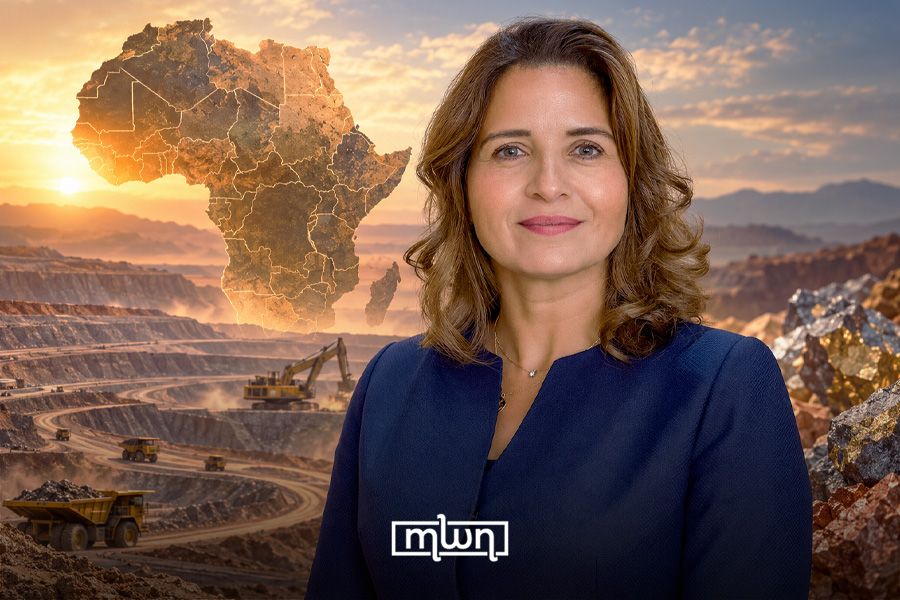
Casablanca – Morocco has chosen to develop an open and integrated industrial model rooted in Africa and connected to global value chains, Energy Transition and Sustainable Development Minister Leila Benali said today in Rabat.
Speaking at the opening of the third edition of the International Mining Congress Morocco 2026, Benali said the model aims to promote responsible mining, improve traceability, facilitate access to sustainable finance and support greater value creation across the continent.
Africa has exceptional geological potential, but the challenge now lies in strengthening its ability to capture more value from its resources, she said. Benali called for African countries to connect their complementary resources, processing capacities, energy, infrastructure, technology, skills and financing.
She said this cooperation could help build an integrated and sustainable industrial ecosystem linked to global markets. “The real question is whether Africa, collectively, can capture a larger and more strategic share of the value chains built around its resources,” Benali explained.
Mohammed Cherrat, president of the Federation of the Mineral Industry of Morocco (FDIM), said critical and strategic minerals now play a growing role in changes across the global economy as the energy transition and technological developments accelerate.
Cherrat said Africa holds considerable mineral wealth, but the challenge now involves determining how to better develop those resources, expand industrial capacities and create more value.
A broader industrial approach
The future of Africa’s mineral industry does not stop at extraction, Cherrat said. It also covers exploration, processing, refining, energy, infrastructure, technology, skills, financing, subcontracting and innovation.
He said cooperation between Morocco and its African partners can build on the complementary nature of their economies, investment, skills sharing and the construction of more integrated industrial chains.
CGEM President Mehdi Tazi said the theme of IMC Morocco 2026 comes as the global economy faces an energy transition and the rapid expansion of digital technologies, semiconductors and energy infrastructure. These changes are increasing demand for copper, cobalt, lithium, nickel and other critical minerals.
Tazi also pointed to a challenge across Africa. A large share of the continent’s minerals still leaves in raw or lightly processed form before companies refine the materials and integrate them into industrial products on other continents.
“The question that should mobilize us is the added value we can retain and develop in Africa,” he said.
Tazi said Morocco now has a real window of opportunity and stressed the importance of creating favorable conditions to attract more investment, develop local processing and place Morocco’s mining industry within more integrated and competitive African value chains.
IMC Morocco 2026 includes a ministerial roundtable titled “From Resources to Industrial Value Chains Building the African Ecosystem,” as well as a plenary session on which industrial models could help Africa develop competitive hubs for processing critical and strategic minerals.
Read also: AfDB Approves €100 Million Loan for Africa’s First LFP Battery Gigafactory in Morocco
Recent developments have also strengthened Morocco’s role in Africa’s industrial and mineral value chains.
In July, the African Development Bank approved a €100 million loan to Gotion Power Morocco for an integrated lithium iron phosphate battery gigafactory in the Rabat-Sale-Kenitra free trade zone, with the bank planning to mobilize an additional €141 million from financial partners.
The project is expected to establish Africa’s first integrated battery manufacturing plant, with an initial capacity of 10 gigawatt-hours and plans to reach 100 gigawatt-hours.
Earlier in June, AfDB consultations in Morocco on regional integration identified mining, green energy and value-chain development among key sectors and pointed to Morocco’s position as a hub linking North Africa, the Sahel, West Africa and Europe.