
 Join on WhatsApp
 Join on Telegram
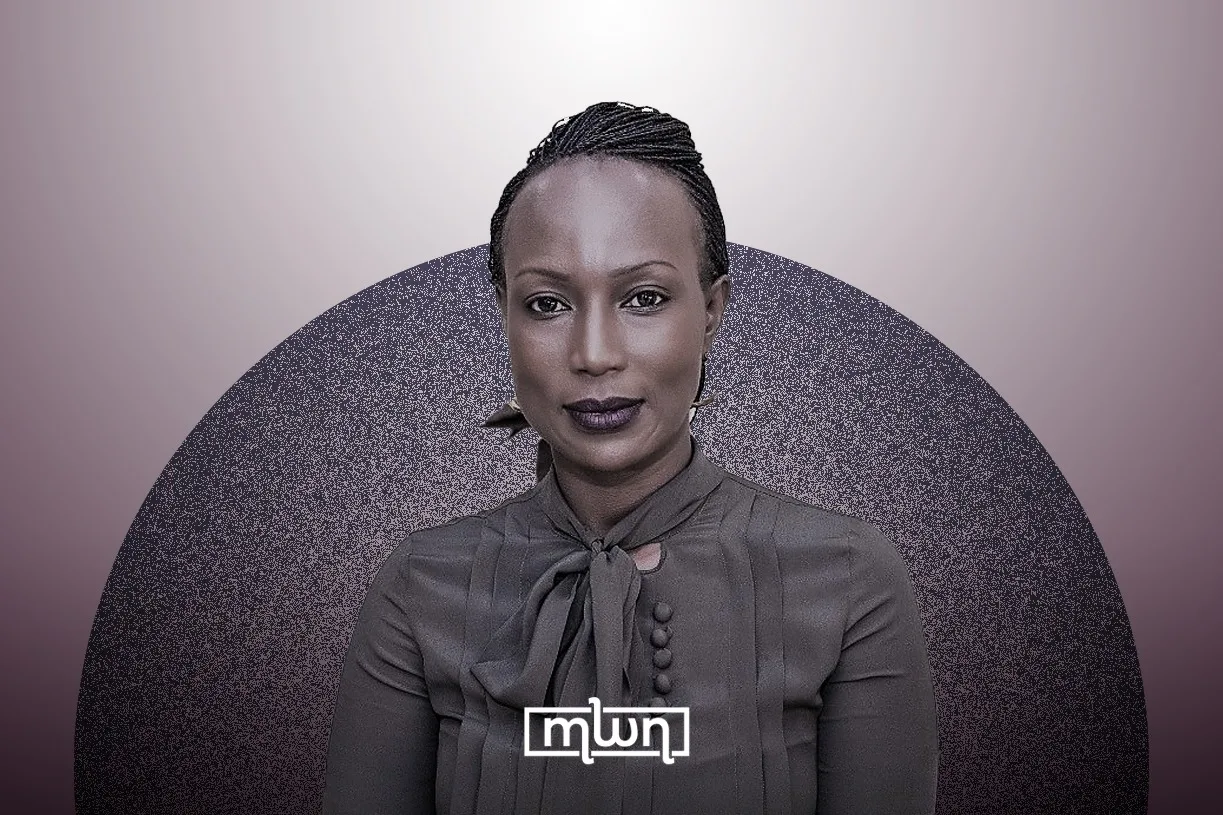
Casablanca – Morocco’s experience in building integrated infrastructure and industrial ecosystems offers valuable lessons for the rest of Africa as the continent seeks to strengthen economic resilience in an increasingly uncertain global environment, according to Dr. Rita Babihuga-Nsanze, Chief Economist and Director of Research and Strategy at Africa Finance Corporation.
Speaking to Morocco World News, Babihuga-Nsanze said Africa’s resilience today rests on three pillars: “Producing more of what we consume, processing more of what we extract, and financing more of our development from domestic capital.”
She argued that industrialization is no longer only a development objective but has become essential to reducing the continent’s exposure to global economic shocks.
“Industrialising domestic and regional value chains is therefore no longer simply a development ambition, it has become a balance-of-payments imperative and a source of long-term economic resilience,” she argued.
The continent still exports iron ore while importing finished steel and exports natural gas while importing fertilizers. At the same time, imports of steel-intensive manufactured goods from Asia increased sharply in 2025, widening Africa’s trade deficit with China to more than $60 billion, she said.
Babihuga-Nsanze also stressed that Africa already has substantial financial resources. “The question is no longer whether Africa has savings, but whether those savings can be mobilised into productive long-term investments rather than remaining concentrated in short-term government securities,” she explained.
Building stronger capital markets and investment vehicles, she added, is essential to reducing dependence on increasingly volatile external financing.
Babihuga-Nsanze described resilience as more than economic growth. Countries connected through regional power pools, transport corridors and integrated industrial value chains are better positioned to absorb external shocks than isolated economies. “Ultimately, resilience means greater economic agency, the ability to define priorities, finance them and execute them on African terms,” she added.
Building systems instead of isolated projects
Africa’s infrastructure challenge has changed, she argued. “Africa’s challenge is no longer simply an infrastructure deficit—it is a systems integration deficit,” she said, referring to AFC’s 2026 State of Africa’s Infrastructure Report.
Instead of focusing on individual assets, the priority is “to connect power, transport, industry and capital into functioning regional ecosystems that support production, trade and investment at scale.”
In the energy sector, she said the priority extends beyond building new generation capacity. Africa also needs stronger transmission networks, regional interconnectors, storage and integrated power markets to ensure electricity reaches industries, cities and neighboring countries.
Recent global energy disruptions have also exposed the continent’s dependence on imported refined fuels and fertilizers despite its oil and gas resources, making downstream industrial projects part of a broader resilience strategy, citing Nigeria’s Dangote Refinery as an example.
Transport infrastructure should follow the same approach, Babihuga-Nsanze said. Rather than operating as isolated export routes, railways, ports and logistics corridors should connect mines, industrial zones, agricultural markets and processing facilities while supporting trade under the African Continental Free Trade Area.
“AFC’s role is to bridge the gap between ambition and bankability,” Babihuga-Nsanze said, explaining that many transformative infrastructure projects fail because early-stage risks remain too high for commercial investors.
The corporation structures projects, commits its own capital and attracts additional financing once projects become bankable. Babihuga-Nsanze pointed to the Lobito Corridor linking Zambia and Angola as an example of a wider economic corridor rather than a simple railway project.
She also cited the Ghoubet Wind Farm in Djibouti, where AFC provided equity bridge financing that helped accelerate construction of the country’s first independent power producer and first utility-scale renewable energy project.
Beyond individual projects, she said AFC has invested in long-term platforms including Infinity Power and ARISE Integrated Industrial Platforms while producing research that helps governments and investors identify viable regional opportunities.
“Execution ultimately requires three things: bankable projects, patient capital and a shared understanding of where the opportunities lie,” she said.
Morocco’s model for regional growth
“Morocco has built what much of the continent is still working toward a deliberately planned national infrastructure ecosystem,” Babihuga-Nsanze said, describing the country as having developed its ports, railways, industrial zones and energy infrastructure as one connected ecosystem rather than separate projects.
Morocco also anchors one of Africa’s largest industrial trade flows through its phosphate industry. As the holder of roughly two-thirds of global phosphate reserves and the world’s second-largest producer, the country supplies phosphoric acid, fertilizers and blended products to markets across West, East and Southern Africa.
She described Jorf Lasfar as a reference model that combines mines, rail infrastructure, a deep-water port and downstream manufacturing in a single industrial platform.
She said Morocco is now expanding that model by developing lithium iron phosphate cathode production around Jorf Lasfar, building on its phosphate resources. She also noted that Morocco ranked first among African jurisdictions in the Fraser Institute’s 2024 mining investment attractiveness index, saying the result shows institutional quality plays a major role in attracting investment.
“Morocco also illustrates the dual positioning the Compendium highlights for North Africa. It hosts major European industrial players, most visibly in automotive, alongside a growing footprint of Asian battery-materials companies, making it a genuine bridge between East and West,” she said.
Read also: World Bank Expects Morocco’s Economy to Grow 4.3% in Medium Term
“Morocco has become one of Africa’s strongest examples of how infrastructure, industrial policy and natural resources can reinforce one another to create globally competitive industries,” Babihuga-Nsanze said, pointing to the country’s continued expansion of fertilizer production, including the Mzinda complex, as a way to strengthen Africa’s food resilience.
She also cited Morocco’s automotive industry, renewable energy investments and growing battery materials sector as examples of integrated industrial development. Projects such as the Nigeria-Morocco Gas Pipeline, she added, could deepen energy integration and support industrial growth across several countries.
Despite global uncertainty, Babihuga-Nsanze said she remains confident about Africa’s long-term prospects. She pointed to the continent’s growing population, rapid urbanization and rising demand for electricity, steel and fertilizers, arguing that the foundations for future growth are already in place.
“Africa has the world’s strongest demand story,” Babihuga-Nsanze said, pointing to rapid urbanization, rising industrial demand and population growth. “The growth story is no longer a projection, it is under construction.”
As for Morocco, she said the priorities should include moving further up the value chain from phosphate rock to fertilizers and battery materials, planning water and energy together as desalination becomes increasingly important, and investing in skills so young people can benefit from emerging industries.