
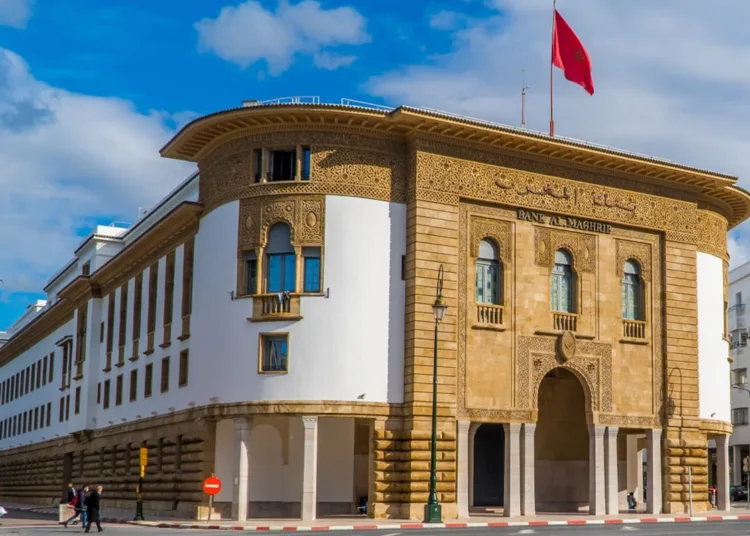
Rabat – Morocco is exploring whether the dirham could take a digital form, as Bank Al-Maghrib (BAM) weighs the potential benefits and risks of a central bank digital currency in an economy where cash remains firmly entrenched.
The central bank has not announced an imminent launch. Its research instead examines whether a digital dirham could offer a practical alternative to cash for everyday payments, improve access to financial services, and make certain transactions cheaper and faster.
The scale of Morocco’s reliance on physical money helps explain the interest in a digital alternative. According to a 2026 working paper published by BAM, cash in circulation rose from MAD 70 billion in 2001 to more than MAD 500 billion in 2025.
That growth points to a persistent challenge for the country’s efforts to modernize payments: digital services may expand, but cash continues to play a central role in household spending and commercial transactions.
A digital dirham, not a replacement for cash
A central bank digital currency (CBDC) would differ from cryptocurrencies such as Bitcoin. Rather than rely on a volatile market price, a digital dirham would represent official Moroccan currency in electronic form, under a model issued or backed by the central bank.
The idea is not to eliminate banknotes and coins, but to give people another way to pay. Depending on its design, the digital dirham could combine the convenience of electronic payments with some of the accessibility of cash, including the possibility of offline transactions.
International experience offers useful lessons. The Bahamas, Jamaica, and Nigeria have already introduced their own central bank digital currencies. Yet the existence of a digital currency does not automatically translate into widespread public use. Consumers must trust the system, merchants must accept it, and the payment process must offer a clear advantage over existing options.
For Morocco, the challenge will be to determine whether a digital dirham can meet needs that current banking and payment services do not fully address.
Can a digital dirham reach people outside the banking system?
Financial inclusion is one of the main arguments in favor of the project. The BAM paper puts the share of Morocco’s resident individuals with bank accounts at 62% in 2025. Women remain less likely than men to hold accounts, while people aged 15 to 24 account for around 10% of account holders.
A digital currency could help narrow these gaps if it offers affordable payments and allows people to carry out basic transactions without the same requirements as conventional banking services. Offline functionality could also benefit rural communities where internet access remains unreliable or bank branches are difficult to reach.
However, access to a digital currency would not automatically solve financial exclusion. Its impact would depend on how people obtain and use it, whether they need a bank account or smartphone, and how easily they can convert digital funds into cash when necessary.
The issue extends beyond households to Morocco’s informal economy. The working paper estimates that the sector represents nearly 30% of gross domestic product (GDP).
Data from the High Commission for Planning (HCP) show that Morocco had more than two million informal production units in 2023. Only 2% of their managers had a bank account dedicated to their business, according to the figures cited in the paper.
A digital payment method could give some of these businesses a simpler way to accept electronic payments and establish financial records. Yet technology alone cannot bring informal businesses into the formal economy. Administrative barriers, access to credit, and the costs associated with formal registration would still need attention.
Remittances offer another potential benefit
Cross-border transfers could provide another reason for Morocco to explore digital currency. Remittances from Moroccans abroad have represented the equivalent of around 8% of GDP on average in recent years, according to the paper.
If Morocco’s digital currency could connect with similar systems abroad, it might eventually help reduce the time and cost required to send money across borders. Such a system could limit the number of intermediaries involved in some transactions and allow faster settlement.
The paper cites Project mBridge, an initiative under the Bank for International Settlements that involves several central banks, including those of China, Thailand, and the United Arab Emirates. Results cited in the document show that the pilot reduced costs for certain transactions by up to 50%, with some settlements completed within seconds.
Those results illustrate the potential of digital currencies, but they do not guarantee similar savings for Moroccan remittances. Any such benefits would depend on agreements with other countries, compatible payment systems, and the legal framework for international transfers.
Infrastructure and trust remain major hurdles
A digital dirham would also require infrastructure that works reliably across the country. Gaps in internet access, the cost of suitable devices, and differences in digital literacy could prevent some people from using the service, particularly in rural areas.
Security would pose another challenge. The system would need strong safeguards against fraud and cyberattacks, alongside clear rules on personal data and payment privacy. Bank Al-Maghrib would also need to determine how the digital currency would interact with commercial banks and existing payment providers.
These choices would shape the currency’s practical value. If the system proves difficult to access or offers few advantages over cash and mobile payments, public uptake could remain limited. If it becomes widely available and easy to use, it could offer another route into the formal financial system.
A long-term decision for Bank Al-Maghrib
For now, the digital dirham remains a subject of research rather than a confirmed monetary reform. Bank Al-Maghrib must assess whether the potential gains justify the technological, financial, and regulatory demands of a new form of money.
The question is particularly relevant in Morocco, where cash remains widespread despite the expansion of digital services. A digital dirham could help modernize payments, improve access to financial services, and support faster cross-border transfers, but none of these outcomes is guaranteed.
Much will depend on the model Morocco chooses, the safeguards it puts in place, and whether the currency addresses problems that citizens and businesses actually face. The objective is not simply to digitize the dirham, but to determine whether a new form of official money would make payments more accessible, secure, and efficient.