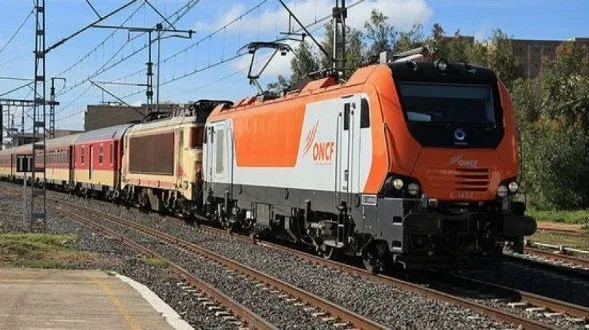
Mohamed Rabie Khlie, director general of the National Railway Office (ONCF), outlined Morocco’s major transformation in the railway sector on Wednesday at the Forum on Financing Railway Projects in Africa in Rabat.
Khlie, who is also president of the International Union of Railways (UIC) Africa Region, cited Morocco’s reforms in the sector, particularly Al Boraq, Africa’s first high-speed train.
He also recalled the modernization of the conventional railway network, stating that the developments had helped the network serve more than 55 million passengers annually. He also cited a “historic investment program” exceeding €10 billion by 2030.
Transport Minister Abdessamad Kayouh outlined an investment program worth $13.53 billion to develop and modernize Morocco’s railway network by 2030.
He made his remarks at the same forum in Rabat, presenting a program that includes extending the high-speed railway line from Kenitra to Marrakech.
Asmae Boureddaya, regional coordinator of the African Union Development Agency–NEPAD (AUDA-NEPAD), also highlighted Morocco’s railway modernization.
Boureddaya noted that Morocco has the continent’s only high-speed train, stating that Rabat is among the countries making the most progress in implementing Agenda 2063.
She said Morocco’s experience offers important lessons on mobilizing resources around a clear national vision, citing the ONCF’s 2022 green bond issuance, which brought together Moroccan investors, the European Bank for Reconstruction and Development (EBRD), CDG Capital, and Tamwilcom.
Boureddaya said the initiative helped align financing with the long lifespan of railway assets, adding that AUDA-NEPAD hopes to share this experience as part of South-South cooperation.
In his speech, Khlie emphasized the importance of developing Africa’s railway sector, noting that population growth, a young population, rapid urbanization, and the potential of natural resources reinforce the need to transform the continent’s transport systems.
He, however, acknowledged that financing remains a major challenge for railway development in Africa.
Several reports have highlighted underfunding as a primary challenge facing Africa’s rail transport sector.
One report indicates that Africa would need to invest an average of between $65 billion and $105 billion annually to address its railway infrastructure needs.
Citing a report from the Africa Finance Corporation, Railway Pro identified underfunding as one of the main challenges facing the sector.
“A problem that is exacerbated by other situations, such as lack of maintenance, under-utilization of rail transport and technological disparities. Due to lack of funding, plans to expand rail networks under the African Union’s Program for Infrastructure Development in Africa (PIDA) have made limited progress,” the report says.