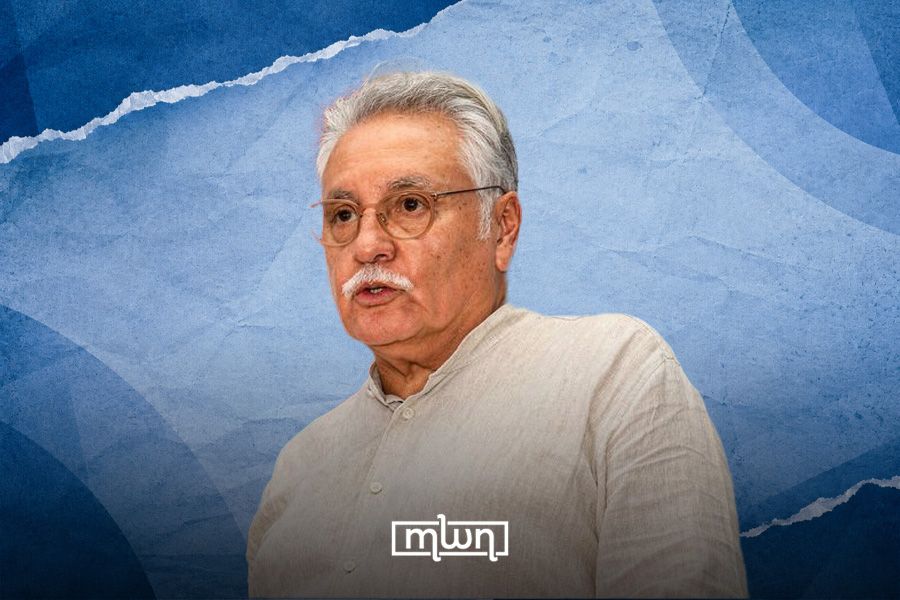
Rabat – King Mohammed VI appointed Nabil Benabdallah as Morocco’s Minister of National Education, Preschool Education, Vocational Training and Qualification on Friday, marking the return of one of the country’s longstanding political figures to the government.
The appointment places the 67-year-old secretary-general of the Party of Progress and Socialism (PPS) in charge of a ministry that oversees several key areas of Morocco’s education system.
Benabdallah joins the new government headed by Fatima Ezzahra El Mansouri, following the September 23 legislative elections and the formation of a coalition that includes his party.
Early years and rise within the PPS
Born in Rabat on June 3, 1959, Mohamed Nabil Benabdallah attended Saint-Exupéry School and Lycée Descartes before pursuing higher education in France.
He graduated from the National Institute for Oriental Languages and Civilizations (NALCO) in Paris in 1985, where he specialized in international relations.
Before entering government, Benabdallah worked as a sworn translator accredited by Moroccan courts, a profession he began practicing in 1987.
His involvement in politics dates back to his university years in France, where he became active in the PPS and the National Union of Moroccan Students.
He subsequently held several positions within the party’s youth organizations and became president of the Socialist Youth movement between 1994 and 1998.
Benabdallah also has a background in journalism. Between 1997 and 2000, he directed Al Bayane and Bayane Al Yaoum, two newspapers affiliated with the PPS.
Two decades of political and government experience
Benabdallah’s first ministerial appointment came in November 2002, when King Mohammed VI named him minister of Communication and Government Spokesperson under Head of Government Driss Jettou.
He held the position until October 2007, before taking on a diplomatic role as Morocco’s ambassador to Italy between November 2008 and July 2009.
In May 2010, Benabdallah was elected secretary-general of the PPS, succeeding Moulay Ismail Alaoui. He has remained at the head of the party ever since, securing re-election at successive party congresses, most recently in November 2022.
His next government appointment followed in January 2012, when he became Minister of Housing, Urban Planning and City Policy under Abdelilah Benkirane.
He continued to oversee the housing portfolio through subsequent government changes, including the formation of Saadeddine El Othmani’s government in April 2017.
His ministerial tenure ended in October 2017, when he was dismissed following a review of delays in the Al Hoceima development programme.
Benabdallah continued to lead the PPS in the years that followed. The party withdrew from government in 2019 and spent the subsequent period in opposition before joining the newly formed coalition in October 2026.
His latest appointment marks his first ministerial responsibility directly overseeing national education.
A new portfolio, new education priorities
Benabdallah takes charge of a restructured ministry that brings together national education, preschool education, vocational training and qualification.
He will work alongside two newly appointed ministers delegate: Kamal Hachoumi, responsible for preschool education and combating school dropout, and Madiha Khayr, responsible for vocational training and qualification.
Education featured prominently in the PPS’s programme for the September legislative elections.
Among its proposals, the party called for recruiting 18,000 teachers annually, constructing 30,000 additional classrooms and reducing the school dropout rate by half by 2031.
The PPS also advocated expanding Amazigh-language education and introducing additional incentives for teachers working in remote areas.
These proposals remain part of the party’s electoral platform, and their inclusion in the new government’s education policies has yet to be determined.
Benabdallah now assumes responsibility for a sector where improving learning outcomes, reducing school dropout and addressing inequalities in access to education remain major national priorities.
His appointment also marks the return of an experienced government official to the cabinet, this time with responsibility for a portfolio that has featured prominently in Morocco’s public policy debates.