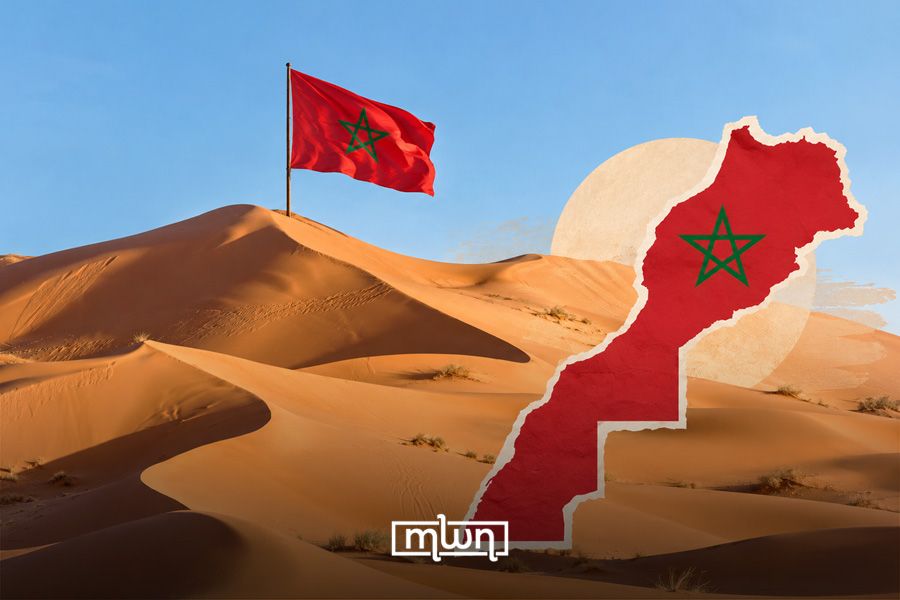
Lagouira, known in Spanish as La Güera or La Agüera, holds a distinctive place in Morocco’s territorial imagination. It sits at the tip of the Ras Nouadhibou Peninsula on the Atlantic coast, immediately beside the Mauritanian city of Nouadhibou and close to the border zone linking Morocco with West Africa. Its significance far exceeds its present size: the locality stands at the intersection of colonial history, national claims, the strategic balance between Rabat and Nouakchott, and the unresolved status of Western Sahara. The assertion that “Morocco stretches from Tangier to Lagouira” expresses a powerful conception of national unity, but it must also be examined as a historical, political, and diplomatic phenomenon.
Recent media reports have circulated claims that Mauritania might seek to obtain Lagouira in exchange for shifting its position on the Polisario Front. These claims show how sensitive the issue remains. Three levels of analysis must nonetheless be kept apart: established diplomatic facts, commentators’ interpretations, and hypotheses about territorial bargaining. In the absence of any verifiable official proposal, presenting such an exchange as fact would be methodologically wrong. The more useful task is to examine the interests that feed the speculation, the historical precedents that shape Moroccan and Mauritanian perceptions, and the constraints imposed by international law.
The argument here is twofold. First, Morocco’s attachment to Lagouira belongs to a historical conception of national unity shaped by the memory of Moroccan presence in the Sahara and the experience of colonial fragmentation. Second, a durable national position requires separating political conviction from legal demonstration: neither patriotic slogans nor presumed geopolitical calculations can substitute for an examination of historical titles, international instruments, and diplomatic realities. The Lagouira question thus exposes a central dilemma of the contemporary Maghreb: how to reconcile territorial memory, asserted sovereignty, regional cooperation, and the peaceful settlement of disputes.
Lagouira in Morocco’s historical geography: territorial memory and colonial legacy
To understand Lagouira’s place in Moroccan national consciousness, the locality must be set within the long history of relations between the Sharifian state, Saharan tribes, and trans-Saharan networks. Before modern borders were drawn, Western Sahara and the regions that now form Mauritania were a space of commercial, religious, tribal, and political ties that did not fit neatly into the territorial categories of the modern state. Caravan routes, networks of Muslim scholars, Sufi affiliations, bonds of allegiance, and exchanges between northern and southern populations reflected a human geography far more fluid than the one European colonialism later imposed.
Precolonial Morocco was a Sharifian state whose authority rested on shifting combinations of dynastic power, tribal allegiance, religious authority, and commercial relations. C. R. Pennell’s Morocco since 1830: A History (2000) shows how the political boundaries of the western Maghreb emerged through the interaction of local state structures and European intervention. Even so, it would overstate the historical record to infer from religious networks or ties of allegiance that all of present-day Mauritania belonged uniformly and continuously to Morocco. Mauritania did not yet exist as an independent state, but the absence of a modern state does not automatically place a region under another state’s sovereignty. This distinction is essential if historical memory is not to harden into an oversimplified territorial argument.
The “Scramble for Africa” refers primarily to the rapid partition of the continent in the 1880s and 1890s, especially after the Berlin Conference of 1884–1885. The year 1860 is an important reference point in Moroccan history, notably because of the Hispano-Moroccan War and the Treaty of Wad-Ras, but it does not by itself mark the start of Africa’s colonial partition. The trajectories of Mauritania and Western Sahara must be read through successive episodes of European penetration, diplomatic conventions, and boundary-drawing that progressively reshaped Saharan political space.
Spanish colonisation of Western Sahara and French expansion into what became Mauritania separated populations whose relations predated these borders. In its 1975 advisory opinion on Western Sahara, the International Court of Justice found that the territory was not terra nullius at the time of colonisation and that legal ties of allegiance existed between the Sultan of Morocco and certain of its tribes. It also recognised legal ties between Western Sahara and the Mauritanian entity. However, it concluded that the evidence did not establish ties of territorial sovereignty with either Morocco or the Mauritanian entity that would displace the principle of self-determination.
The advisory opinion does not settle every contemporary political debate over Western Sahara, but it remains an indispensable legal reference. It requires a distinction between the depth of historical relations and proof of territorial title under international law. For Morocco, Lagouira symbolises the geographical and historical continuity of a national space whose boundaries were profoundly disrupted by colonialism. Rigorous analysis, however, must treat separately the locality’s history, its legal status, the arrangements produced by decolonisation, and the situation on the ground today.
Lagouira, the Ras Nouadhibou Peninsula, and the logic of colonial borders
Lagouira’s geography largely explains the political sensitivity around its status. Located at the western extremity of the Ras Nouadhibou Peninsula, facing Nouadhibou, it lies where physical geography, port infrastructure, and political borders are tightly intertwined. Because Nouadhibou is one of Mauritania’s principal economic and maritime centres, the peninsula carries a strategic weight well beyond Lagouira’s own size and population.
The locality was under Spanish colonial rule as part of Spanish Sahara, and the upheavals of 1975–1979 transformed its surroundings. The Madrid Accords of 14 November 1975 organised Spain’s withdrawal and set up a temporary administration involving Morocco and Mauritania. They did not, however, amount to a transfer of sovereignty recognised by the United Nations as a final settlement of the Western Sahara question. The Declaration of Principles on Western Sahara is registered in the United Nations Treaty Series (Vol. 988).
In August 1979, Mauritania signed a peace agreement with the Polisario Front and renounced its territorial claims over Western Sahara. This was a turning point: Nouakchott withdrew from a conflict that had strained its economy and political stability. Morocco then consolidated its presence in the part of the territory it administers, while the question of Western Sahara’s final status remained on the UN agenda.
Mauritania’s renunciation of its claims must nevertheless be distinguished from the specific question of Lagouira and the situation on the peninsula. As Morocco World News has recalled, the understanding that left Lagouira under Mauritanian military watch was a narrow one, designed to protect Nouadhibou pending a resolution of the Sahara dispute, rather than a proprietary claim. Nouadhibou’s proximity, security requirements, and the operational needs of the Mauritanian port may explain Nouakchott’s interest in preserving the status quo. Strategic interest, however, is not a title to sovereignty, and a physical or security presence does not by itself establish sovereignty under international law.
Lagouira’s history thus reveals one of the most persistent paradoxes of African decolonisation: the borders that made today’s states possible also turned spaces of interaction into zones of separation. On Ras Nouadhibou, the division of the peninsula has produced a configuration in which Mauritania’s security interests, Morocco’s claims, and the wider Western Sahara question are closely bound together. A lasting solution cannot rest on a purely symbolic reading of geography; it must account for historical realities, international commitments, and the legitimate security needs of neighbouring states.
The rumour of a bargain: separating information, interpretation, and hypothesis
The current controversy took a new turn with articles published in October 2026. On 8 October, former Algerian diplomat Amar Belani interpreted Mauritania’s request for a commission to clarify the definitive international borders of Western Sahara as a possible sign of Nouakchott’s concern about the territorial consequences of a future settlement. On 20 October, in a further article for the Algerian outlet TSA, he explicitly floated the hypothesis of a bargain over Lagouira, raising the possibility of a long-term concession to support Nouadhibou’s development in exchange for a shift in Mauritania’s position on Moroccan sovereignty over Western Sahara.
These articles help explain how the media controversy emerged, but they are not evidence of official negotiations between Rabat and Nouakchott. Their nature matters: they offer interpretations and geopolitical scenarios, not the text of a signed agreement, a government statement confirming a territorial offer, or a bilateral declaration of an exchange. The distinction is more than formal. In international relations, a hypothesis repeated across several outlets can take on the appearance of confirmed information, even when every article traces back to the same initial speculation.
Three scenarios can be distinguished. The first is an explicit exchange: a territorial concession, or recognition of Mauritanian rights over Lagouira, in return for a diplomatic realignment on Western Sahara. The second is a functional arrangement limited to port access, infrastructure, or security, with no transfer of sovereignty. The third is a broader negotiation on border management, cross-border trade, and regional cooperation, in which Lagouira is one element among several. These scenarios differ sharply in their legal implications and political consequences.
For now, the territorial-bargain scenario must be treated as an unconfirmed hypothesis. Political actors may well weigh strategic arrangements, but no serious conclusion can be drawn without documentary evidence. The claim that Mauritania wants Lagouira in exchange for dropping its support for the Polisario should therefore be presented as media speculation, not as an official decision of the Mauritanian state.
Such caution does not blunt a critical analysis of regional interests. On the contrary, it allows facts to be separated from conjecture and prevents a rumour from becoming a driver of diplomatic escalation. A territorial question this sensitive demands verifiable sources, precise legal language, and close attention to the interests of the populations concerned.
Mauritania and Morocco: divergent interests, strategic interdependence
Relations between Rabat and Nouakchott cannot be reduced to a territorial confrontation. The two countries share economic, security, and diplomatic interests that make border stability especially important. Mauritania is an essential partner in Morocco’s trade with West Africa, while Morocco offers Mauritania a commercial outlet, a potential source of investment, and a major diplomatic partner in the Maghreb. This interdependence creates incentives to cooperate even while disagreements over Western Sahara persist.
The Guerguerat road corridor illustrates this. It links the territory administered by Morocco to Mauritania and, beyond it, to West African markets. Its importance goes beyond the movement of goods: it is a channel for Morocco’s economic and diplomatic engagement, since its African strategy rests partly on trade, investment, and infrastructure. In September 2026, the two countries signed an agreement in Rabat to rehabilitate and widen the roughly 480-kilometre road linking Nouakchott and Nouadhibou to the border at Kilometre Point 55, opposite Guerguerat. Disruptions along this route carry substantial economic costs and can strain commercial relations. Secure land communications and the free flow of trade are therefore shared interests that favour pragmatic arrangements.
Mauritania must nonetheless protect its own strategic priorities. Nouadhibou is a major port and economic hub whose development depends on maritime activity, fisheries, logistics, and regional connectivity. It is reasonable to assume that Nouakchott watches closely any development that could affect the security or economic prospects of the Ras Nouadhibou Peninsula. That concern, however, does not prove that the Mauritanian government officially claims Lagouira or seeks to negotiate its sovereignty.
Any geopolitical reading must also account for the triangle formed by Morocco, Algeria, and Mauritania. Nouakchott has long sought to preserve a degree of diplomatic autonomy in a polarised regional environment. A policy of balance lets it defend its interests without being drawn into the Moroccan-Algerian rivalry. A radical change in its position on Western Sahara would have diplomatic and security consequences reaching far beyond Lagouira.
Two forms of negotiation should therefore be distinguished. The first would be an explicit territorial transaction: politically explosive and legally complex. The second would concern functional cooperation: the movement of goods, border security, access to infrastructure, the management of maritime resources, and investment. The second path offers far more room for compromise, because it lets both countries address practical concerns without presupposing any transfer of sovereignty.
For Morocco, the best strategy is not to turn a rumour into a bilateral crisis but to defend its interests through preventive diplomacy, rigorous historical documentation, and consultation mechanisms. For Mauritania, transparent cooperation with Rabat could safeguard its economic and security interests without unsettling the regional balance. Both would gain from treating the relationship as a space for negotiation between neighbours rather than a zero-sum game.
International law: why territory cannot be a bargaining chip
Territorial sovereignty is one of the foundations of the international order. It cannot be inferred from a locality’s strategic importance, its proximity to a port, or the existence of historical ties alone. It rests on legal and historical elements whose weight must be assessed against applicable instruments, state practice, and the relevant rules of international law.
The United Nations Charter enshrines, among other principles, the sovereign equality of states and the peaceful settlement of disputes. Article 2(4) prohibits the threat or use of force against the territorial integrity or political independence of any state. It would go too far, however, to conclude that every negotiated territorial change is forbidden. Territorial arrangements can be concluded in accordance with international law and with respect for the rights of the populations concerned. The decisive questions are the legal basis, the validity of consent, and the agreement’s compatibility with relevant international obligations.
In Lagouira’s case, the difficulty stems partly from its link to the broader Western Sahara issue. The ICJ’s 1975 opinion remains central precisely because it distinguished pre-colonial historical and legal ties from the question of territorial sovereignty and the principle of self-determination. The Court did not find that the ties invoked by Morocco or the Mauritanian entity amounted to titles of territorial sovereignty over Western Sahara. That conclusion should be stated precisely, without stretching it beyond its actual scope.
Lagouira’s status therefore cannot be settled simply by invoking the slogan “from Tangier to Lagouira.” The slogan expresses national attachment and a vision of territorial unity; it is not, in itself, a legal title. Likewise, a hypothetical Mauritanian offer would have no legal effect merely because it circulated in the press. The precise terms of any proposal, the parties entitled to conclude it, the legal status of the territory concerned, and the applicable international obligations would all have to be established.
A further issue is the distinction between sovereignty and rights of use. A port concession, a long-term lease, a security agreement, or an economic right of access is not a territorial transfer. An arrangement allowing Mauritania to use certain facilities at Lagouira, if lawful and validly concluded, would not make Mauritania sovereign over the locality. Conversely, a transfer of sovereignty could not be disguised in the vocabulary of a commercial agreement if its real effects were territorial.
Moroccan diplomacy should therefore avoid two pitfalls: letting territorial rights be debated on the basis of rumour, and treating every form of practical cooperation as a concession of sovereignty. A sound legal position requires a precise definition of what is being negotiated, verification of the applicable instruments, and a clear line between strategic interests and legal titles.
‘From Tangier to Lagouira’: the national slogan and its political uses
The phrase “Morocco stretches from Tangier to Lagouira” carries considerable symbolic weight. It joins the northern and southern extremities of the national territory in an image of unity, historical continuity, and sovereignty. In Morocco’s political imagination, it expresses the aspiration to overcome divisions inherited from the colonial period and to anchor the southern regions firmly in the national project.
Territorial slogans play an important role in building political communities. Benedict Anderson, in Imagined Communities (rev. ed., 2006), argues that the nation is an imagined community held together in part by historical narratives, shared symbols, and collective representations. This helps explain why Lagouira looms so large in national discourse even though it is today largely uninhabited, and only now the subject of Emirati-backed plans for a tourism village. A territory’s political significance depends not only on its area or population but on its memorial value and what it represents for collective identity.
The slogan also carries risks. When an expression of national cohesion is read abroad as an expansive territorial claim, it can unsettle neighbours and complicate diplomacy. Belani’s 8 October article illustrates this reading: he presents “from Tangier to Lagouira” as a possible source of anxiety in Nouakchott about the consequences of a future settlement. That interpretation belongs to its author and should not be equated with Mauritania’s official position.
Effective diplomacy distinguishes language meant to strengthen domestic cohesion from language that eases external negotiations. Morocco can defend its territorial integrity and historical memory while clarifying its intentions toward Mauritania. It can assert its strategic interests without treating every Mauritanian concern as a hostile manoeuvre.
The challenge, then, is not to abandon national symbolism but to fold it into a foreign policy that prioritises stability, legal credibility, and cooperation. Patriotism is strongest when it rests on verifiable facts and a coherent diplomatic strategy, not on amplified rumours.
Lagouira and the future of the Maghreb: from rivalry to cooperation
Finally, the Lagouira question must be placed within the broader crisis of Maghrebi integration. The closed border between Morocco and Algeria, the lack of structured regional cooperation, and the persistence of the Western Sahara conflict all limit the region’s collective development. The UN Secretary-General’s latest report on Western Sahara (S/2025/612) again stresses the need for a lasting, mutually acceptable political solution and for neighbouring states’ engagement in the diplomatic process.
In this context, a new dispute over Lagouira could sharpen tensions and divert governments from shared priorities: economic development, border security, the fight against trafficking, climate resilience, and infrastructure. Cooperation between Morocco and Mauritania could instead become a model of regional pragmatism, provided it respects international obligations and does not turn populations and territories into bargaining chips.
Such an approach rests on several principles. First, any report of a territorial negotiation must be verified through official sources before political conclusions are drawn. Second, questions of sovereignty must be kept separate from technical agreements on ports, roads, and security. Third, both countries need diplomatic mechanisms that can address border concerns without resorting to media escalation. Finally, negotiations on Western Sahara must take account of the UN framework and the rights of the populations concerned.
For Morocco, this approach would reconcile the defence of national interests with a broader African ambition. For Mauritania, it would protect its economic interests around Nouadhibou while preserving an autonomous foreign policy. For the region as a whole, it would reduce the temptation to use borders as instruments of political pressure.
Lagouira’s strategic value therefore lies not only in its location but in what it reveals about the regional system: states that need to cooperate yet remain constrained by historical disputes, competing conceptions of sovereignty, and a deficit of trust. Good-neighbourly relations do not require disagreements to vanish; they require that disagreements be managed through stable rules and transparent procedures.
Defending Lagouira through memory, law, and diplomacy
Lagouira is far more than a locality at the end of the Ras Nouadhibou Peninsula. It is a symbol of territorial unity in Morocco’s national imagination, a sensitive point in the geopolitics of Western Sahara, and a place where Moroccan and Mauritanian strategic interests meet. Morocco’s attachment to it must be understood in its historical and political context, without confusing the strength of national sentiment with legal proof of sovereignty.
The October 2026 speculation about a bargain involving Lagouira and a change in Mauritania’s stance toward the Polisario Front deserves analytical attention, but it does not show that any agreement exists or that such a transaction has been officially proposed. The hypotheses of a long-term concession, a port arrangement, or a diplomatic realignment must remain distinct until verifiable evidence confirms them.
Morocco’s response should rest on three complementary pillars. The first is historical: understanding the colonial transformations and longstanding relationships that shaped the political geography of the Sahara. The second is legal: distinguishing national claims, territorial titles, and international obligations. The third is diplomatic: protecting Morocco’s interests while maintaining a constructive relationship with Mauritania.
The assertion that “Morocco stretches from Tangier to Lagouira” can remain a powerful expression of Moroccan national consciousness. Its most effective defence, however, lies neither in rumour nor in verbal confrontation, but in historical rigour, strong legal argument, diplomatic vigilance, and the capacity to build lasting regional stability.
Lagouira should never become the object of an opaque bargain. If arrangements concerning the area were ever contemplated, they would have to be weighed against applicable law, their actual effects, and the rights of the populations concerned. Only on those terms can the defence of Moroccan interests form part of a responsible sovereignty policy, one that combines national memory, strategic realism, and regional peace.