
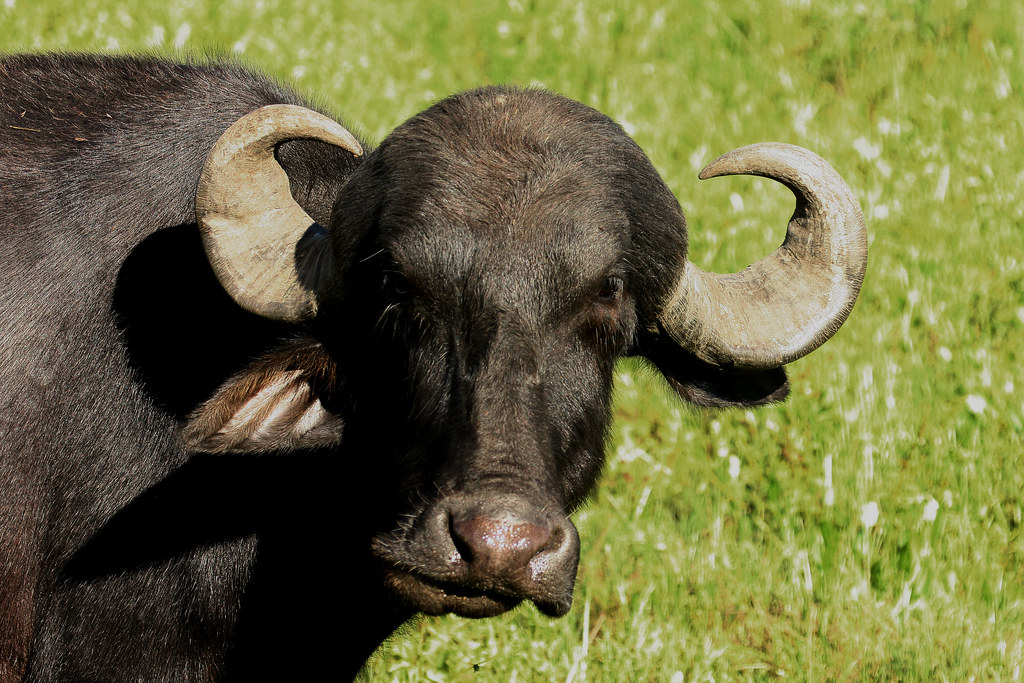
Marrakech – Brazilian authorities announced that Morocco has authorized imports of live buffalo from Brazil for slaughter. The decision opens an additional channel for Brazil’s livestock exports and gives Moroccan importers another potential source of animals for domestic meat production.
The authorization came in a joint statement published on October 23 by Brazil’s Ministry of Agriculture and Livestock and its Ministry of Foreign Affairs. In Morocco’s case, the clearance covers live buffalo (bubalinos) destined for slaughter. The note formed part of a wider set of market openings for Brazilian agricultural products across six countries.
The same statement listed approvals from Argentina, Egypt, Peru, Kenya, and Singapore.
Argentina authorized imports of crotalaria seeds. Peru approved mung bean seeds, coriander seeds, and equine leather. Egypt cleared Brazilian breeding birds for ornamental purposes. Kenya authorized blood-derived ingredients and palatability enhancers free of ruminant proteins, both for animal feed. Singapore opened its market to bovine fetal serum.
The buffalo authorization arrives as Morocco continues to depend heavily on Brazil for its cattle imports. On the same day, Morocco’s Ministry of Agriculture, Maritime Fishing, and Food Sovereignty announced that the duty-exempt quota of 300,000 head of cattle for slaughter set for 2026 had been reached.
According to the ministry, importers and professionals were informed of the quota’s exhaustion through notice n°1484 of October 15, published on the ministry’s portal. Monthly imports averaged close to 24,000 head, with sharp variation. They exceeded 44,000 head in June and July but fell to 17,000 head in August and September.
Thirty-seven importing companies took part in the operation. More than 90% of the imported cattle came from Brazil, which offered more abundant supply than European sources. Demand rose again in October after imports from Portugal opened, an option favored for its geographic proximity.
The ministry tied the policy to rising red meat prices in recent years. It attributed the increase to a smaller national herd, the result of repeated drought and the scarcity and higher cost of animal feed, whether local or imported. Those pressures pushed some breeders to slaughter female cattle, which further reduced supply.
To counter this, the government suspended customs duties and VAT on the import of 300,000 head of domestic cattle through December 31, 2026, under decree n°2.25.720 and the 2026 finance law.
The operation required no prior authorization and remained open to all importers. Exemption requests are filed through the PORTNET platform, processed within 24 hours, and valid for one month.