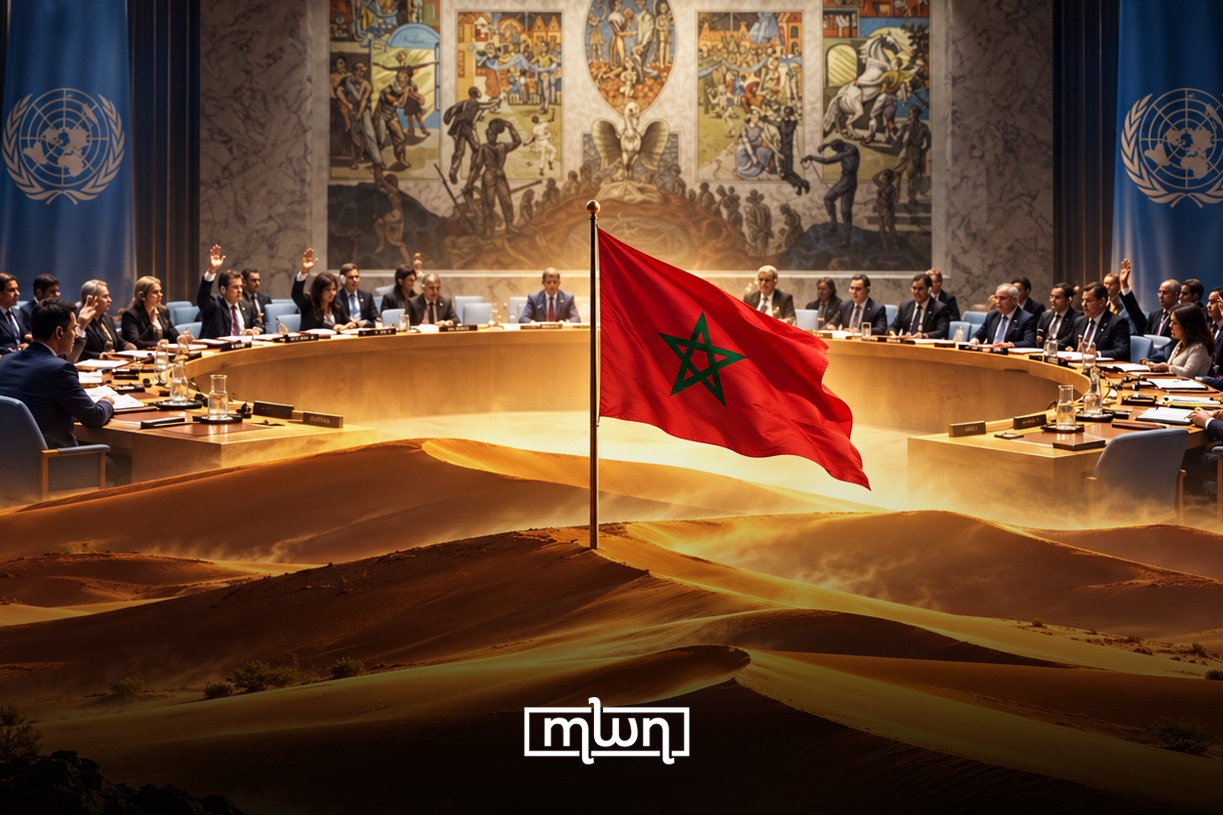
Rabat – As the penholder of the UN Security Council’s draft resolutions on Western Sahara, the US has reportedly amended the latest draft circulated among Council members on October 20.
But the revised text continues to maintain momentum in favor of Morocco’s Autonomy Plan, describing it as the most feasible political solution and retaining it as the sole basis for negotiations to resolve the dispute over Western Sahara.
Earlier this month, there were reports of frustrated Algerian diplomats sharing the original draft or draft zero of the resolution, which has reinforced Morocco’s position, reiterating the viability of the Autonomy Plan as the only framework for negotiations toward a solution to the dispute.
The UN Security Council will vote on a new resolution on Western Sahara later this month, probably by the end of the week.
The first draft circulated online included a paragraph in which the UN Security Council declared the Morocco proposal the “only basis” for an agreed-upon political solution.
Moroccan news outlet Le360, however, stated that the US penholder agreed to reintroduce UN terminology to secure consensus, but emphasized that the exclusivity of the autonomy initiative remains “firmly enshrined.”
Yet the resolution removes all references to a referendum, including from the name and mandate of the UN peacekeeping operation in Western Sahara, MINURSO.
The new version of the draft resolution continues to support the renaming of MINURSO to MINUSO, with wording referring to death and buried narratives that continue to shape Algeria’s regime narrative on Western Sahara entirely now disappearing, reportedly.
Algeria’s regime arms, finances, hosts the Polisario Front and sustains its separatist ambitions in Morocco’s southern provinces. Meanwhile, Algiers continues to shirk its role as a main party to the dispute, backs the Polisario’s independence claims, and still describes the UN-led process over the Sahara as a “decolonization process.”
Algeria has continued to cling to these sidelined claims despite the prevailing consensus among the international community over the Moroccan Autonomy Plan, which all UN resolutions over the past two decades have established as the only or most feasible path to a lasting political solution of the Sahara dispute.
The reportedly amended draft resolution will also maintain a paragraph that welcomes President Donald Trump’s leadership and contribution to resolving the conflict.
Notably, it welcomes the US president’s call to the parties to support efforts by both the UN-led political process and the US seeking to find a common ground that could see the parties to the dispute commit to implementing the terms of the political process. The UNSC draft resolution will also uphold concerns over the situation in Tindouf, where the Polisario still holds Sahrawis hostage in an open-air prison without a census.
The draft resolution will again urge the complete registration of the refugee population in the Tindouf camps within six months, a new blow to Algeria’s regime, which has long obstructed the process and disallows UNHCR from conducting a census in the region.
The amended resolution also includes the principle of self-determination, a wording that does not change the text’s substance, as Morocco has emphasized that autonomy is a form of self-determination and not a synonym for a referendum.
Political analyst and author Samir Bennis has recently commented on the draft resolution circulated on October 20, acknowledging that he is not certain that “the final version of the upcoming resolution will retain the same wording as the draft.”
He argued, however, that the new resolution would take another decisive step toward bringing the dispute to an end and “burying the separatist plans of Algeria’s detestable, contemptible, and accursed regime.”
The current, pro-Rabat momentum is nothing more than the culmination of the political process that began at the council in 2007 and accelerated in 2018 with the adoption of Resolution 2440, Bennis said.
That adoption “was followed by the US recognition of Morocco’s sovereignty over Western Sahara, which marked a turning point, and the successive recognitions that followed the American decision, leading up to Resolution 2797,” he stressed.