
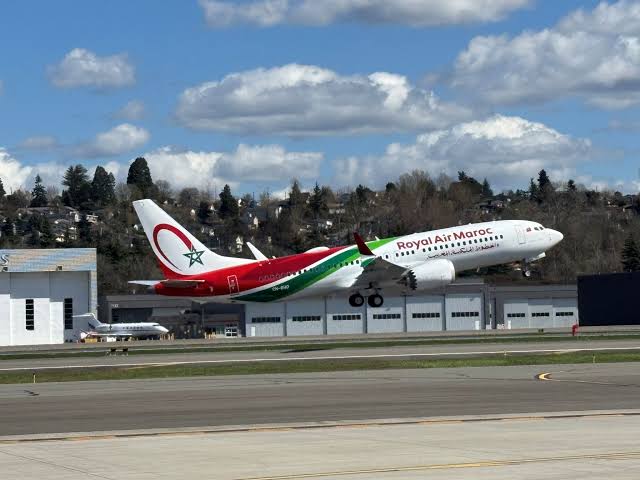
Rabat– Royal Air Maroc (RAM) launched its fifth weekly direct flight between São Paulo and Casablanca on Thursday, less than two years after returning to the South American market.
The Moroccan national carrier plans to increase the service to daily flights from São Paulo by 2028. It also aims to launch a new route connecting Morocco with Rio de Janeiro by late 2027.
The expansion is part of Royal Air Maroc’s global growth strategy, which seeks to strengthen its presence in Brazil and improve connections to more than 100 destinations across Africa, Europe, the Middle East, and Asia through its Casablanca hub.
“Offering more flights means opening the doors to Morocco even wider and making travel easier for passengers who want to discover the country or reach the rest of the world through our Casablanca hub,” said Othman Baba, RAM’s regional director for South America.
The additional flight operates on a Boeing 787-9 Dreamliner. It responds to growing demand and comes ahead of the European winter season, a key period for Brazilian tour operators and travel agencies.
With the new service, flights from São Paulo operate on Tuesdays, Wednesdays, Thursdays, Fridays, and Sundays. Flights departing from Casablanca run on Mondays, Tuesdays, Wednesdays, Thursdays, and Saturdays.
The route has recorded strong performance. In 2025, it carried approximately 80,000 passengers in both directions, with an average seat occupancy rate of 84% and an on-time performance rate of 98%.
The expansion also comes amid growing tourism between Brazil and Morocco. Morocco welcomed a record 19.8 million international tourists in 2025, including 60,000 Brazilian visitors, a 35% increase from the previous year.
RAM’s growing flight network also supports Morocco’s wider infrastructure and urban mobility projects ahead of the 2030 FIFA World Cup, which the North African kingdom will co-host with Spain and Portugal.
A member of the global oneworld airline alliance, RAM holds a four-star rating from international airline rating organization Skytrax. The carrier is pursuing an ambitious expansion plan to strengthen its position as an intercontinental airline.
Its 2023–2037 strategic plan aims to increase its fleet to 200 aircraft and carry 32 million passengers annually in the long term, compared with 7.5 million passengers in 2024.
The airline is also pursuing sustainability initiatives. In 2025, it operated its first flight powered by sustainable aviation fuel (SAF).