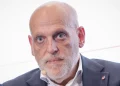
Rabat – Julian Harston, the former head of the now-ended United Nations peacekeeping mission in Western Sahara, has welcomed the end of the mission, joining a growing chorus of voices arguing that the operation should be brought to a close.
Harston echoed remarks by Foreign Affairs Minister Nasser Bourita, who also stressed that MINURSO’s continued presence no longer reflected the reality on the ground.
On Friday, the UN Security Council failed to adopt a resolution extending the mission’s mandate after Russia vetoed a US-drafted resolution calling for a substantive change in the mission’s name and primary objective.
Algeria’s regime, a close ally of Russia and the sponsor of the Polisario Front’s independence dreams in the Western Sahara region, had apparently hoped that the veto would further advance its separatist agenda for Morocco’s southern provinces.
The Russian veto targeted a US-drafted resolution that sought to rename MINURSO to MINUSO, removing the “R” that refers to the referendum and reflects Algeria’s outdated narrative surrounding the dispute.
To their dismay, the US also vetoed a Russian alternative resolution that sought only to extend the mission’s mandate and maintain its operations in the region.
As a result of the Security Council’s failure to adopt either resolution, the mission’s mandate expired on October 31.
Bourita emphasized on Saturday that the mission’s presence and its reference to a referendum no longer reflected the reality on the ground, as the UN-led political process is now aligning with Morocco’s Autonomy Plan as the sole genuine political basis for resolving the dispute.
Bourita emphasized the growing momentum behind the autonomy path and the strengthening of Moroccan sovereignty, questioning how the international community could continue to maintain two realities simultaneously.
It was no longer possible to recognize the Autonomy Plan and Moroccan sovereignty as the best and most realistic path to a lasting political settlement, while still maintaining a mechanism that referred to the possibility of a self-determination referendum, Bourita argued.
“This is the anachronism here: the imbalance between reality and a situation that belongs to another era,” he said.
Harston agreed, describing MINURSO as “anachronistic.”
The mission “belongs to a different time,” Harston said, stressing: “Almost all the requirements of the original mandate are no longer relevant. There never was a possibility of a referendum.” he said.
Drawing on his experience of leading MINURSO from 2007 to 2009, Harston also recalled violations of the ceasefire by the Polisario Front and Algeria’s regime, accusing Algiers of acting as a spoiler in the dispute.
“Simply taking every opportunity to oppose while keeping 1000s of Sahrawis hostage under intolerable conditions under an aged leadership,” he lamented, sharply criticizing the Algerian regime for its paradoxical and double-standard position. While supporting the Polisario Front financially and logistically, Algiers continues to reject its responsibility in the dispute.
Harston concluded by emphasizing that autonomy under Moroccan sovereignty is the only viable solution to the Western Sahara question, aligning with the positions of more than 135 countries that consider the Moroccan initiative either the only or the most feasible political solution to the lingering dispute.
The former MINURSO chief further accused Algeria of obstructing UN efforts to reach a genuine and sustainable political resolution of the Sahara question while continuing to lecture the international community about human rights even as it funds and sustains Polisario’s open-air prisons in Tindouf.
“The international community supports that [Autonomy Plan,” he said. “The UN should do the same.”