


 Join on WhatsApp
  Join on Telegram
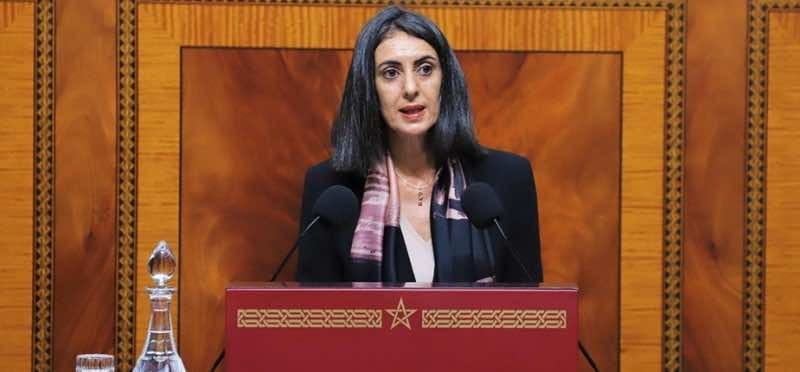
 Rabat – Morocco’s Minister of Economy and Finance, Nadia Fettah, announced in Rabat that the 2025 Finance Bill reflects the government’s commitment to advancing its 2021-2026 program goals while remaining adaptable to both ongoing and emerging challenges.
Addressing the House of Representatives’ finance and economic development committee on Thursday, Fettah, joined by Budget Minister Fouzi Lekjaa, underlined Morocco’s resilience amid global crises, attributing this stability to the government’s adept handling of complex challenges.
She outlined growth targets for 2025, grounded in national metrics and international forecasts, especially from the Eurozone—Morocco’s key trading partner. She also reaffirmed the government’s commitment to restoring its “Investment Grade” rating with international credit agencies.
In terms of social initiatives, Fettah noted an increase in the share of Value-Added Tax (VAT) revenues allocated to local authorities, raised from 30% to 32% for the first time since 1986. She also mentioned the government’s focus on improving incomes through salary increases and personal income tax reductions, reflecting a commitment to investing in human capital and workforce welfare.
Housing subsidies have enabled more than 27,000 Moroccans to secure primary residences. An additional MAD 37 billion ($3.6 billion) was allocated for social protection programs and MAD 16.5 billion ($1.6 billion) for strengthening purchasing power and facilitating transparency dialogues within institutions.
Read Also: Morocco Eyes MAD 16.4 Billion in Cigarette and Alcohol Taxes to Power Economic Growth
In healthcare, Fettah reports that over 75% of Moroccan citizens are now enrolled in mandatory health insurance (AMO). The government is devising specific measures to extend this coverage to agricultural and artisanal workers.
Morocco’s healthcare workforce has grown from 63,000 in 2020 to 70,000, aiming to meet global standards for health worker-to-population ratios. The government is working to enhance healthcare access with projects that include new university hospitals and the modernization of 1,400 local health centers by 2025.
On the education front, 4,000 new preschool classes were introduced for the 2024-2025 school year, aiming to reach an 80% preschool enrollment rate and establish 626 “pioneer schools.”
The new bill earmarks a record MAD 340 billion ($33.4 billion) for public investments in 2025, including allocations for infrastructure, agriculture, and housing. Fettah pointed out the focus on private investment as well, citing the new Investment Charter, administrative streamlining, and improvements in business conditions as cornerstones of the government’s private-sector initiatives.
The 2025 Finance Bill outlines Morocco’s comprehensive approach to economic resilience, aiming to bolster social protections, stimulate investment and job creation, drive structural reforms, and maintain sustainable public finances amid global uncertainties.
Central priorities for the upcoming years include strengthening sovereignty in water, food, and energy resources, alongside measures to safeguard purchasing power and promote long-term growth.


