


 Join on WhatsApp
  Join on Telegram
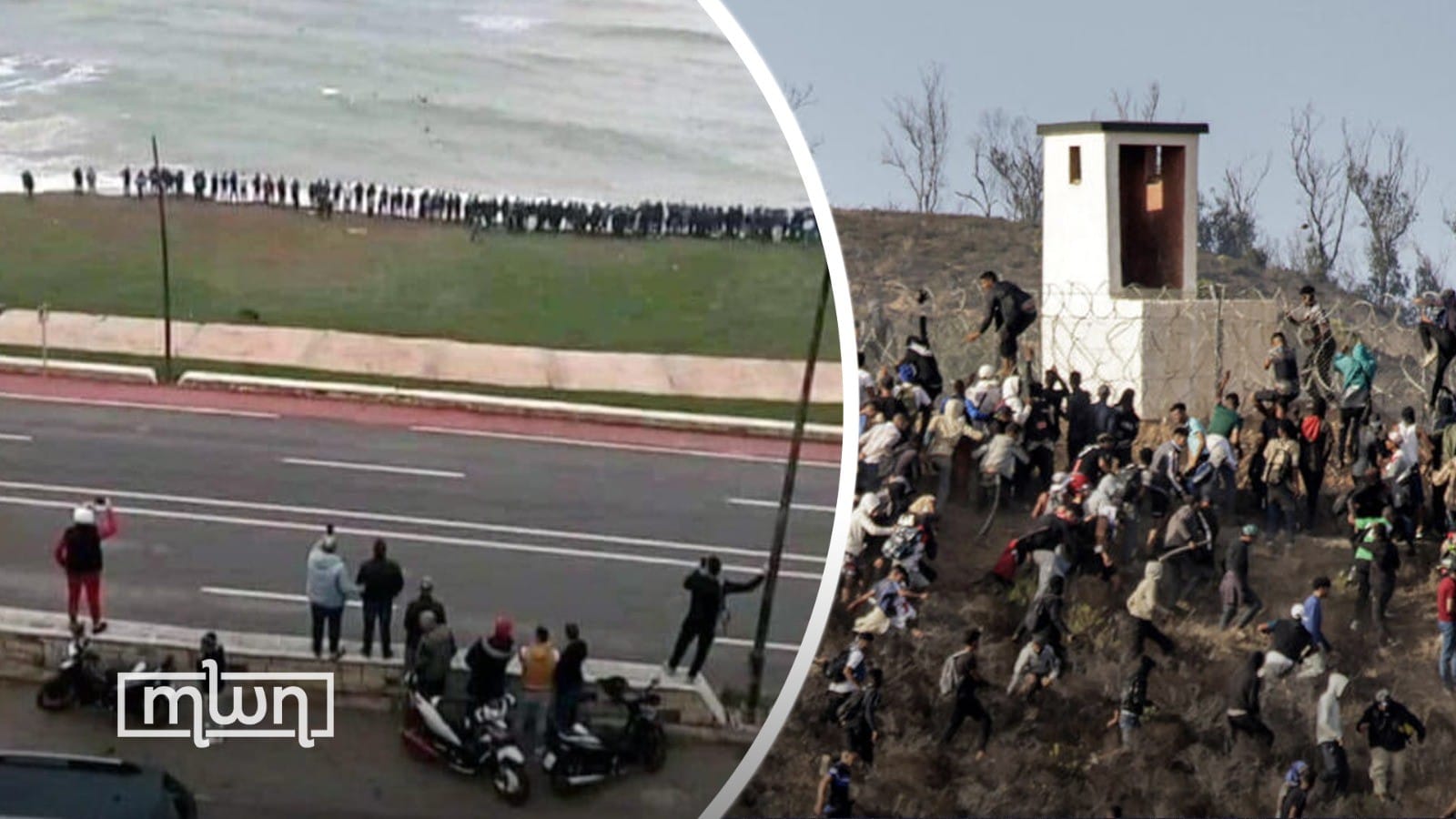
 Marrakech – Since Morocco’s September 15 mass migration attempt, experts and commentators warned against the manipulation of young people lured by false promises of a better life and bright future across the Mediterranean, fueled by widespread social media calls for irregular migration.
Experts have condemned the reckless social media calls that push thousands of young people in Morocco and elsewhere to risk their lives chasing a false dream of a Mediterranean Eldorado.
These misleading promises lure vulnerable individuals into dangerous migration attempts, promising a better life that rarely materializes.
For political analyst Mustapha Tossa, the content circulating on social media openly urging an assault on the security barrier between Fnideq and Ceuta on September 15 “shows how harmful social media has become, amplifying this phenomenon and creating illusions.” “It riles up young people and vulnerable minds, feeding them false hopes of crossing borders,” he said in a statement to MAP.
Through conscientious and professional measures, Moroccan authorities have aimed to stop potential migrants from jeopardizing their lives based on deceptive and malicious online campaigns
“As soon as these border-crossing attempts were announced, it became clear that Moroccan authorities implemented an effective security plan that significantly reduced the impact of the assault, keeping it minimal and far from the ambitions of its promoters and social media agitators who tried to exploit it,” Tossa further detailed.
These incidents once again highlight the major challenges of illegal immigration that Morocco faces, as the country works tirelessly to thwart such attempts and address a growing international phenomenon, he added.
He also noted that Morocco’s migration policy is widely praised on the global stage for its effectiveness in combating irregular migration.
Beyond its firm security measures, Morocco is committed on multiple fronts to ensuring a decent life for its citizens, particularly its youth, through large-scale projects and strategies, including youth employment initiatives aimed at nurturing this invaluable human capital.
Mohammed Benhammou, President of the Moroccan Center for Strategic Studies (CMES), condemned the malicious calls for irregular migration on social media, asserting that they aim “to damage the Kingdom’s image” and particularly target vulnerable young people.
“These attempts seek to sabotage and hinder the Kingdom’s ongoing development across various sectors,” Benhammou added.
He noted that Moroccan authorities, who have implemented an effective security framework to preemptively thwart these attempts and prevent any escalation, have demonstrated professionalism and restraint despite the violence and vandalism perpetrated by the migrants.
M’hammed Belarbi, a professor-researcher at Cadi Ayyad University in Marrakech, noted that the social media calls for an assault on the security barrier between Fnideq and Ceuta have reached unprecedented levels.
This escalation prompted Moroccan authorities to establish a significant and effective security framework to address this unprecedented situation.
As Morocco continues its extensive efforts to combat illegal immigration through a multidimensional approach, the migration pressure is becoming increasingly unbearable due to mafias orchestrating mass mobilizations on social media, Belarbi explained.
Echoing Tossa’s remarks, he also highlighted that Morocco is actively engaged in various projects and programs aimed at providing employment opportunities for youth and ensuring they have the means to lead a dignified life, far from the deceitful voices that seek to mislead them with empty promises and false hopes.


