


 Join on WhatsApp
  Join on Telegram
 Marrakech – As irregular migrant entries to Spain surge 66% this year, driven largely by increased arrivals to the Canary Islands, Morocco’s strengthened border measures have emerged as a key factor in controlling migration flows from the North African coast.
According to confidential reports from Spanish security forces, as cited by outlet El País, Morocco has maintained strict control over its northern and southern shores, including its coasts in the provinces of Western Sahara.
The deployment of Moroccan forces has resulted in a nearly 30% decrease in irregular entries from these areas in the first half of the year, as reported by police sources.
Geopolitical factors and migration trends
However, this crackdown appears to be displacing migrants further south, with a growing number of asylum seekers from Syria, Pakistan, and Bangladesh appearing in the Canary Islands after departing from Mauritania and Senegal. This is an unusual trend for these nationalities.
With Mauritania becoming a new focal point of concern, the country is experiencing its own refugee crisis, with reports of between 100,000 and 500,000 potential migrants waiting to attempt the challenging journey to Europe.
Spanish authorities are particularly worried about the situation in Mauritania, which has seen a 6,000% increase in departures to the Canary Islands in the first half of the year.
The instability in the Sahel region is exacerbating the situation. Mali, in particular, has become a significant source of migrants, with Malians now representing the largest nationality group among irregular arrivals to Spain.
This shift presents new challenges for Spanish authorities, as many Malians may have stronger claims for asylum due to ongoing conflicts and terrorism in their home country.
Rubén Andersson, a migration expert and anthropology professor at Oxford University, links the rise in the Canary Islands route to Morocco’s firm control in the north.
“Repression on one part of the border leads to that displacement to another place,” Andersson states in the El País report. “In the short term, governments rely on that control to cover up the problem, but in the medium and long term, repression does not solve it.”
A surge in irregular migration to Spain
While Morocco’s efforts have contributed to a decline in arrivals, Spain continues to face challenges on other fronts.
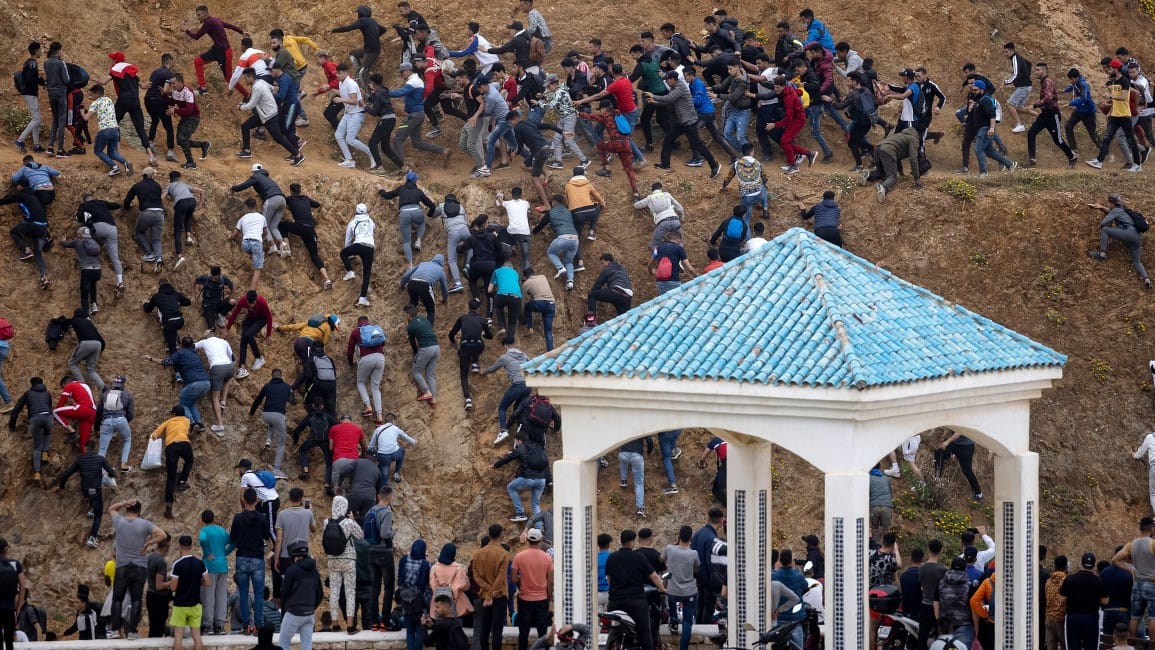
Irregular entries by land into the Spanish enclave of Ceuta have grown by 173%, totaling 1,605 individuals so far this year.
Additionally, the business of drug smuggling boats carrying migrants, charging up to €10,000 per journey, has become a consolidated phenomenon that “is here to stay,” according to police sources.
Meanwhile, arrivals from Algeria have seen a 15% increase in the first half of the year, as reported by police sources, with a notable impact on the Balearic Islands.
The surge in Algerian migrants comes amidst a bilateral crisis between Algiers and Rabat, which has led to the suspension of deportations of Algerian nationals since March 2022.
Reports indicate that Spanish authorities anticipate that pressure will continue to increase as waves of refugees from the Sahel and sub-Saharan Africa move towards the African coasts with the intention of migrating.
The situation is particularly critical in the final four months of the year when calmer Atlantic conditions improve navigability, potentially leading to a surge in boat departures.
Looking ahead, Andersson calls for a “more strategic approach” that incentivizes legal and safe migration pathways while considering demographic imbalances and labor supply differences between Europe and Africa.
With the situation evolving, cooperation between Spain, Morocco, and other regional partners will remain crucial in managing migration flows and addressing the complex factors driving irregular movement across the Western Mediterranean.
Read also: New Arab Barometer Report Details Migration Trends in Morocco


