


 Join on WhatsApp
  Join on Telegram
 Rabat – At the recent International Book Fair (SIEL) in Rabat, Senegalese philosopher Souleymane Bachir Diagne offered a profound and timely message on the importance of rebuilding a reconciled humanity.
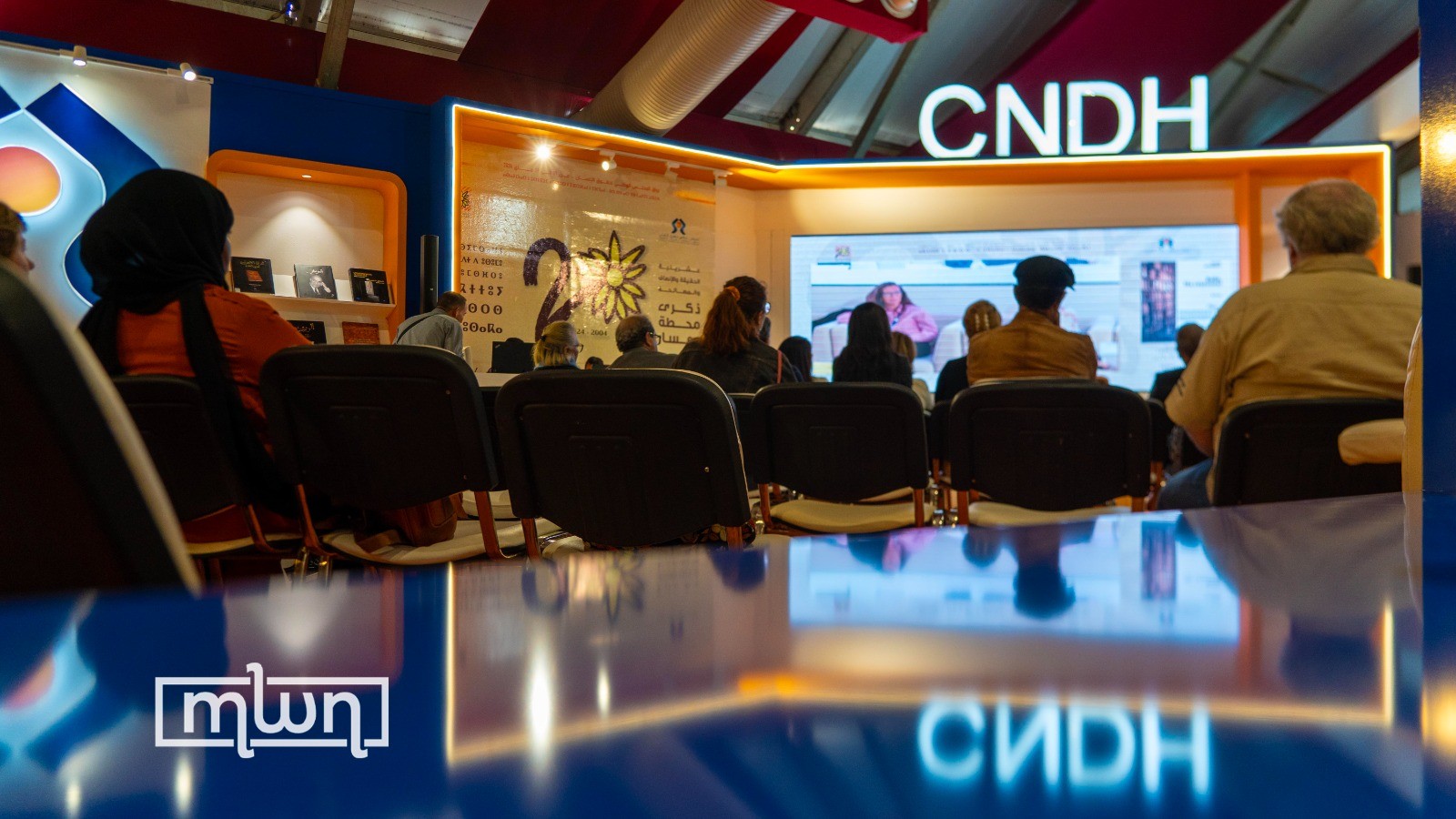
This conversation, hosted by the National Human Rights Council of Morocco (CNDH), took on particular significance as it placed the concept of “Ubuntu” within the framework of human rights and national reconciliation efforts.
Diagne, a newly appointed member of the prestigious Academy of the Kingdom of Morocco, discussed Ubuntu’s potential to heal the wounds of the past and forge a shared future, echoing the CNDH’s mission to promote human dignity and equality.
Decentering universalism and the search for inclusive values
Diagne challenges the traditional notion of universalism, which has often been rooted in Western philosophical and cultural perspectives. He argues that this approach neglects the rich heritage of human experience found in diverse cultures across the globe.
For a true universalism to emerge, it must be “decentered,” incorporating the voices and experiences of those who have been historically marginalized. According to the Senegalese philosopher, this requires a critical examination of existing power structures and a willingness to learn from alternative ways of knowing and being.
Central to Diagne’s vision of a reconciled humanity is the concept of Ubuntu. Derived from Bantu languages, Ubuntu roughly translates to “humanity towards others” or “ I am because we are.”
This philosophy emphasizes the interconnectedness of humanity, the idea that our own well-being is fundamentally linked to the well-being of others. We are not isolated individuals, but rather members of a shared community with a collective responsibility for one another.
Ubuntu challenges the notion of individualism that has dominated Western thought for centuries, offering a more communal and interdependent understanding of the human experience.
Healing the wounds: Moving beyond the shadow of trauma
Diagne acknowledges the deep scars left by historical traumas on the African continent, including colonialism and genocides. These traumatic experiences have the potential to trap us in a cycle of grievance and resentment, hindering progress and reconciliation.
To move forward, Diagne argues, we must engage in a deliberate process of “stitching” the wounds of the past. This means a commitment to healing and forgiveness, not forgetting the past but rather using it as a springboard for a more just future.
It requires confronting difficult truths, fostering dialogue and understanding, and actively working to dismantle structures that perpetuate inequality and injustice.
Ubuntu in action: Building a reconciled future
Diagne sees Ubuntu as a powerful tool for building a reconciled humanity. By embracing the core principle of Ubuntu, we recognize that our humanity is not a given but an ongoing process.
It is through our interactions with others, through empathy, understanding, and cooperation, that we fully realize our potential as human beings.
This perspective fosters a sense of shared responsibility for the future, encouraging us to work together to create a world where all can flourish.
Diagne warns against the dangers of “generalized apartheid” that fragments the world today. He sees ethnonationalism, with its emphasis on national or ethnic purity, as a contemporary manifestation of this divisive ideology.
Just as South Africa dismantled the system of institutionalized apartheid, Diagne argues, we must strive to break down the walls that divide us – cultural, social, and economic.
This requires a commitment to intercultural dialogue, mutual respect, and the recognition of our shared humanity.
Shared humanity in a globalized world
The challenges we face in the 21st century, such as pandemics and climate change, transcend national borders and require a global response. As far as Diagne is concerned, these issues highlight our interconnectedness as a species and the urgency of working together for the common good.
The Senegalese philosopher emphasizes that humanity has become a “geological force” capable of shaping the planet’s future. We have the power to create a sustainable and prosperous world, but also the potential to cause immense destruction.
Diagne’s message is ultimately a call to action. He urges us to embrace the concept of Ubuntu and work towards a future where collaboration and mutual respect are the cornerstones of human interaction.
The task of building a reconciled humanity, he argues, is not simply a desirable outcome, but a necessity for our collective survival. By recognizing our interconnectedness, fostering empathy, and actively working to heal the wounds of the past, we can create a world that lives up to the promise of Ubuntu – a world where humanity thrives in all its richness and diversity.


