


 Join on WhatsApp
  Join on Telegram
 Rabat — In a strong address to European partners at the 2025 European People’s Party (EPP) Congress on Tuesday in Valencia, Secretary General of the Istiqlal Party Nizar Baraka outlined Morocco’s strategic value as a pivotal partner to the European Union (EU).
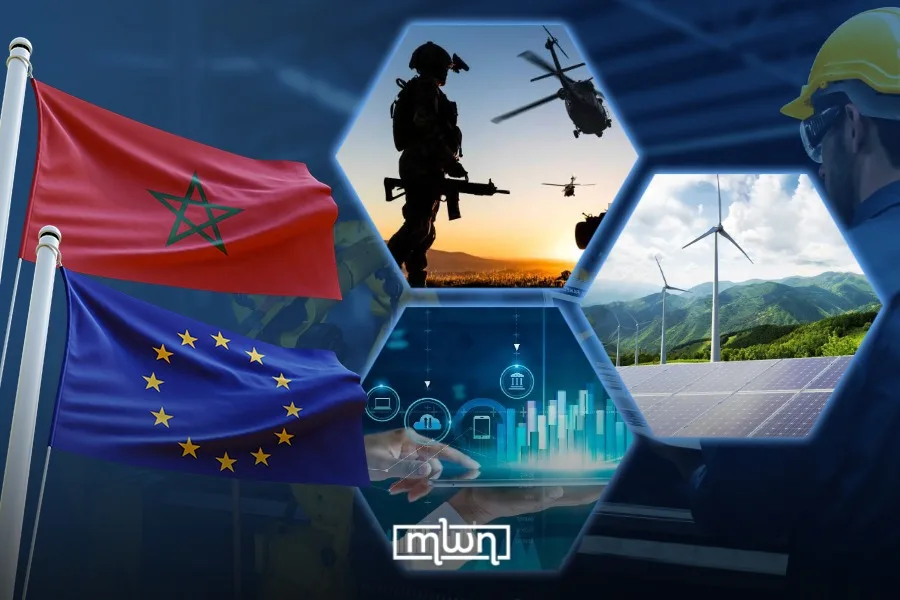
Baraka outlined the main sectors of cooperation between Morocco and EU countries, with a particular focus on joint efforts to reduce irregular migration, enhance economic relations, and collaborate on renewable energy projects.
The Moroccan politician stressed the need to support Morocco’s Autonomy Initiative for the Western Sahara as a step toward regional stability in the Mediterranean.
Political alignment on the Western Sahara
During his speech, Baraka made a direct appeal for European support on Morocco’s most pressing diplomatic priority, namely the recognition of its Autonomy Plan for Western Sahara.
This initiative, which would grant the region significant self-governance while remaining under Moroccan sovereignty, has already gained endorsements from the “US and 22 European Member States, as well as dozens of other countries around the world.”
The Moroccan politician explained the sensitivity of the artificial conflict over Morocco’s Western Sahara and how it generates many problems and issues that burdens Morocco and its strategic allies.
“If we are serious about securing peace, stability and prosperity along European borders, then we must support the Moroccan Autonomy Initiative for the Sahara,” Baraka stated, describing it as “the only real pathway to end the conflict that has held back an entire region for over 5 decades.”
Western Sahara remains one of Africa’s longest-running territorial disputes, and its resolution would unlock greater regional integration in Northwest Africa, a development that Baraka argued would also benefit European interests.
Baraka’s comprehensive presentation further revealed a broader partnership that spans multiple domains, from security to renewable energy.
Morocco, an indispensable European ally
Morocco has established itself as Europe’s indispensable partner in addressing security challenges emanating from the southern Mediterranean. Intelligence sharing and operational coordination between Morocco and European nations, particularly Spain, have yielded tangible results in containing irregular migration flows across borders.
“Morocco remains the frontline partner for Europe in counterterrorism and migration management,” Baraka said, recalling the joint operations that have “significantly reduced irregular crossings” into Spanish territories.
This partnership has become increasingly vital as Europe grapples with complex irregular migration pressures and evolving security threats.
Security analysts note that Morocco’s strategic location and institutional stability make it uniquely positioned to serve as a buffer zone for European interests. Experts also believe that the North African country capitalizes on security measures, international partnerships, and counter-violent extremism (CVE) programs to excel in addressing radicalization.
Meanwhile, the country’s expertise in counter-terrorism and border management represents a valuable resource that can’t skip European countries’ strategic calculations.
Energy revolution: Morocco, from consumer to supplier
One of the most transformative aspects of Morocco-EU relations has to do with the energy sector, as the country has been rapidly shifting from depending on other countries for its energy supplies to becoming a critical supplier of green energy.
Speaking of Morocco’s energy transition, Baraka said that the country “demonstrated today, thanks to its electric interconnection with Spain, that it’s already a part of the solution for Europe.”
He also referred to existing energy infrastructure that connects the two continents’ power grids.
The Moroccan politician spoke of Morocco’s ambitious plans to become a “champion of green hydrogen,” leveling up its “world-class and competitive solar and wind resources.”
This energy transition is already drawing renewable energy investments from major European energy companies from Germany, France, and Spain.
Baraka mentioned the Nigeria-Morocco gas pipeline flagship project, which aims to transmit natural gas from Nigeria to Europe via Morocco. This massive infrastructure initiative would not only diversify Europe’s energy sources but also provide energy access to twelve West African nations along its route.
The North African country has an ambitious plan to achieve 52% of electricity generation from renewable resources by 2030. The plan reflects Morocco’s commitment to green energy, with the country continuing to position itself as a vital partner for the EU’s own ambitious climate goals.
Meanwhile, Morocco is investing in projects that would allow for energy savings of 20% by 2030, reflecting the country’s commitment to Sustainable Development goals.
Economic integration: boosting European competitiveness
Morocco-EU economic relations extend far beyond traditional trade, as the country has been getting ahead in becoming a manufacturing hub that, instead of threatening, enhances European industrial competitiveness.
European manufacturers in automotive, battery production, and aerospace have established significant operations in Morocco, benefiting from what Baraka described as “skilled human resources” and “world-class logistics and connectivity platforms.”
These investments allow European companies to maintain competitiveness while reducing carbon footprints, thanks to Morocco’s growing renewable energy capacity. This arrangement creates a win-win scenario where European industries can leverage Morocco’s advantages while both partners benefit economically.
The partnership will receive a symbolic boost when Morocco co-hosts the 2030 FIFA World Cup alongside Spain and Portugal, an event Baraka framed as a celebration of “complementary partnership between Africa and Europe.”
Baraka concluded that “supporting a strategic partnership with Morocco is not only an act of friendship with a neighbor,” adding that “it’s about building together a future where we lead the way to a safer and more prosperous Mediterranean region.”
As geopolitical competition intensifies globally, Morocco’s offer of partnership across multiple domains presents Europe with a comprehensive approach to securing its southern neighborhood. The coming years will reveal whether European leaders fully embrace this multifaceted alliance that Baraka so passionately advocated for.


