 Join on WhatsApp
 Join on Telegram
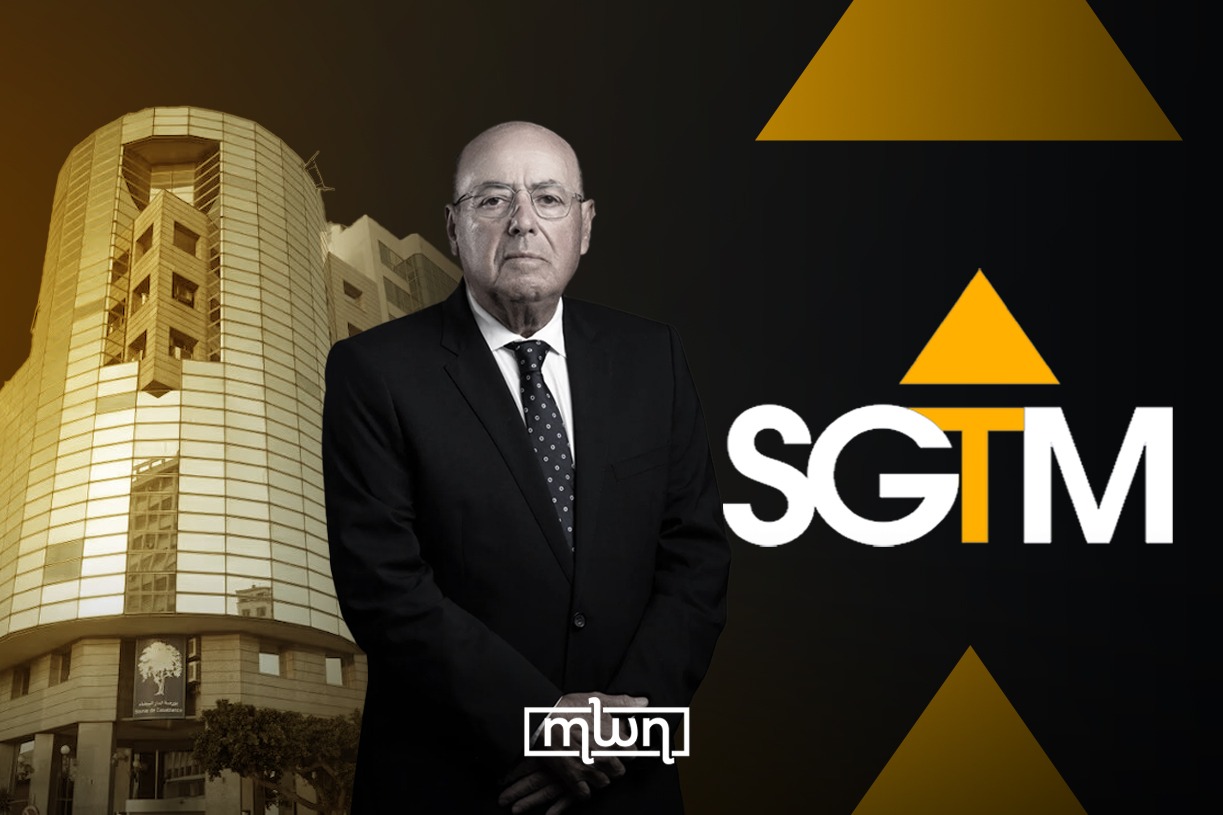
Marrakech – SGTM is preparing one of the most significant equity operations the Casablanca market has seen in two decades. The family-owned construction group is coming to market at a valuation of around MAD 25 billion ($2.5 billion), through an initial public offering made entirely by share disposal, in a sector supported by record public investment plans and the momentum of the 2030 World Cup.
The IPO concerns 20% of the company’s capital, sold by members of the founding Kabbaj family, for a maximum amount of MAD 5.04 billion ($504 million).
The Moroccan Capital Market Authority (AMMC) granted its visa on November 17, and the subscription window runs from December 1-8, with a first trading day scheduled for December 16 on the main “A” compartment of the Casablanca Stock Exchange, under the ticker GTM. The shares have a nominal value of MAD 20 ($2) and are offered at an IPO price of MAD 420 ($42), before discounts that apply to some investor categories.
The offer is structured around four types of orders designed to reach a wide investor base. Employees and retirees of SGTM and related entities can subscribe under Order Type I at MAD 340 ($34) per share, reflecting a 19% discount to the reference price. The broad retail segment can subscribe under Order Type II at MAD 380 ($38), a 9.5% discount.
Institutional investors, high-net-worth individuals committing more than MAD 5 million ($500,000), and UCITS, both local and foreign, subscribe under Order Types III and IV at the full price of MAD 420 ($42).
In total, up to 12 million shares are being sold, with close to 60% of the offer reserved for individuals, making this a deliberately “popular” transaction compared with typical large IPOs in Casablanca.
A homegrown group scaling steadily
Founded in 1972 by the brothers Ahmed and Mohamed Kabbaj, SGTM has grown from a challenger in a market dominated by foreign firms into one of the central players of Morocco’s construction and infrastructure industry.
The group positions itself as a multi-specialist, active across five main lines: dams and hydraulic works, tertiary buildings, transport infrastructure and civil works, maritime and river works, and industrial, mining and energy-related buildings.
Its track record includes major dams, ports such as Tanger Med and Nador West Med, large stadiums, sections of the high-speed rail line, industrial units, and university campuses. The group is also present in several African countries and now counts more than 20,000 employees, backed by a sizeable equipment fleet.
Financially, SGTM enters the market with scale and a visible growth trajectory. Consolidated revenue rose from about MAD 8.8 billion ($880 million) in 2022 to MAD 11.1 billion ($1.11 billion) in 2024, and is expected to reach MAD 14.3 billion ($1.43 billion) in 2025. Over 2022-2025, the average annual growth rate is projected at 17.6%.
EBITDA stood at MAD 1.9 billion ($190 million) in 2024, after MAD 1.5 billion ($150 million) in 2022 and 2023, with a margin around 17%. The business plan projects EBITDA of MAD 2.4 billion ($240 million) in 2025, keeping the margin at 16.9% on a larger revenue base.
Net profit, impacted in 2024 by non-recurring items linked to consolidation perimeter changes and guarantee calls, is expected to exceed MAD 1 billion ($100 million) in 2025 and grow at an average annual rate of 9.4% through 2031, for a normalized net margin around 9%.
The balance sheet is presented as conservative for a capital-intensive business. Equity increased from MAD 1.7 billion ($170 million) in 2022 to MAD 2.6 billion ($260 million) in 2024 and is expected to exceed MAD 3.2 billion ($320 million) in 2025.
Net financial debt fell from around MAD 1.8 billion ($180 million) in 2022 to MAD 832 million ($83.2 million) in 2024, bringing gearing down from 103% to roughly 32%, with a projected ratio of 45% in 2025 as the group continues to invest in equipment. Most of the debt relates to finance leases on machinery, with average borrowing costs around 5.5%.
The business plan anticipates cumulative investments of nearly MAD 3 billion ($300 million) between 2025 and 2031, representing about 2.5% of projected revenue over the period, after heavy capex in recent years to reinforce the equipment base. Working capital requirement is modeled at around 76 days of sales, broadly in line with recent history in the sector.
Order intake sustains momentum
The key element underpinning the growth scenario is the order book. As of end-May 2025, SGTM reports a contracted project portfolio of MAD 37 billion ($3.7 billion), combining an order book of MAD 16.6 billion ($1.66 billion) at end-2024 and new orders worth MAD 20.5 billion ($2.05 billion) booked in the first five months of 2025.
This pipeline secures the entirety of 2025 revenue, about 72% of 2026, 46% of 2027 and 23% of 2028, giving the company several years of visible activity. Management also incorporates additional annual order intake of MAD 15 billion ($1.5 billion) between 2026 and 2028, including a “fast-track” component of MAD 4.5 billion ($450 million) over the period.
According to market analyses, the backlog has climbed to around MAD 35 billion ($3.5 billion), almost double its level at end-2024, giving SGTM roughly three years of sales “almost secured” at current run-rate.
The valuation framework adopted for the IPO is centered on discounted cash flows, using a business plan covering 2025-2031. The DCF is built on the projected revenue, margin profile, investment schedule and working capital assumptions described in the prospectus.
The weighted average cost of capital is set at 7.96%, combining a risk-free rate of 2.88%, an equity risk premium of 6.07% and an unlevered beta of 0.9, which translates into a cost of equity close to 9.93%. The terminal growth rate is capped at 2.5%, below macro forecasts for Morocco’s construction sector.
On this basis, the DCF yields an equity value of MAD 26.692 billion ($2.6692 billion), or MAD 445 ($44.5) per share, placing the IPO price of MAD 420 ($42) towards the lower end of the theoretical range. Sensitivity analysis shows a valuation band between MAD 371 ($37.1) and MAD 552 ($55.2) per share, depending on assumptions for WACC and terminal growth, with even the low end remaining above the offer price.
Market comparables are used as a secondary cross-check. Applying EV/EBITDA multiples from an international peer group leads to an indicative valuation of around MAD 453 ($45.3) per share, while P/E multiples produce about MAD 481 ($48.1) per share.
These methods confirm that the IPO price embeds a discount versus theoretical values, in line with the usual approach of pricing primary listings below intrinsic models to ensure demand and aftermarket support.
Sector sentiment favors construction stocks
According to the press analyses on SGTM’s IPO, the stock prices of TGCC and Jet Contractors, the two listed Moroccan peers, currently stand at their historical highs in terms of valuation, with investors paying “very expensive” multiples for exposure to infrastructure and construction plays in the run-up to the 2030 World Cup.
The comparison with TGCC is central in local market discussions. At current market prices, TGCC carries a capitalization of more than MAD 31 billion ($3.1 billion), with a share price around MAD 900 ($90), while SGTM is brought to market at approximately MAD 25 billion ($2.5 billion). Yet the available indicators suggest that SGTM generates higher revenue, stronger net income and holds a larger order book than TGCC.
The gap is mainly explained by the different nature of the valuations: SGTM is priced within an IPO framework that includes a discount to theoretical models, while TGCC’s value reflects four years of trading, strong demand for the stock and sector momentum.
Several analysts quoted in the local financial press argue that, if SGTM were already listed, its fundamentals would justify a market value closer to MAD 40 billion ($4 billion), and that the discount to TGCC is likely to narrow over time as the market reprices the new entrant.
Governance and ownership remain key elements of the equity story. The operation is entirely a secondary sale, with no new shares issued and therefore no immediate impact on SGTM’s equity or net debt.
After the IPO, the founding family will retain 80% of the capital, split between the two branches originating from the co-founders, preserving control while opening the company to new shareholders. The board of directors will comprise nine members, including four women and three independent directors.
Two specialized committees will be put in place: an audit and risk committee, and a strategy and CSR committee, each chaired by an independent member. This structure aims to align the group with listed-company standards on governance, risk oversight and ESG monitoring, while maintaining continuity in day-to-day management.
World Cup projects amplify visibility
The transaction also formalizes SGTM’s positioning as a large employer and “corporate citizen” in the domestic market. The group employs more than 20,000 people, with a workforce dominated by site workers but also a growing proportion of engineers and managers who have spent their entire careers within the company.
Women account for just over 12% of monthly-paid staff, with management underlining efforts to increase their presence, including on construction sites.
Employee participation in the IPO through a dedicated tranche, preferential pricing and protective mechanisms is presented as a way to share value creation with the teams that execute projects across the country.
Finally, the timing of the IPO is directly linked to a favorable macro and sector backdrop. Construction represents about 6% of Morocco’s GDP and 16% of jobs, and it sits at the heart of a public investment program exceeding MAD 1,000 billion ($100 billion) by 2031.
Large-scale projects in water infrastructure, transport, ports, industrial platforms, renewable energy and social facilities are already under way or planned, with the 2030 World Cup adding an additional layer of visibility for stadiums and transport upgrades.
In this context, SGTM’s listing brings to the market a sizeable, diversified and integrated operator whose financial profile is framed by a substantial order book, robust margins, a conservative balance sheet and an IPO valuation that, by construction, sits below model-based estimates and below the levels implied by its closest listed peer.