
 Join on WhatsApp
 Join on Telegram
Rabat – Rising geopolitical tensions in the Middle East could drive up the cost of several fertilizer inputs in the coming years, according to new projections from Fitch Ratings.
The agency warns that nitrogen-based fertilizers face the strongest pressure, while phosphate fertilizers, closely linked to Morocco’s production, may remain relatively stable.
In a recent market alert published through its “Fitch Wire,” the ratings agency revised its price assumptions for key fertilizer inputs. The adjustment reflects disruption in global supply chains linked to the US-Israel-Iran war, as well as the resulting uncertainty across energy markets.
A central factor behind the revision is the current disruption around the Strait of Hormuz, a strategic maritime corridor through which a large share of global oil exports normally passes. The passage has been closed for two weeks since the start of the war. Any restriction in that passage quickly affects energy-intensive industries, including fertilizer production.
Nitrogen fertilizers face the strongest price increases
According to Fitch, ammonia prices could rise sharply over the coming year. The agency now expects ammonia to reach about $375 per ton in 2026 under FOB Middle East terms, compared with an earlier estimate of roughly $300 per ton.
Urea may also climb to around $420 per ton, a notable increase from the previous projection of $340 per ton. Both inputs sit at the heart of nitrogen fertilizer production.
These increases largely stem from the sector’s heavy dependence on natural gas. When energy markets face disruption, production costs for nitrogen fertilizers rise quickly, placing pressure on global agricultural supply chains.
Phosphate inputs remain more resilient
In contrast, phosphate fertilizers appear less exposed to the current turmoil. Fitch expects phosphate rock prices to remain stable at about $150 per ton in 2026 under FOB Morocco terms.
This stability holds particular importance for Morocco, one of the world’s largest phosphate producers. The main exporting countries, Morocco, Jordan, and Syria, benefit from maritime routes that connect to the Mediterranean and the Red Sea rather than the Gulf, which reduces their exposure to disruptions around the Strait of Hormuz.
However, some phosphate-based products still face pressure. Fitch expects diammonium phosphate (DAP) to reach roughly $650 per ton. A global sulfur shortage and export restrictions from China contribute to that higher level.
Potash prices also move upward
The agency also adjusted its outlook for potash. Prices could rise from $260 to about $280 per ton in 2026 under FOB Vancouver terms.
Despite the current upward pressure across fertilizer markets, Fitch expects prices to moderate later in the decade. The agency anticipates a correction between 2027 and 2028 as supply conditions stabilize.
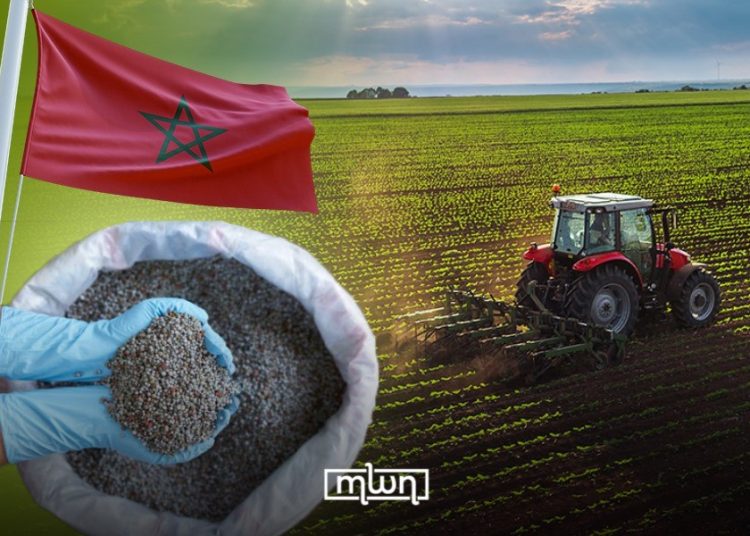
For Morocco, the relative stability of phosphate fertilizers may strengthen its position in a tense global market. While nitrogen fertilizers face rising costs linked to energy markets, phosphate supplies from Morocco may gain greater appeal among international buyers.