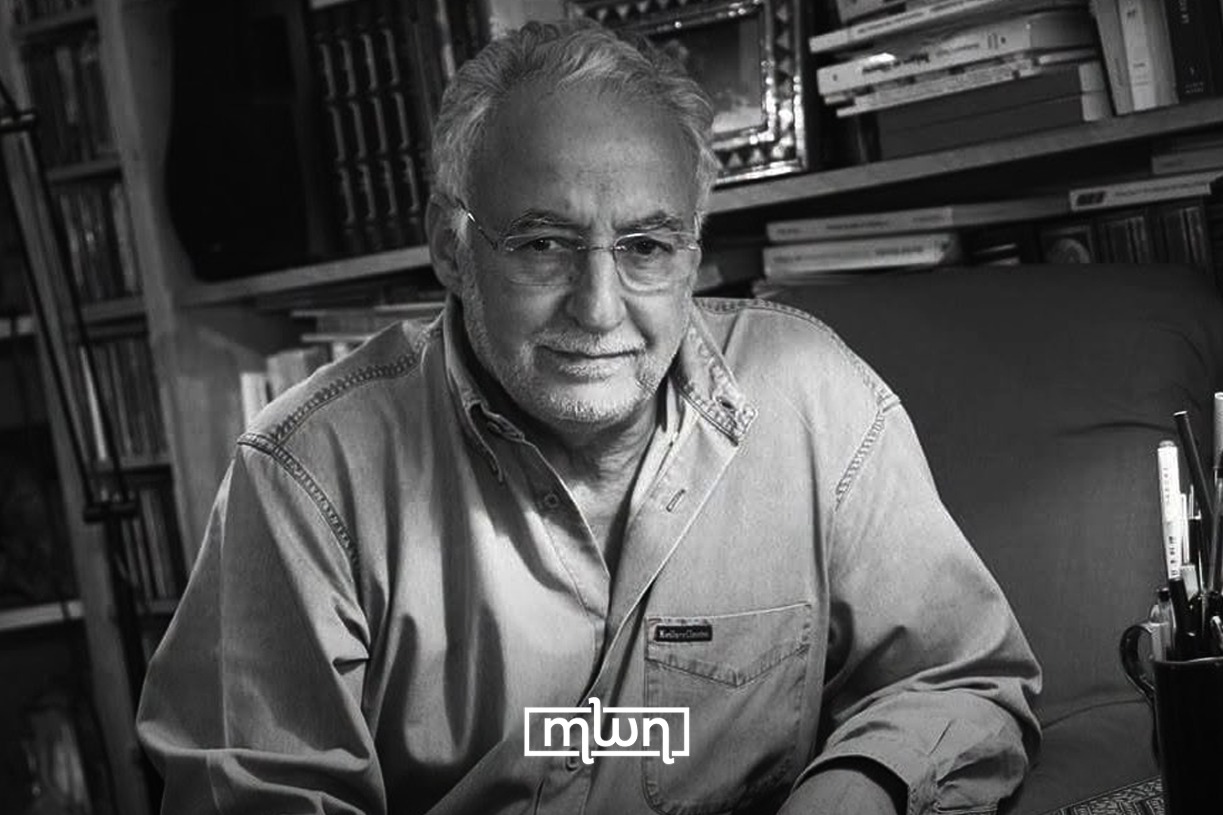
Marrakech – Hamid Barrada, a Moroccan journalist and intellectual whose career spanned more than half a century of the country’s political and media life, died overnight from Friday to Saturday at the age of 87. He was to be buried after the Al Asr prayer at the Arrahma cemetery.
Born in 1939 in Tangier, into a family originally from Fez, Barrada entered political life early. He joined the Union nationale des étudiants du Maroc (UNEM) and became its president in 1962. He later grew active in the Union nationale des forces populaires (UNFP), moving close to major figures of the Moroccan left.
That activism carried a heavy cost. In 1963, amid sharp political tensions, Barrada was condemned to death in absentia. The sentence forced him into clandestinity and then exile, first in Algeria and later in France. He was not allowed to return to Morocco until 1978.
Trained in philosophy, law, and political sociology, Barrada turned to journalism. He joined the Paris weekly Jeune Afrique as a grand reporter, then served as its editor-in-chief from 1974 to 1985, remaining a regular contributor afterward. He went on to direct the Maghreb and Middle East desk of the francophone channel TV5.
Moroccan audiences knew him best from 2M, where he presented “Mais Encore?” from 2007 to 2018. The long-format program brought him leading political, economic, and cultural figures, and its demanding interviews marked generations of viewers.
Barrada held a singular place in the country’s press history as the only Moroccan journalist to interview the late King Hassan II. Organized in 1985 for a Canadian television production, that encounter turned in part to Morocco’s Western Sahara, ten years after the Green March. A large portion of it later appeared in Jeune Afrique.
Over his career, Barrada interviewed a wide range of political and intellectual figures, among them Abderrahmane Youssoufi, Abdallah Laroui, Ahmed Ben Bella, Houcine Aït Ahmed, Rached Ghannouchi, Léopold Sédar Senghor, and M’Hamed Boucetta.
His engagement extended beyond reporting. In 2004, he testified before the Equity and Reconciliation Commission, as his father had been a victim of abduction and forced disappearance. He also taught at university until his retirement.
In 2025, Barrada published the first volume of his “Anthologie des entretiens,” a work of more than 700 pages gathering exchanges conducted between 1977 and 2012.
Released by Kulte Editions with support from the Council of the Moroccan Community Abroad, it stands as both a historical document on post-independence Morocco and the nature of its political debates in the 1970s and 1980s, and an archive of political and intellectual change across Morocco, the Maghreb, and Africa.
He was the father of Yto Barrada, founder of the Cinémathèque de Tanger. Journalist Taoufik Bouachrine called him “the dean of Moroccan journalists” in a tribute honoring both his career and his human qualities.
In a similarly impassioned homage, journalist Abdellah Touarbi described Barrada as a reporter who worked until the end. Despite his fatigue and the weight of the years, he followed the news daily, questioning, investigating, and trying to understand what was unfolding in Morocco.
He would then entertain those around him with endless stories about the country after independence, a period he had lived as an activist, journalist, and interviewer of the figures who shaped modern Morocco.
“For me, and in all objectivity, Hamid Barrada is the most important professional journalist Morocco has known,” Touarbi wrote. He recalled a meticulous interviewer who prepared each conversation for days and hours, sitting at length with his subjects before drafting his questions with precision.
No Moroccan journalist had interviewed as many historic figures at home and abroad, Touarbi added, noting that his personal regret was that he could not convince Barrada to write his biography and memoirs, given how eventful and compelling his life had been.
He closed on the man’s integrity. Barrada lived with honesty and never grew rich from journalism, though his personal ties to officials at the top of the Moroccan state could have made it possible. He spent his final years in a small apartment in Casablanca, surrounded by his books, his cats, his memories, and the affection and esteem of those who knew him.
Read also: Moroccan Journalist and TV Presenter Chihab Zariouh Dies at 58