
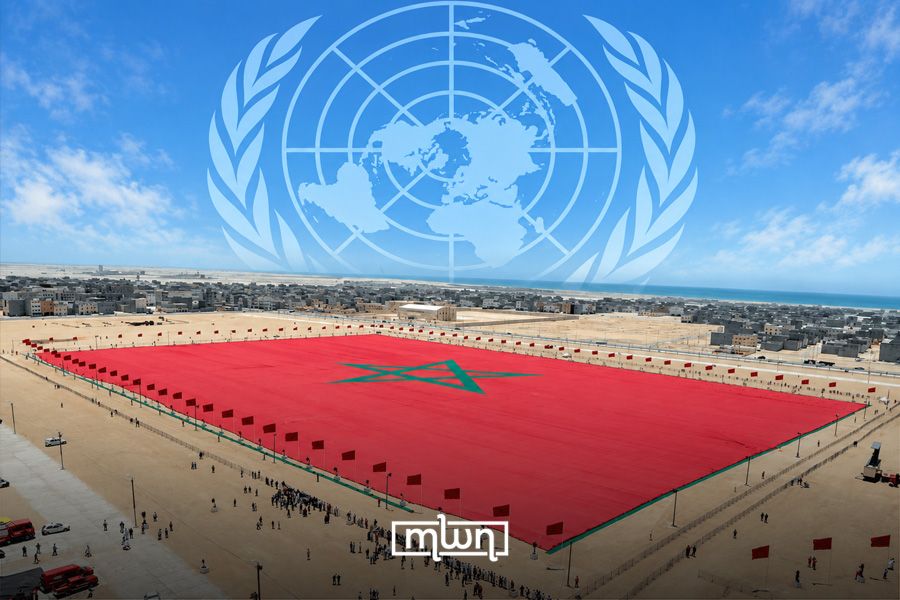
In his article, “The U.S. and UN Will Need More Patience to Resolve Western Sahara Conflict,” published on 9 October 2026, Riccardo Fabiani argues that recent talks stalled because mediators moved too quickly toward negotiations centred on Morocco’s autonomy proposal. He calls for a slower process focused on rebuilding confidence and keeping the negotiating framework open.
The need to rebuild trust deserves serious consideration. But patience alone cannot resolve the dispute, and an open process must also reflect the framework the Security Council has set: negotiations taking Morocco’s Autonomy Proposal as a basis, while welcoming constructive proposals and seeking a mutually acceptable solution that provides for self-determination. The central question, then, is how to turn that framework into meaningful engagement by all parties—without allowing calls for patience to become a justification for indefinite delay.
The central imbalance
Fabiani says the Polisario should be included in negotiations, but his argument gives it something close to a veto over who may speak for Sahrawis. He warns that expanding the table could “bypass” the Front and says a settlement involving other Sahrawi groups would lack popular legitimacy. Yet the article gives much less weight to the legitimacy of elected Sahrawi representatives in Morocco’s southern provinces, who hold electoral mandates and participate in local and national institutions.
The Polisario is a party to the conflict and can be part of negotiations. That does not mean it should be treated as the only credible Sahrawi voice, or that including others undermines the process. Elected representatives, the MSP, civil-society figures and Sahrawis from the Tindouf camps could all contribute. A broader table would make it harder for the Polisario to claim that it alone speaks for all Sahrawis.
Fabiani proposes a parallel consultative track for other Sahrawis, but keeps the main negotiations centred on Morocco and the Polisario. That arrangement risks preserving precisely the political monopoly he says is not formally exclusive. Inclusion should not be treated as a threat to negotiations; it can test and broaden the representativeness of the process.
Patience can also serve the status quo
Fabiani treats a slower process as a remedy for mistrust. But slowness is not neutral when one side has an interest in delaying a decision. A plausible reading is that the Polisario—and possibly Algeria—could see exploratory talks as a way to avoid substantive negotiations while waiting for the U.S. political landscape to change. That is an interpretation of incentives, not proof of intent; still, the article gives too little attention to the risk that “more patience” simply prolongs the stalemate.
The diplomatic opening did not appear from nowhere. U.S. recognition of Moroccan sovereignty, the growing number of countries supporting the autonomy plan, and consulates opened in Laayoune and Dakhla have helped change the political context. Fabiani acknowledges some of that momentum, but largely treats it as pressure to be managed rather than an opportunity to turn into progress. If the parties keep restarting confidence-building exercises without moving toward a settlement, the opening may disappear.
Autonomy is Morocco’s offer, not just an opening bid
Fabiani describes Morocco’s plan as the basis for negotiations and urges Rabat not to “fast-track” it. But from Morocco’s perspective, autonomy under Moroccan sovereignty is not simply an initial bargaining position with a long list of further concessions behind it. It is the maximum compromise Morocco is prepared to offer. The article underplays that domestic constraint: there is broad Moroccan consensus on the Sahara, and any solution perceived as reopening the question of sovereignty would be politically unacceptable to many Moroccans.
That does not mean negotiations cannot address the plan’s institutions, powers, guarantees or implementation. It does mean that asking Rabat to treat sovereignty as an unresolved bargaining chip misreads what autonomy represents in Moroccan politics. The practical question is how a settlement can be made credible and workable within that framework—not how Morocco can be pressed to concede beyond it.
The Baker Plan is not a ready-made bridge
Fabiani suggests that the Polisario could revive the 2003 Baker Plan as a flexible counterproposal: a period of autonomy followed by a referendum on final status. But that plan included independence as a possible outcome. Morocco rejected it, and the UN record describes the referendum question—including the option of independence—as a central Moroccan objection.
So presenting Baker II as an obvious route back to compromise does not solve the central disagreement. It reopens the very question Morocco has rejected as a condition of settlement. The article should explain why Rabat would now accept that framework, or acknowledge that this proposal is unlikely to bring the parties closer.
Gdeim Izik: confidence-building cannot erase the legal case
The suggestion that Morocco release Gdeim Izik prisoners is presented as a confidence-building measure. But the article does not adequately explain the distinction between convictions for violent offences and imprisonment for political views. The defendants were convicted in connection with clashes in which 11 unarmed security-force members were killed; Moroccan courts found them responsible for the deaths.
Fabiani proposes releases or transfers as if this were a straightforward diplomatic concession, without engaging with either the seriousness of the convictions or the due-process concerns. Any measure should be grounded in a transparent legal review, not used to imply that the prisoners were jailed simply for their political beliefs.
What the article leaves out
The piece repeatedly asks Morocco to exercise restraint, offer concessions and accept a long process. It asks the Polisario to show flexibility, but also protects its role as the indispensable interlocutor and offers it a route back to a referendum-based proposal. It calls on Algeria to maintain channels with Washington, but does not set out comparable political costs or concrete obligations for Algiers.
That asymmetry is why the article can be criticised as functionally aligned with Algerian and Polisario negotiating preferences, even without claiming that Fabiani is acting on their behalf. The proposed outcome—slow the process, keep the Polisario central, resist alternative Sahrawi interlocutors and retain the possibility of a referendum—closely matches positions that preserve the existing impasse.
To conclude, Fabiani calls for patience, but patience without a clear destination risks preserving the status quo. His article recognises the Polisario’s need to show flexibility while treating its place at the centre of the process as indispensable; it gives too little weight to elected Sahrawi representatives, underestimates Morocco’s domestic red line on sovereignty, and revives the Baker Plan without explaining how Morocco could accept a referendum that includes independence. The result is an analysis that may be framed as balanced diplomacy but whose