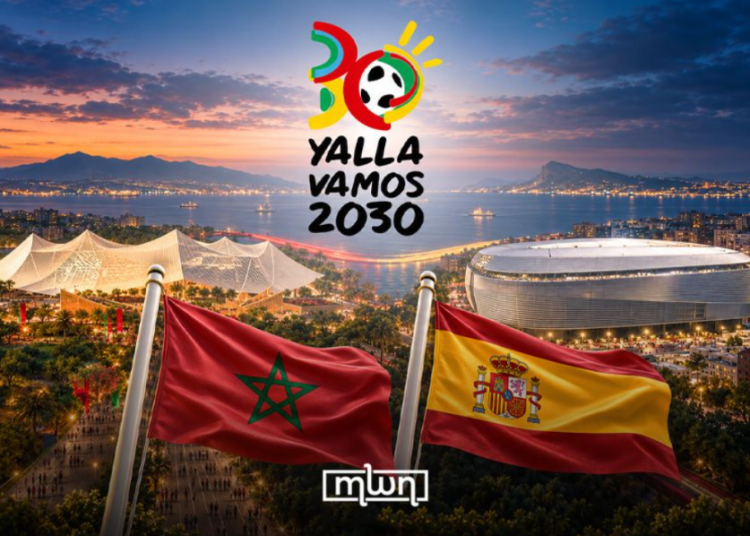
Casablanca – Spain could face substantial financial penalties and potential sporting sanctions if it withdraws from co-hosting the 2030 FIFA World Cup over the location of the final, according to Spanish radio station Cdena SER, which examined the consequences of a proposal by opposition leader Alberto Núñez Feijóo.
The People’s Party (PP) leader has repeatedly argued that Spain deserves to host the final ahead of Morocco, even suggesting that he would pull the country out of the tournament if FIFA selected Casablanca. In an interview with Spanish newspaper AS on November 17, Feijóo said he would not allow Spain to remain a co-host under those circumstances if he became prime minister.
He defended Spain’s claim on the grounds of its footballing history, achievements and international standing.
Feijóo’s position has drawn scrutiny in Spain, where Cadena SER journalist Antón Meana questioned whether such a threat could realistically translate into government policy.
Speaking on the radio program Hora 14, Meana described withdrawal as practically impossible given the commitments Spain has already made, although he acknowledged that it remains technically possible.
“Technically, it is possible, but with economic and sporting consequences,” Meana explained.
The price of walking away
The financial implications could prove particularly difficult to manage. Spain, Morocco and Portugal have already signed agreements committing them to jointly organize the 2030 tournament, which FIFA officially awarded to the three countries in December 2024. Walking away would therefore involve more than withdrawing a candidacy: Spain would have to address obligations it accepted as an official host.
Cadena SER contacted the Royal Spanish Football Federation (RFEF) about the potential financial penalties, but the federation declined to disclose any figures because the relevant agreements remain confidential. The broadcaster reported that the documents already signed would make withdrawal particularly complicated.
A unilateral exit would expose Spain to contractual claims and disputes over preparations already undertaken, although the precise financial consequences would depend on the terms of its agreements with FIFA and other parties.
A political gamble with sporting risks
The sporting implications raise a separate concern. FIFA requires its member associations to manage their affairs independently, without improper political interference.
If a Spanish government attempted to force the RFEF to abandon its hosting commitments, FIFA could examine whether that intervention breached its statutes.
Such a finding could lead to sanctions against the federation, potentially including suspension from international football. However, a political statement alone does not automatically constitute interference, and neither a suspension nor exclusion from future World Cups would be an inevitable consequence of withdrawing.
The dispute also exposes the competing ambitions of the tournament’s two largest co-hosts. Morocco hopes to stage the final at the Grand Stade Hassan II in Benslimane, near Casablanca, while Spain has put forward several venues, including Madrid’s Santiago Bernabéu. FIFA has yet to announce its decision, despite increasingly public arguments from football officials and political figures in both countries.
The Spanish federation has continued preparations for the tournament, with FIFA inspectors visiting the Santiago Bernabéu on November 12. Morocco expects an inspection delegation later this month as work progresses on its proposed stadiums and supporting infrastructure.
Spain would also have to consider the consequences of abandoning an event it has spent years preparing to host. The decision could disrupt stadium projects, tourism planning and commercial arrangements, while forcing FIFA and the remaining organizers to reconsider how they distribute matches across the tournament.
Feijóo’s proposal has not become official Spanish government policy, and the RFEF has not announced any intention to withdraw. Nevertheless, the warning from Cadena SER illustrates the difference between campaigning to host the World Cup final and accepting the financial and sporting consequences of leaving the competition altogether.