






























































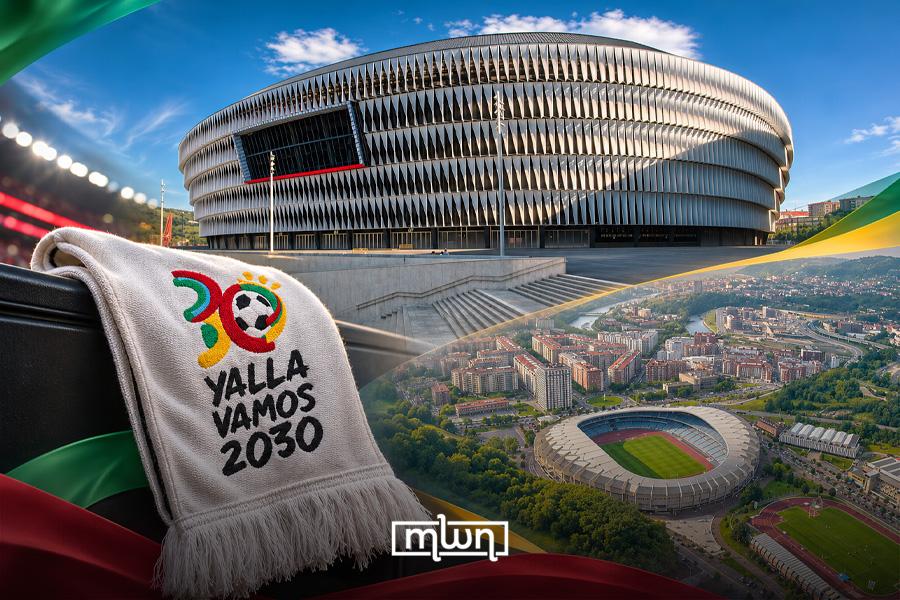
Rabat – FIFA has rejected a proposal to combine Bilbao and San Sebastian into a single host location for the 2030 World Cup, complicating efforts by the two Spanish cities to share the financial and organizational demands of staging matches at the tournament.
Royal Spanish Football Federation (RFEF) President Rafael Louzan confirmed the decision on Thursday, explaining that FIFA would not accept an arrangement treating San Mames in Bilbao and Anoeta in San Sebastian as one venue.
The Basque proposal called for each stadium to host two group-stage matches under a joint candidacy. Rather than committing to two independent host-city bids, local institutions hoped to divide responsibilities and limit the costs associated with FIFA’s hosting requirements.
According to Spanish newspaper La Razón, the rejection leaves both cities facing a decision on whether to continue pursuing their World Cup ambitions separately.
The joint proposal was not simply an attempt to distribute matches between neighboring cities. Basque institutions had previously raised objections to several hosting conditions, including mandatory infrastructure investments, commercial restrictions and limits on other events during the tournament.
A shared candidacy offered a way to retain both stadiums in the competition while reducing the commitments each city would have to accept independently.
Speaking to reporters in Santiago de Compostela, Louzan explained that FIFA considers Bilbao and San Sebastian two separate host locations and has declined to combine them into one.
Read Also: Spanish Media Push for European Alliance Against Morocco’s 2030 World Cup Final Bid
The decision also exposed tensions over how the matter was communicated.
San Sebastian’s city council confirmed receiving FIFA’s response but criticized the handling of the announcement, particularly after Louzan discussed the decision publicly. The municipality said it would review the documentation before determining its next steps.
Bilbao’s authorities have taken a more reserved approach, indicating that they will consult other Basque institutions before making a public decision. The Basque government, meanwhile, said it had not received a direct notification from FIFA.
The rejection does not automatically remove San Mames or Anoeta from consideration for the 2030 World Cup. Both stadiums remain potential venues, but their participation now depends on whether local authorities are prepared to pursue separate arrangements.
However, this counts as another unresolved issue for Spain’s preparations for the tournament.
Spanish organizers are already reviewing their proposed host-city lineup after Malaga and A Coruna withdrew their candidacies. Vigo and Valencia are also seeking places on the list, with FIFA inspections expected in the coming weeks.
Louzan endorsed Vigo’s inclusion, although he acknowledged that the final decision rests with FIFA and the city’s ability to meet hosting requirements.
For Bilbao and San Sebastian, the immediate concern is less about stadium capacity than the conditions attached to hosting. Both cities must now decide whether the opportunity to stage World Cup matches justifies the financial and administrative commitments they had hoped to share.