


 Join on WhatsApp
  Join on Telegram
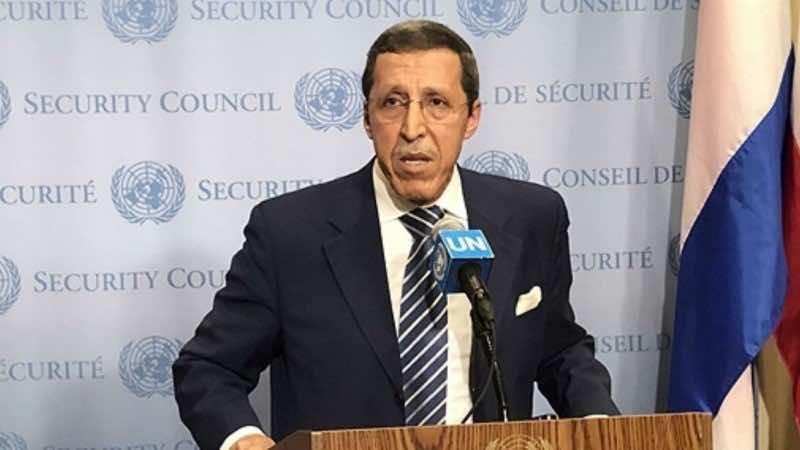
 Rabat – Morocco’s permanent ambassador to the UN Omar Hilale expressed on Thursday the country’s satisfaction with the recognition of the newly adopted Resolution 2654, which confirmed Algeria’s responsibility in the Western Sahara dispute.
Thirteen members of the Security Council voted in favor of the new resolution, which “strongly” encouraged all parties in the dispute to engage in the UN-led political process and potential roundtable talks aiming to relaunch dialogue, as part of the international community’s efforts to find an agreed-upon and mutually acceptable solution to end the dispute.
Paragraph three of the resolution said that the Security Council “strongly encourages Morocco, the Frente POLISARIO, Algeria, and Mauritania to engage with the Personal Envoy through the duration of this process, in a spirit of realism and compromise to ensure a successful outcome.”
Commenting on the language in the new resolution, Hilale said that the Security Council has “sealed once again its [Algeria’s] status as a major stakeholder in the regional dispute over the Moroccan Sahara, by enjoining it to cooperate and engage with the UN Secretary-General in the political process of the round tables in a spirit of compromise, and realism until the completion of this process.”
The Moroccan ambassador emphasized that the new resolution reaffirmed the UNSC’s “consistent position” that a solution to the dispute should be based on a political, realistic, and sustainable basis.
According to Hilale, the position leaves no room for “ambiguity,” and renews the same statements made by UN Secretary-General Antonio Guterres in his report on the situation in Western Sahara.
“The council asks Algeria as a stakeholder in this conflict to develop and expose its position on the Sahara issue in order to move towards the solution of this dispute,” Hilale said, stressing that the resolution also documents Morocco’s efforts to find a solution to end the dispute.
For Hilale, the resolution “irreversibly enshrines, like the Council’s resolutions adopted since 2007, the pre-eminence, credibility, and seriousness of the Moroccan autonomy initiative as the only solution to this regional dispute within the framework of sovereignty and integrity of the Kingdom.”
Morocco submitted the autonomy initiative to the UNSC in 2007. Since then, a chorus of over 90 countries have shown their support and described Morocco’s proposal as a credible and serious basis to end the dispute over Western Sahara.
In addition to the US, several countries described the autonomy initiative as a good basis to find a solution, including Germany, Belgium, and the Netherlands.
Over 27 countries have also opened consulates in Morocco’s southern provinces of Dakhla and Laayoune, reflecting their support for the Moroccan Autonomy Plan and preserving the country’s territorial integrity and sovereignty over Western Sahara.
“The Security Council has just reinforced the massive support of the international community for the autonomy initiative,” Hilale said, noting that this support is reflected in the expression of “strong, clear, and official support of more than 90 countries to the Moroccan initiative,” as well as the opening by many countries of general consulates in the cities of Laayoune and Dakhla.
Hilale also celebrated the new resolution that acknowledges Polisario’s provocative acts, hampering the UN-led political process and the work of the peacekeeping operation in Western Sahara, MINURSO.
“The new resolution reaffirms the consistent position of the Security Council, and in the second provision…the Council calls on the armed separatist group ‘Polisario’ to end its obstructions to the freedom of movement of MINURSO in its mission area and to cease its obstructions to the movement of resupply convoys of its observers,” the ambassador said.
The Security Council also reiterated concerns about the inhumane conditions in which Sahrawis live in Tindouf, where food insecurity remains one of the most worrying issues.
The council urged international humanitarian organizations to ensure the delivery of food assistance to the secluded populations of the Tindouf camps, checking that they align with the practices of the United Nations, Hilale said, echoing concerns that the UN Secretary-General made in his recent report on the situation in Western Sahara.
In the report, the UNSG emphasized that “the refugees were at risk of serious food insecurity and malnutrition,” recalling a recent statement from the UN System in Algeria outlining the urgent and critical needs related to food insecurity in Tindouf.
Many linked shortages in food aid to ongoing embezzlement of goods that are directed to Sahrawis.
Polisario and Algeria have been linked to embezzlement of aid in several reports, including a document from the European Anti-Fraud Office (OLAF) in 2015.
The OLAF report exposed the embezzlement of aid between the period of 2003 and 2007, showing that Polisario leadership was directly involved in selling Tindouf’s humanitarian aid in Mauritania and sub-Saharan markets under Algeria’s watch, without taking any accountability.
“This embezzlement has been confirmed in several reports of the Office of the High Commissioner for Refugees, the anti-fraud office of the European Union, and many humanitarian NGOs,” said Hilale.
Resolution 2654 renewed the mandate of MINURSO for one year until the end of October 2023.


