


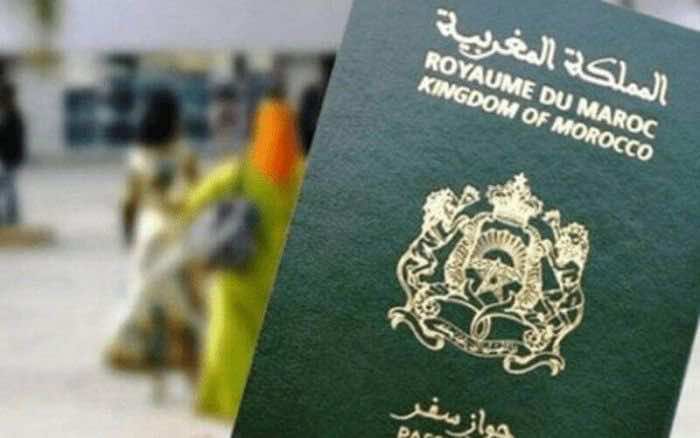
When COVID-19 first appeared in Wuhan, China, no one could have predicted its economic, health, and humanitarian consequences. At the very beginning, both developed and developing countries dealt with the pandemic as if it were an internal Chinese issue, blindly trusting the filtered and not-so-reliable information provided by the ruling Communist Party in Beijing.
This approach, backed by the World Health Organization, who many claim downplayed the severity of the virus and its ways of transmission, backfired. The virus started to hit other countries hard, symbolizing a globalized world with a shared destiny, for better or for worse.
Morocco is no exception to this reality. In fact, when the virus hit our neighbors and commercial partners, namely France, Spain, and Italy, Morocco learned from their mistakes and took proactive measures to curb the virus’ transmission.
The first was closing borders and canceling all domestic and international flights, leaving tens of thousands of tourists trapped in Morocco and Moroccans stranded abroad. Morocco took this decision abruptly and saw its effects immediately.
I was personally directly impacted by this decision. I was in Rabat at the time and had a flight booked to Paris, where I work. After two days of struggle in Rabat’s airport, I was able to make the trip. Unfortunately, my fellow Moroccans who are stranded abroad did not have the same chance.
‘Here you are home’ … but not too much!
In the summer of 2002, national television and radio stations aired a commercial nonstop, welcoming Moroccans living abroad (MREs). “Here you are home…” it said. Featuring popular Moroccan singer Najat Aatabou, the commercial’s goal was to welcome all Moroccans living in foreign countries and ensure they feel happy and not discriminated against in their home country. After all, they are a major source of foreign currency for the country.
Unfortunately, it seems the current Moroccan government forgot not only this commercial’s spirit but also that they have at least 32,000 citizens stranded abroad, according to the most recent official numbers.
This tally is below the real number as it includes only the fiscal residents of Morocco who went abroad for tourism, professional, or medical purposes, and who contacted the country’s diplomatic representations.
If we add the Moroccan students studying abroad and the undocumented immigrants established mostly in Western European countries, who want to go back to their home country as economic horizons look gloomy in their host countries, we will easily exceed the bar of 100,000 stranded Moroccans.
Most have already run out of cash and are struggling to meet their daily basic needs. They had to face difficult lockdowns in countries they barely know. To the financial hurdles, we can add the administrative ones: For some, visas have already expired.
Moreover, psychologically and emotionally, most of them exhausted their stock of forbearance and cannot wait any longer to see their loved ones. Some videos shared on social media are heartbreaking.
‘The Moroccan exception’ proves true
One hobby that some Moroccan politicians cherish is commercializing Morocco as a global exception. For once, I can fully agree with them. As a matter of fact, and to the best of my knowledge, Morocco is the only country on Earth to have shut its doors in the face of its citizens.
Countries that respect their citizens began to bring them back home gradually as border controls and closures reached a level not seen since the Cold War.
As if closing the borders to them and abandoning our compatriots trapped abroad was not humiliating enough, the Moroccan government allowed most of the tourists and visitors stuck in Morocco to return to their home countries, leaving the Moroccans abroad startled.
This action triggered a major backlash on Moroccan social media. Internet users criticized a policy that framed the Moroccans stuck abroad as second-class citizens.
As the Moroccan government excels in the art of ignoring its own citizens, it ensured all the repatriation planes coming to Morocco were empty—supposedly for sanitary reasons.
Knowing that most of these planes came from destinations where Moroccans themselves are stranded, this step showed how Morocco’s government failed to value its own people. The plane I took to Paris came from Orly to Rabat empty.
According to the official numbers, more than 532 empty flights came to Morocco to repatriate foreign nationals. I will let you do the math to figure out how many stranded Moroccans these flights could have brought home.
What now?
It took the Moroccan government the death of one stranded Moroccan woman in absolutely humiliating conditions—found dead in a bathroom—in the Spanish enclave of Melilla to start repatriating its citizens from there.
We are aware that repatriating thousands of citizens in this public health crisis is not an easy task. It takes time, infrastructure, and a high level of coordination between several stakeholders such as ministries, consulates, and airline companies—no one denies it. However, countries with less means than Morocco successfully did so.
Read also: Moroccan Man Dies After Spain Refuses Repatriation
This means there are no valid reasons we cannot. Let us also keep in mind that most of the stranded Moroccans abroad are ready to pay for their flights and hotel rooms to quarantine, if necessary. The bottom line here is this issue is less about means and more about political will.
The first step in launching the process of repatriation is setting a start date and an operational schedule to follow. This move will provide tremendous psychological relief for all the affected. Second, the operations must proceed gradually and in waves, as we all know that Morocco does not have the adequate infrastructure and resources to repatriate thousands of citizens all at once.
Third, Morocco should prioritize the elderly, those vulnerable with health conditions, and pregnant women. If this operation is going to take weeks, so be it. At least, at the end of the day, all Moroccans stranded abroad will reunite with their loved ones.
A stain on Morocco’s reputation
The dire and incomprehensible strategy Morocco chose to deal with this topic will leave serious and incurable deep wounds in its relations with its own citizens. The strategy is mainly based on running out the clock as if the suffering of our fellow Moroccans is some kind of boring game for our decision makers.
Why did “the most beautiful country in the world” fail to protect, and abandon its citizens? Why did Morocco bring home 100 Moroccan students from Wuhan in the first weeks of the pandemic and later back-pedaled on this strategy? How can Morocco market itself as a role model in managing the COVID-19 crisis and at the same time turn its back to its own citizens?
After this crisis is over, history books will retain how each country treated its citizens stranded abroad and unfortunately, Morocco will go down as one of the worst if not the worst in class.
The views expressed in this article are the author’s own and do not necessarily reflect Morocco World News’ editorial views.
© Morocco World News. All Rights Reserved. This material may not be published, rewritten, or redistributed without permission.




