 Join on WhatsApp
 Join on Telegram
It is undeniable that women are key figures within rural communities. As a sphere where well-being is heavily determined by the success of the agricultural sector, contributions from rural women play an integral role in community development.
However, despite their participation, the purpose of rural women is often commodified, defined by informal responsibilities, heavy workloads, and restricted access to the labor market and social services. This cycle of informality and marginalization furthers the “feminization of poverty,” a phenomenon clearly present when we examine the current status of rural women and girls in North Africa.
As a concept, the feminization of poverty describes a situation or context in which women represent a disproportionate percentage of those in poverty due to gender biases within education, safety, health, employment, climate change, households, and cultural norms. For many women throughout rural communities, this isn’t so much a theory as it is a seemingly inescapable reality of everyday life.
Women make up over two-thirds of the world’s illiterate population, with young rural girls being unenrolled from primary education due to poverty, distance, and the ideology that girls don’t need an education. It is imperative to recognize why female education is so important beyond the aspects of literacy and numeracy training.
Education empowers a girl from an adolescent age to understand her capability to obtain income-generating skills, access social protective services, and contribute to the economic life of her community beyond the home or domestic sphere. Education is often said to be the most powerful tool in fighting the feminization of poverty as it has the potential to entirely reroute the destiny of young girls.
Read also: Female Empowerment Can Drive Development in Morocco
In some rural African communities, girls with little to no access to education are forced to undergo female genital mutilation and forced child marriages. These practices are unequivocal violations of women’s human rights and endanger women with devastating health consequences, including hemorrhaging, infection, chronic pain, increased risk of HIV/AIDS, childbirth complications, or even death.
Further threats to female health and safety are exacerbated by poor hygienic and sanitation conditions, gender-based violence, and inadequate access to health care or social security. Intergenerational beliefs and patriarchal power dynamics maintain this fatal commodification of girls and women, again, perpetuating the feminization of poverty.
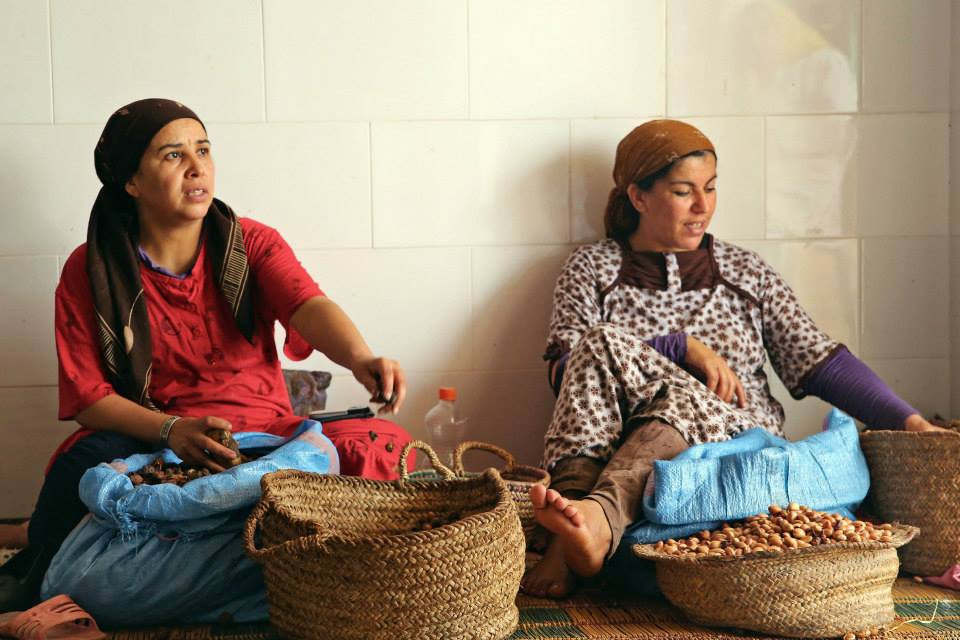
In many regions, the tasks of rural women include planting and selling crops, tending to livestock, engaging in small-scale trading, looking after children, preparing meals, cleaning, maintaining the home, fetching water, and collecting firewood. Despite the importance of these tasks in providing food at domestic and national levels, the role of rural women within the agricultural sector is often belittled and classified as informal labor.
This informality furthers the vulnerability and exploitation of rural women by restricting their access to land and livestock ownership, rightfully earned wages, and services needed to increase productivity while easing the burden of household duties. And once again, the multidimensional feminization of poverty perseveres.
Irrespective of their intersectional positionalities, all women and girls deserve autonomy, life satisfaction, and to be viewed as individuals with intrinsic value and worth. This is a central theme when it comes to women’s empowerment. Female-focused ideologies and projects work to embolden individual women with confidence to find their voices and an awareness of their rights, dreams, and agency. While this is a crucial stepping stone in addressing gender inequality, solely focusing on expanding the feeling of agency has proven to be an insufficient strategy for community development.
Read also: Moroccan Women Still Face Obstacles to Access Labor Market
Not only does this narrow focus tend to actually burden women more than strengthen them, but the consequences of gender inequality are much greater than many initially assume. The sweeping magnitude of female oppression harms all sectors of community development, which in turn hurts everyone. Particularly in regions of Africa without education, health, employment, and food security, women’s empowerment must go beyond personal development and focus on sustainable action at a variety of infrastructural levels with men and women as partners in change.
In rural Africa, efforts that aim to restructure the status of women through participatory development are proving this notion to be true. Projects that merge female self-worth, agency, and power with agribusiness, cooperative building, and climate smart farming strive to not only support women’s socioeconomic conditions, but fight against the cycle of hunger, climate change, and poverty.
This allows for women’s empowerment to be a launching point for community development as a whole: alleviating agricultural inequalities strengthens the resilience of rural women, and strengthening the resilience of rural women alleviates agricultural inequalities.
The theme emerges that women’s empowerment is not just a moral obligation, but an undeniable, absolute necessity when fighting for food security, community development, poverty reduction, and social change.
We must demand accountability from organizations, governments, and institutions to challenge the oppressive architecture they were built upon and uplift efforts that support women to lead, innovate, and succeed. For that, it is imperative that we address the reality of the feminization of poverty and ensure that women’s empowerment is at the heart of the fight for a more sustainable, equitable, and just society.