Join on WhatsApp
 Join on Telegram
Rabat – It is no secret that Eid Al-Adha is one of the biggest occasions for economic activity in the Arab and Muslim world. Yet aside from the obvious revitalization of the travel or cattle trading sectors, several seasonal jobs also materialize during the Eid season.
Frequently run by people in street-side stalls that are built to be easily removed after Eid ends, these professions usually focus on providing people with supplies necessary for the celebrations.
Some vendors sell fodder and hay used to feed the animals that are to be sacrificed, thus providing an opportunity for unemployed people and low-income workers to obtain additional work, even if only for a short period of time.
The window to sell these products can be very short, however, usually only lasting for the week prior to the big day.

Other workers also sell general supplies that are not necessarily related to Eid, yet nevertheless see an increased demand, such as coal, ropes, and knives.
Knife sharpening becomes prominent during this time, with workers setting up sharpening wheels near the areas where other supplies are sold.

Perhaps due to the greater availability of these more general products, however, they often witness slower sales than the hay and fodder.
Speaking to Morocco’s MAP news agency, Ayoub, a young man selling such supplies during the season, voiced these complaints earlier this month.
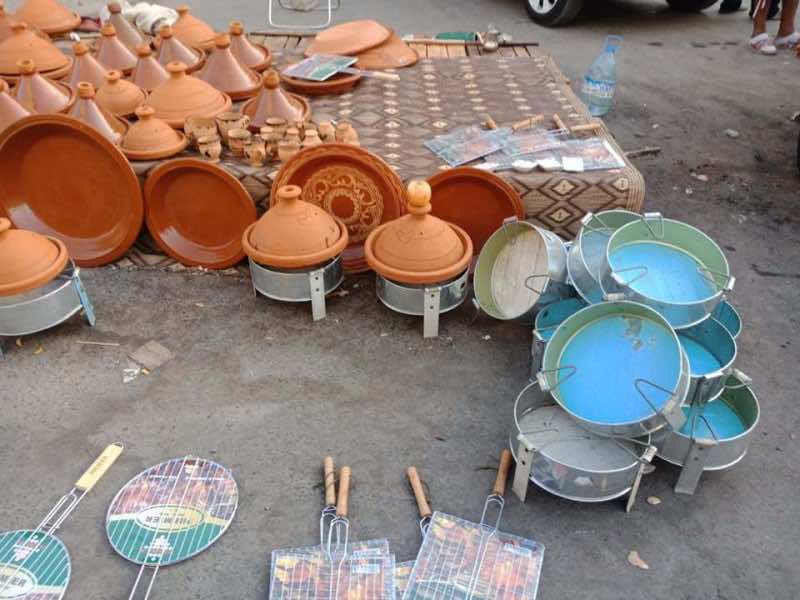
“I come looking to make a living every year in Tangier’s souk, but this year demand is still low,” he said. “I sell grills, burners, other supplies, and coal, but the selling rate is slow.”

Nevertheless, the presence of sellers providing such products has become an integral part of the Eid atmosphere in Morocco, and continues to offer many with a precious source of income during one of the most financially demanding periods of the year.
The sales also help farmers or citizens of rural areas who are often able to sell their surplus of hay and fodder for the festivities. They also often gather wood from trees that fell or decayed throughout the year and heat it up to produce charcoal to be sold.
Eid Al-Adha almost matches the winter season in terms of coal demand, which is primarily used for heating.
Transport services
While travel between cities in buses, trains, and Morocco’s “grand taxis” witnesses an uptick during the Eid season as people return to their families, small truck or scooter drivers within cities also see an increase in their commercial activity.
These drivers often help individuals and families transport their sacrificial animals from the local markets where they are bought to their places of residence, thus receiving a precious source of income as they themselves try to cover their own Eid expenses.
In the days leading up to Eid, it is common to see people taking scooters or small trucks with sheep or goats in the back.
The profession has similarly witnessed something of a dip in the past few years, at least with regards to activity during the Eid season.
However, as citizens continue to voice complaints about reduced purchasing power and mounting expenses, these workers can also only hope for stabilization in the market and prices that can leave both customers and workers satisfied.
Read also: Eid Al Adha in Morocco: How Many Sheep Can You Fit in a Jeep?
Cooking lamb heads
Usually the last of these temporary professions to disappear from Morocco’s streets following Eid, many people grill sheep heads for their relatives and neighbors in streets and alleys for another source of added income.
The job only lasts for a day or two and is often performed by the very same people who sell the supplies in the days preceding Eid.
Many families choose to pay these workers to grill the heads in a show of financial support and for the added benefit of not working with a usually messy and hard part of the animal.
The people working this job are usually able to bring in respectable amounts of money for a day or two of work, which many of the younger workers put towards their school fees or other life necessities.
Thus, Eid Al-Adha festivities do not limit themselves to the residences of Moroccan families where the animals are sacrificed, but can be witnessed all over the cities, with the occasion presenting an opportunity for many people to generate income for their families.