By Loubna Flah
Morocco World News
Casablanca, June 19, 2012
At the current conjuncture, the lack of job opportunities in Morocco can be a lurking threat to the government’s viability and, eventually, to the country’s stability. Those who believe that Morocco is out of the danger zone may have to reconsider their appraisal of the situation. Faced with all sorts of hurdles ranging from financial to infrastructural ones, the government is still pondering how to fulfill their promises. The domestic growth seems entrapped in a status quo due to the budget deficit and the consecutive seasons of drought that paralyze agriculture, one of the key sectors in the Moroccan economy. The public sector burdened with public expenses can no longer lift the weight of job demands among Moroccan youth.
To sort out this dilemma, the government displayed openness towards foreign investment, thus allaying all fears raised about its conservative ideology, which seems to be more and more diluted. In fact, PJD officials give priority to all pending and vital issues, namely employment, health and education, rather than ideological disputes. The government relies on the private sector to employ the majority of the discontent workforce who are still taking to the streets claiming their right to employment.
The challenges facing the unfledged private sector remain insurmountable since they have trait to the areas of investments rather than productivity potential. A great part of the national capitals are invested in real estate, building business rather than industrial activities liable to contribute directly to the domestic growth. The government has been offered several opportunities to revive the public sector through assistance programs and loans. Institutions that lend money to countries with payment imbalances like the IMF came under attack for their interventionist approach in shaping domestic policies and setting the order of priorities at the expense of national interests.
The European Bank for Reconstruction and Development emerges as a counterweight to more imposing banking institution since it provides financing solely to the private sector. With a capital base of 30 billion Euros received mainly from donors, the EBRD endeavors to help the poorest countries where basic services such as water, roads and public transport, among others, suffer from years of underinvestment. The EBRD was established in 1991 in response to major changes in the political and economic climate in central and Eastern Europe. Today, it works in 29 countries from North Africa, central Europe and central Asia financing projects, primarily in the private sector, that serve the transition to market economies and pluralistic democratic societies.
The EBRD endeavors to create an infrastructure for democracy in the SEMED (Southern and Eastern Mediterranean) region by capitalizing on domestic growth. It invests money in an environment where political pluralism is secured and the general practices undertaken by officials are conducive of democracy. Yet, there are fears that the attention given to the private sector may lead to hasty privatization. At the empirical level, the presumed efficiency and growth benefits of privatization have not been forthcoming. Privatization has tended to result in increasing unemployment and inequitable access to key assets and social services.
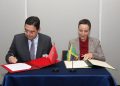
Morocco has also received a loan granted by the African Development Bank (ADB) estimated at 64 million Dirhams that aims at providing Moroccan entrepreneurs in the agriculture sector with technical assistance. The fund allotted by the ADB group is intended to assist micro-companies operating in the agricultural sector through a series of trainings and workshops. The African Development Bank Group is a development bank established in 1964 with the intention of promoting economic and social development in Africa. The group comprises the African Development Bank, the African Development Fund, or ADF, and the Nigeria Trust Fund, or NTF. ADB provides loans and grants to African governments and private companies investing in the regional member countries in Africa. It is owned and funded by member governments, and has a public-interest mandate to reduce poverty and promote sustainable development. Its headquarters is in Abidjan, Côte d’Ivoire.
It is well known that decision makers seldom scrutinize the clauses in loans agreements in times of crisis. The absence of a well-informed vision and an accurate risk assessment may have detrimental repercussions on the national economy in the future. Benkirane’s government is caught between the hammer of popular expectations and the anvil of a shrunk economy. In this narrow sphere of action, the electoral slogan seems to falter and give way to a more realistic outlook on the whole situation.
© 2012 Morocco World News. All Rights Reserved.