Fez – I’m traveling to Spain for the first time this weekend, and frankly I’m not looking forward to it. After all, I don’t even speak the schoolgirl Spanish taught in Los Angeles public schools (I focused on French). And one thing my life in Morocco has taught me is that visiting a country where you don’t know the language or the culture is a very unpleasant experience! Imagine arriving in a country where you don’t know its histories or traditions, you don’t understand the language, you don’t know a soul, and you’re all alone in a sea of strangeness. In other words, imagine being a tourist.
I don’t have to imagine being a tourist, as I had toured a bit of Europe in my early teens on a family vacation. I knew nothing of the language or the culture of the places that I visited, and frankly couldn’t be bothered to learn a thing. I just remember hopping on and off buses, visiting one vaguely historical site after another, taking face-book appropriate photos in the days before facebook (yes, I’m that old) and generally living the pampered, photogenic ignorance of the “ugly American” abroad.
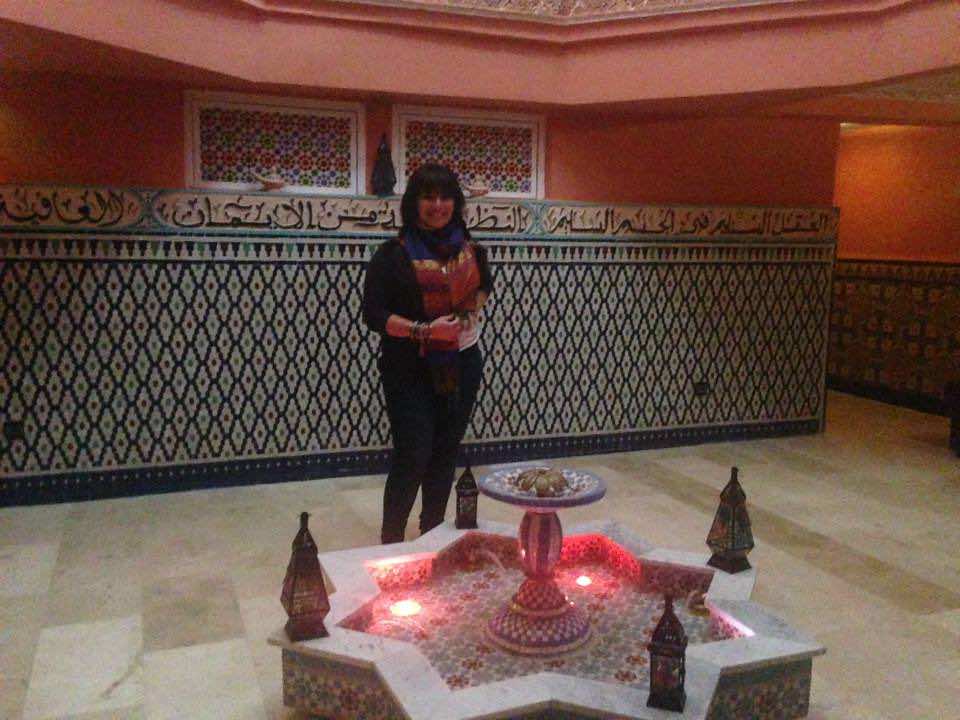
But coming to this country after having spent half a decade studying Islam, the Middle East and Arabic was a very different experience. Even though I was here for only a short time on a language fellowship, Morocco seemed like home for me almost from the first. There were aspects of the culture that were deeply familiar to me after my studies: I knew that Inshallah could mean one of about ten different things, including “yes, right now” and “no, never.” I knew that Ibn Batutta was a Moroccan who undertook the longest voyage of the Middle Ages, and that he was a son of Tangiers. I knew enough Fusha that Darija came to me with surprising ease, and had enough French to cover the gaps where my Arabic failed me. I took the time to learn something of the language and the culture of this wonderful country, and in return was gifted with happiness, real friendship and the best memories of my life.
My language fellowship ended mid-August, and I left Morocco to visit Prague, Krakow and Budapest on graduation vacation. I thought that touring Eastern Europe would be an enjoyable way to reward two years of dedicated study, but I was wrong. Being a tourist once again, without the linguistic or cultural knowledge necessary to appreciate a new place, was an unpleasant experience. I missed Morocco terribly, especially when cabdrivers failed to greet me with the warmth I was used to, or when people looked at me in askance when I said “dak shi ghali bizaaf” to the souvenir vendors.
Living in Morocco—not as a tourist, not as a Moroccan, but as a kind of inter-cultural person with a toehold in both identities—transformed my opinions about travel, life abroad, and what it means to be a “stranger in a strange land.” It made me understand viscerally that the visitor has an intellectual and moral responsibility to the country that they visit: to know something of the country, to understand at least something of its past, its present, its traditions and its languages. As it is said in both English and Arabic, al-`aql zeina, knowledge is beautiful. And knowledge can also make your travels beautiful, it can enrich your experience of a place and make the whole known world a home for the mind. So for those of you who plan on being strangers in the strange land that is Morocco anytime soon, or for those visiting now, I have two pieces of advice: first of all, ma damta fi al-maghreb, fi la tastaghreb: as long as you are in Morocco, don’t be surprised by anything! And second, do your best to learn a bit of darija, and to understand a bit about the many greetings, blessings, hospitality traditions and cultural riches of this place. You will find yourself, then, not a stranger, but a friend.

© Morocco World News. All Rights Reserved. This material may not be published, rewritten or redistributed