 Join on WhatsApp
 Join on Telegram
August 4, 2011
UN News Center
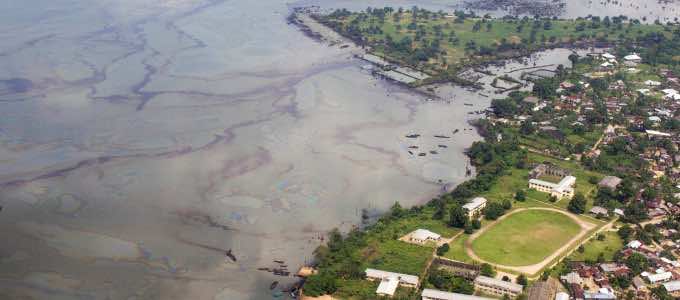
The environmental restoration of Nigeria’s Ogoniland oil region could prove to be the world’s most wide-ranging and long-term oil clean-up exercise ever, if contaminated drinking water, land, creeks and other ecosystems are to be brought back to full health, according to a United Nations report released today.
It could take 25 to 30 years, with an initial investment of $1 billion just for the first five years, to clean up pollution from more than 50 years of oil operations in the Niger Delta, ranging from the “disastrous” impact on mangrove vegetation to the contamination of wells with potentially cancer-causing chemicals in a region that is home to some 1 million people.
The independent scientific assessment, carried out by the United Nations Environment Programme (UNEP) over a 14-month period, showed greater and deeper pollution than previously thought after an agency team examined more than 200 locations, surveyed 122 kilometres of pipeline rights of way, analyzed 4,000 soil and water samples, reviewed more than 5,000 medical records and engaged over 23,000 people at local community meetings.
“It is UNEP’s hope that the findings can break the decades of deadlock in the region and provide the foundation upon which trust can be built and action undertaken to remedy the multiple health and sustainable development issues facing people in Ogoniland,” UNEP Executive Director, Achim Steiner said of the report, which was presented to Nigerian President Goodluck Jonathan today in Abuja, the capital.
“In addition it offers a blueprint for how the oil industry, and public regulatory authorities, might operate more responsibly in Africa and beyond at a time of increasing production and exploration across many parts of the continent.”
The report, Environmental Assessment of Ogoniland, proposed the establishment of an Ogoniland Environmental Restoration Authority as soon as possible, with an initial capital injection of $1 billion from the oil industry and the Government to cover the first five years of the clean-up project; and a soil management centre with hundreds of mini-centres to treat contaminated soil and provide hundreds of job opportunities.
It also recommended setting up a centre to promote learning and benefit other communities impacted by oil contamination in the Niger Delta and elsewhere in the world.
The study found that some areas, which appear unaffected at the surface, are in reality severely contaminated underground, and action to protect human health and reduce should be taken without delay. In at least 10 communities where drinking water is contaminated with high levels of hydrocarbons, public health is seriously threatened.
In one community, Nisisioken Ogale, near a Nigerian National Petroleum Company pipeline, families are drinking water from wells contaminated with benzene, a known carcinogen, at levels over 900 times above UN World Health Organization (WHO) guidelines, warranting emergency action ahead of all other remediation efforts.
The report noted that the impact of oil on mangrove vegetation had been disastrous, with many inter-tidal creeks where mangroves that serve as nurseries for fish and natural pollution filters denuded of leaves and stems, the roots coated in layers of a bitumen-type substance. But despite community concerns, fish consumption was not posing a health risk.
Meanwhile, Ogoni communities are exposed to hydrocarbons every day through multiple routes. While the impact of individual contaminated land sites tends to be localized, air pollution related to oil industry operations is pervasive and affecting the quality of life of close to 1 million people.
UNEP has emphasized that the study, which began in late 2009, is independent and its funding by the Shell Petroleum Development Company is in keeping with the polluter-pays principle.