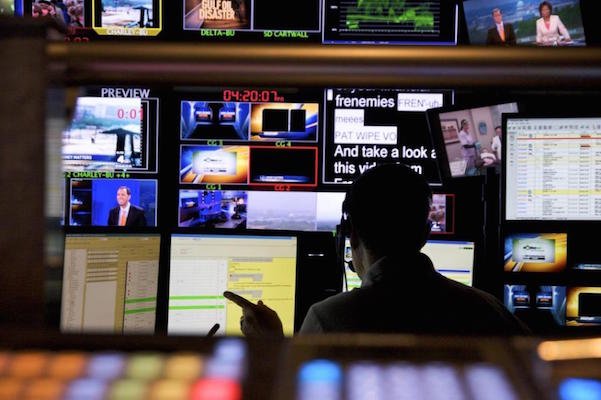
Rabat – The consensus in the meetings seems to have always been that negative stereotypes and attitudes as well as untrue ideas about Arabs, Muslims and Islam are conveyed through many channels amongst which education and the media; essentially TV, are the most influential. The question that everybody seems to want answered is “how do the media do it?”
Far from me the pretension to answer that question in any systematic or exhaustive way here. I will limit myself to listing – and perhaps making some comments – on the most frequently used techniques which the media have actually resorted to to create, support or destroy opinion as well as people for that matter. When the media, which are an important component of the democratic construct, malfunction, the whole democratic system is weakened and abused. In many countries, the USA in particular, some leading TV networks have grown out of the normal size that the media must have in a checks and balance political system and have ended up becoming not a system of controlling politics and of protecting democracy but a strong political party with huge interests to protect and which are not always those of the US population.
1. The media present the rest of the world through the Western and Judaeo-Christian value system.
2. The media do not reflect objective images of the world; they present subjective evaluations and judgments of the world.
3. The media take the Western and Judaeo-Christian value system as a norm against which all other cultures, civilizations and religions are assessed.
4. The perspective from which the media perceive and present Islam is biblical. This means that the image presented is on the one hand that of Islam as a devious and heretic ideology and of Muslims as a group of apostates that need either or both to be punished and redeemed.
5. The media select who to talk about as victims of violence and who to present otherwise even when killed at a war or shot by a sniper.
6. The media are being concentrated within a few hands. Free press, just like local press, is having tough times as it has to compete with huge corporations whose business is making news. The more the concentration, the less diversity there is and the less freedom of expression is allowed for.
7. The media consciously blur the frontiers between facts, news and commentary.
8. The leadership – owners – of TV station networks and other forms of media do not necessarily prefer objectivity and do not hesitate to present subjective interpretations and political choices, for example, in the form of objective reporting. They do not hesitate because it is not easy to contradict them or to prove them wrong. The public actually has no recourse to make its voice heard.
9. The media tend to present personal political options in the form of consensual options or facts. The systematic use of phrases such as “people say,” “some people are saying”, “many people think” to introduce one’s own opinion is very frequent in TV, for example.
10. The media tend to fix meetings and face-to-face confrontations between political opponents who are not of an equal status and who are of unequal communication skills, for instance, to favor one side over another.
11. The media invite people to shows and introduce them as experts in a certain field while they are not or while the real experts are denied TV time. Likewise, the media tend to reduce complex issues to oversimplified sketches and ask non experts to talk about them. A person who has been to a country, for a year or two, for example, is introduced as if s/he were an expert in that country.
12. The media select what to show and what not to show.
13. The media fix interviews by unethical editing which makes a person say what he/she has not really said.
14. The media attack individuals and groups and single them out when their opinions are contrary to their interests. On the other hand, they promote ideas and people who are in favor of their own interests and options.
15. It is easier and cheaper for the media to reduce, summarize and simplify news and commentaries than to present professional investigations that seek to be fair to the facts and to diverging opinions.
16. The media do not hesitate to create events, to blow up events out of their real dimensions, to downscale others and to ignore other pieces of information entirely.
17. The media do not hesitate to mix up discourse levels so as to present, for example, political attitudes, in terms of religious ethics, while maintaining that there is a true distinction between religion and politics in the political system. When president Bush II says, for example, “Freedom is not the gift of this country to the world, freedom is a gift of Almighty to the whole world” is his discourse political or religious?
18. The media manipulate language, presenting, for instance, domination and hegemony as assistance and/or defense of some universal values such as democracy or Human Rights.
19. The media play on the instability of concepts through cultures and languages to present distorted visions of reality and to cultivate conflicting attitudes and opinions.
20. The media do not hesitate to lie or report lies as if they were truth. They may apologize later but the effects of the lie are more lasting than those of the apologies.
21. The media do not hesitate to give orders to their reporters as to what to focus on and what to avoid, whom to support and whom not to support.
22. Many media monitor and spy on their reporters and their journalists.
23. In many cases, the media create tensions and fear among the population so that they can orient both to their interests and to work in their favor.
24. The media do not hesitate to judge people who hold different opinions like calling a person “anti-American” when they are anti war or when they are critical of some decisions of the government.
25. They create fear so that they can later request that people go to their government and give up their rights and request protection.
26. The media pretend to inform while they present only partial information and biased commentaries so that people remain ignorant of facts, fearful of hypothetical dangers and more willing to accept violence and abusive use of force and of the law by their governments.
27. The media create a virtual reality and present it as an alternative to factual reality. They create lies and build up further virtual realities on them. The case of the reported success of Iraqi elections which were/are presented as the anticipated democratic triumph of the US invasion are in fact but a mere creation of the media whereby a dual Iraq is maintained: a real one and one created by the media to comfort the interests of the invaders.
28. The media become not a source of information, but of judgment. They do not show action, they make it, interpret it and exclude any interpretation that does not suit their interests. The case of terrorism, for example, is edifying. The origin of Islamic terrorism is diagnosed in the exclusive terms of Islam and of the complex political and social situation in Arab and Islamic countries. That this situation could be to a large extent the consequence of an unjust international order, a form of resistance to an invader who spoiled some Arab lands, a result of direct interventions of foreign powers in the internal politics of Arab and Islamic countries and the logical outcome of inappropriate integration policies of Muslim populations in Western countries is occulted.
To read the first chapter. Second chapter. Third chapter. Fourth chapter. Fifth chapter. Sixth chapter
The book, Reflections on the formation of Western opinions, stereotypes and attitudes about Islam and Arabs, published in 2005 is based on a series of reports on Cross Culture seminars the author had conducted at LangCom during academic year 2004-2005. Over two hundred participants from various American universities and many Moroccan university students and English language teacher trainees from ENS Rabat took part in these seminars.
The seminars were a rare opportunity for both Moroccan and American participants to exchange ideas, opinions and attitudes about Islam, Arabism, and the various stereotypes that have come to be associated with them especially after the 9/11 aftermath and the two Gulf wars. They have also been an exceptional occasion for the participants to share thoughts and feelings about the various concepts associated with globalization, westernization and the new challenges of the communication era. The chapters are thus to be read as reports of these seminars.
The views expressed in this article are the author’s own and do not necessarily reflect Morocco World News’ editorial policy