


 Join on WhatsApp
  Join on Telegram
 By Aziz Ait Talebe
Rabat – The date of Morocco’s legislative elections has been announced. There are a number of reasons the upcoming elections =scheduled for October 7 will be interesting to watch. Firstly, the large number of parties participating in the elections (approximately 30), each with its own aim and ideology demonstrates the multi-plural political system that is the essence of the Moroccan constitution. Secondly, from reading the profiles of the party leaders, these elections look to be tense and well worth following.
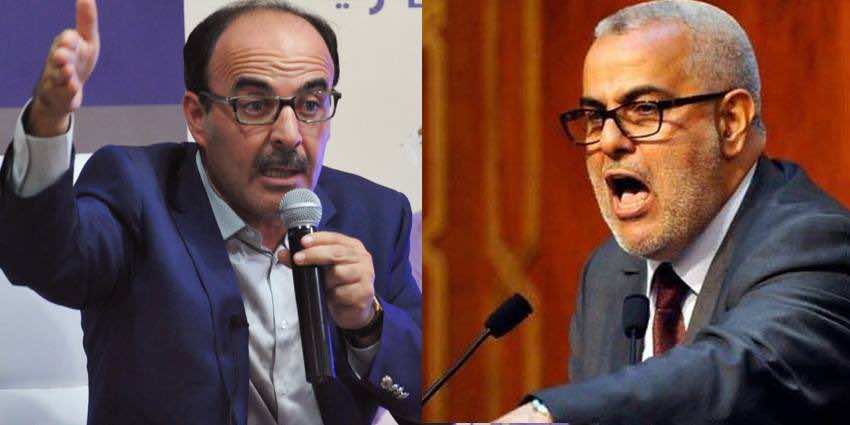
Let’s take a look at the profile of the current prime minister, Mr Abdelilah Benkirane, the secretary general of the Islamist Justice and Development Party, known as the “PJD”. He was born in Rabat in 1954 and took the reins of the PJD in 2008 and was thus appointed as prime minister in 2011 for a five-term period. During his period in office, he has taken unpopular austerity measures such as the pension reform bill and the compensation fund reform. Stagnating wages as well as his inability to root out corruption, which was the cornerstone of his electoral campaign in 2011; the looming state deficit, lack of economic competitiveness and high unemployment rates, as well as failure in reforming the educational sector, have all put Benkirane in a bad light.
On the other hand, the government officials claim they have made measures in favor of lower income classes. These measures include setting up a family solidarity fund, giving payments to widows who are experiencing financial difficulties; expanding health insurance coverage; setting up the RAMED project, a national health insurance program which targets lower income citizens.
As for Benkirane’s counterpart Ilyas El Omari, he was elected the secretary general of “Authenticity and Modernity Party” known as “PAM” in 2016 and he is the current president of Tangier-Tetouan-Al Hoceima region. His father worked as a fqih (preacher) in a mosque in his small village in the region of Alhoceima. He took part in the political initiative launched by Fouad Ali Al Himma which later became the PAM party. In 2015, he launched a large media project composed of 6 publications but he soon withdrew from it.
What is special about the Moroccan elections is that people support the individuals rather than scrutinizing their political platforms; and this is a very dangerous approach. The mass electorate should not fall in this trap. It has to prioritize all the issues that have immediate influence on their well-being such as social security, how to reduce the unemployment rate among the society’s constituents, providing efficient educational and healthcare systems, establishing effective economic reforms with long-term positive effects…etc.
What has come to my attention is that it is considered a mere formality to go through elections, instead of being viewed as an overall objective. That is why the mass electorate has lost faith in our politicians, whatever their political orientations are, because they are convinced that they are exploiting their political platforms to achieve their personal interests. So, there is a tendency amongst the voting population to boycott the elections and this is the downfall of democracy in our beloved country.


