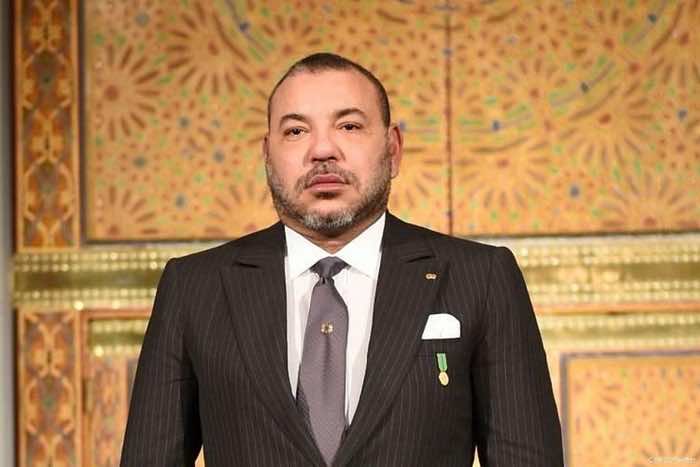
Rabat – At a gathering of a parliamentary forum on regional governance in Rabat last week, the Sovereign announced—with renewed vigor—the kingdom’s march toward devolved government. Advanced regionalization, as it has come to be known, was necessary to “combat inertia”, that ubiquitous source of aggravation to many young Moroccans. King Mohammad VI called on regional and national political leaders to establish a new paradigm of responsive governance that would “fulfill their constituents’ aspirations” concerning economic opportunity and administrative accountability. The bold initiative—a legacy of the February 20 Movement and the monarchy-led reforms that followed—promises to reverse decades of administrative centralization that are rooted as much in French administrative culture as they are in that of the kingdom’s.
Morocco has had four different capital cities over the course of 12 centuries: Fes, Marrakech, Meknes, and now Rabat. The later is now home to an administrative structure that oversees 12 regions and more than 60 provinces that cover an area the size of the entire U.S. West Coast. From land use policy to business regulation, from food subsidies for the poor to broad educational initiatives, centralization of administrative and governmental power was a requirement during the early years of the newly independent kingdom.
Fast forward to 2017. Morocco 2.0 is under construction. A high-speed train (TGV) from Tangier to Casablanca. The 160 megawatt Noor 1 solar energy complex outside Ouarzazate. Automotive ecosystems and tech hubs in Rabat and Casablanca. That great burst of creative and entrepreneurial talent requires both a loosening of bureaucratic regulations as well as individual initiative. Likewise, more modest regional economic and social development initiatives often require the knowledge and input of local business, government and association leaders—combined with the flexibility to design relevant place-based programs—that boost the well-being of real people, some of whom may never ride that TGV racing towards Casa.
Advanced regionalization promises to strengthen civil society by bringing the decision-making process closer to the people, as well as to increase administrative performance in service to the kingdom’s 34 million citizens. Change is hard and obstacles (inertia) will be significant. In his speech to open the parliamentary session in October of last year, the King delivered some tough talk to the gathered members of the House of Representatives and the House of Councilors:
Some people do not understand why citizens seek the assistance of their King to resolve simple problems and issues. What this means, in fact, is that something, somewhere, is not functioning properly.
Customer service. It’s both the promise and curse of politicians and bureaucrats alike. In the United States, new presidential and state-level (governors) administrations—regardless of political party—often advocate for either a streamlining of services and agencies or, alternatively, a significant roll back of government bureaucratic authority. Whether it was President Reagan’s embrace of laissez-faire capitalism (“Government can and must provide opportunity, not smother it.”) or Bill Clinton’s reinventing government initiative, the desire to win the hearts and minds of the American citizen-consumer is an eternal effort to make life easier.
Morocco’s ambitions are big: becoming the preeminent business and investment hub in the Maghreb and West Africa, establishing itself as a leader in Africa’s social and economic development, and becoming a diplomatic and religious faith trendsetter in the Arab World. The King knows that the closer the decision-making process is to the constituent the more immediate the effect, be it the timely receipt of a business application or a decision on a land use proposal. The endgame being the improvement in the lives of ordinary Moroccans and, equally important, shrinking the significant gulf that exists between remote rural Morocco and the developed urban centers of the north and coastal areas. Just four of Morocco’s 12 provinces account for roughly half of the kingdom’s total GDP.
The Sovereign’s bold challenge for advanced regionalization is a reminder of the interdependence that exists in the kingdom: between monarchy and people, between politician and constituent, between regional council and town baladiya, and between ministry and citizen. Change can be agonizingly slow and frustrating—like renewing your driver’s license at a DMV bureau in the United States. But rest assured Morocco, there is a light at the end of the tunnel.
The views and opinions expressed in this article are those of the author and do not represent any institution or entity.
© Morocco World News. All Rights Reserved. This material may not be published, rewritten or redistributed without permission.