 Join on WhatsApp
 Join on Telegram
By Dil Bola
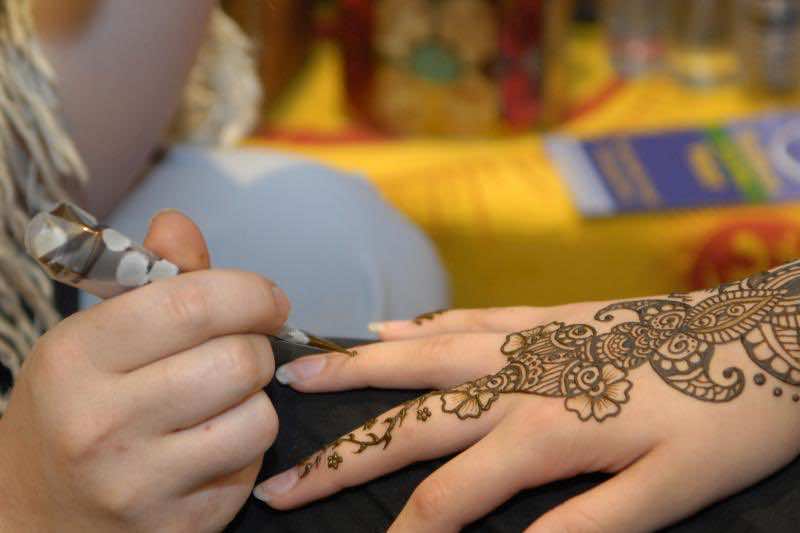
Rabat – The centuries-old practice of henna is an important part of Moroccan culture and has become a common tourist attraction. What many do not know, however, is whether the paste being applied is 100 percent natural henna which results in a reddish-brown tattoo on the skin or black henna, a perilous chemical mixture that can cause lifelong damage.
Henna is an ancient cultural practice wherein a paste created from the Lawsonia inermis or “hina tree” plant is used for various functions such as skin decorations or hair dye. After mashing dried leaves, artists create a reddish brown coloured paste which they use to create elaborate designs on skin for various ceremonies, such as weddings or holidays. The natural tattoo lasts anywhere from several days to a few weeks as the process of exfoliation slowly allows the tattoo to fade.
Black henna, in contrast, is a mixture created using para-phenylenediamine (PPD) and other chemicals such as white spirits. PPD is a synthetic coal dye that is now used in henna pastes to create a darker, quicker, and longer-lasting dye in comparison to the natural paste which must sit for six to eight hours to achieve a prominently dark design.
PPD has been known to cause severe skin reactions as some are born sensitive to the chemical whereas others can become sensitive. The chemical is a strong sensitizer producing an allergic reaction that will never go away. As a potential carcinogen, it has been associated with “bladder cancer, asthma, and many other health problems,” according to Lori Gordon, a certified henna supervisor.
The disastrous results are displayed in a reaction that may appear anywhere from 3 to 10 days after application. When mixed in henna paste and applied to skin, PPD frequently causes a variety of skin problems. This includes itching, bleeding, peeling, burning, painful blistering, and frequently terrible scarring. Black henna has caused many problems for tourists, and even locals, who do not know what is being applied.
Earlier this month a British tourist, Toni Feeney, accompanied by her two sons, took to Facebook to share photos and warn others of the experience her family had with black henna while on vacation in Morocco. Feeney shared photos of the aggressive burning and scarring on the arms of her two children.
Upon medical examination, the hospital enlightened her about the harmful mixture and diagnosed the children with chemical burns. Her children were put on antihistamines and antibiotics prompting the mother to warn others as she “just presumed it was harmless,” as “loads of people were offering it.”
PPD is a banned chemical in the US as well as many other Western states. The US Food and Drug Administration (FDA) has spoken out about the perils of PPD whether it is used for skin decoration or hair dye. The Moroccan government does not have a law on the books regarding PPD, but the International Certification for Natural Henna Arts (ICNHA) remains the primary guarantor of safe, natural henna applications.
The Marrakech Henna Art Café located in the midst of the Marrakech medina holds the sole safety certification in Morocco. The café is a collaboration between a Moroccan Amazigh (Berber) named Rachid Karkouch and an American artist, Lori Gordon. Together they founded and co-own this art gallery café that “offers authentic cultural experiences that incorporate local community development.”
The café works closely with a US-based non-profit organization, Six Degrees Consortium and Morocco based El-Fenn Maroc to achieve their mission of “building bridges across cultures through visual art.” A variety of mixed media art is displayed, and many traditional Moroccan henna artists are employed.
According to Gordon, the establishment frequently sees people coming in to complain about the henna tattoos they receive in Marrakech’s Jemaa El-Fna square. More often than not, these tattoos contain harmful chemicals such as PPD. For an experienced henna artist, it is easy to discern when a tattoo indicates signs of PPD application.
But many tourists, similar to Feeney, who remain unfamiliar with the practice of henna and lack the ability to discern the presence of chemicals, have experienced a severe reaction. The occurrence is not uncommon as it happens repeatedly all over the state.
The safe alternative is to receive henna from an artist certified by ICNHA. Certification requires the passing of an exam on the history, science, and art of natural henna and the perils of black henna. The current henna supervisor at the Marrakech Henna Art Café remains the only member in Morocco providing a dedicated service to tourists while honouring a priceless Moroccan tradition.
Although partaking in the ancient art form of henna is a must when visiting Morocco, visitors should be cautious when encountering artisans who cannot provide answers when asked for a list of ingredients. The lifelong effects of PPD may result in not only a distorted cultural impression but a long-lasting physical impression as well.