 Join on WhatsApp
 Join on Telegram
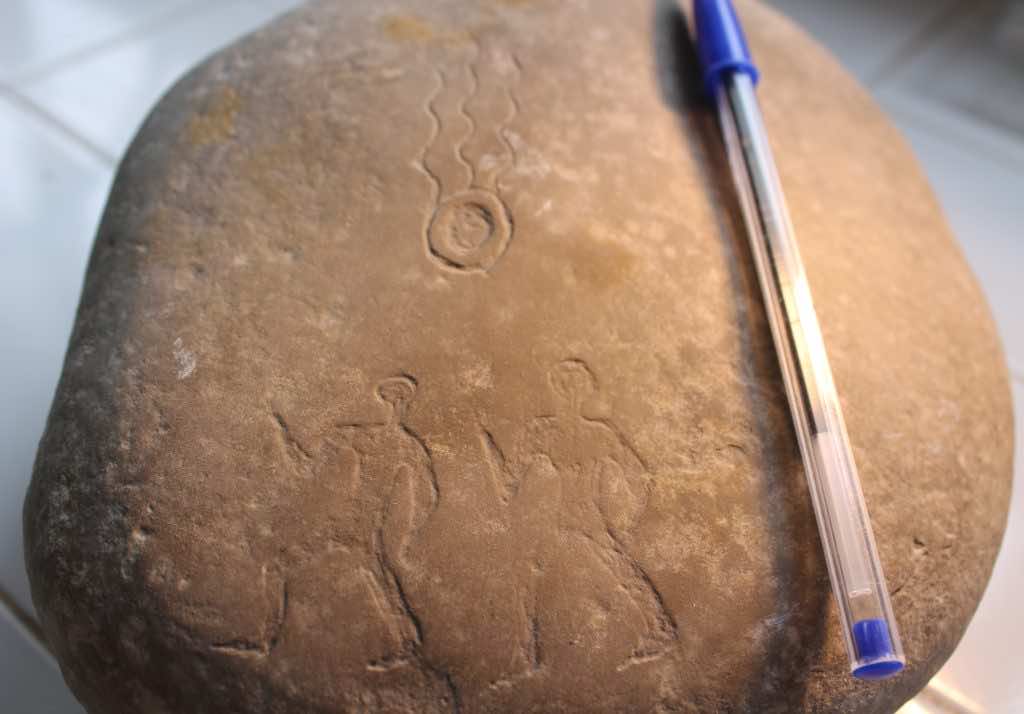
Rabat- Three engravings on a rock surface illustrate two men watching what looks like an asteroid, emitting a trail of smoke, on its way to hit earth.

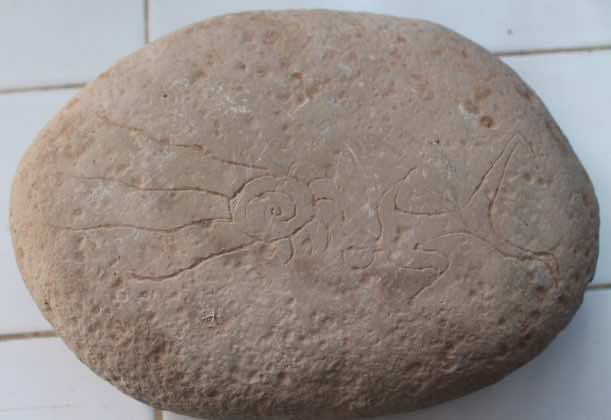

The petroglyphs were found in Ida Oukazou village west of the High Atlas, in Essaouira province, reported MeteorNews on November 18.
The Moroccan researchers behind the findings, Abderrahmane Ibhi, Fouad Khiri, Lahcen Ouknine, Abdelkhalek Lemjidi, and El Mahfoud Asmahri, compared the engravings to other petroglyphs discovered previously in the region.
The researchers also gathered testimonies from eyewitnesses of the fall of the Tissint meteorite in 2011, to reach the conclusion that the petroglyphs date back to ancient time, albeit not providing an idea on how old the engravings are.
The Tissint meteorite was a Martian meteorite, a rock that formed on the planet Mars, and fell in Tata province in the Guelmim-Es Semara region on July 18, 2011. Tissint is the fifth Martian meteorite to be observed on its fall to earth. It is also the first to fall since 1962.
The discovery is one of numerous Moroccan archeological findings.
Read Also: Remains of Archeological Ship Appear on Essaouira Coast
The Ministry of Culture and Communication announced early in November the discovery of ship ruins dating back to the 18th or 19th century off the Essaouira coast.
The ministry announced on October 3 that scientists discovered a 90,000 year-old bone-knife made from an animal rib. The bone tool, recovered in 2012 in the Dar es-Soltan 1 cave south of Rabat, is the oldest tool to have been shaped and used as a knife by the Aterian culture from the Middle Stone Age in North Africa.
Other recently published scientific discoveries in Morocco came in March.
An international team of researchers sequenced the DNA from Homo sapiens in Morocco dating to approximately 15,000 years ago in Grotte des Pigeons, in northeast Morocco near Oujda.
The Homo sapiens, dating to the Late Stone Age, had a genetic heritage similar to both Near Eastern populations and sub-Saharan African populations.
In June 2017, 300,000-year-old fossils of the oldest-known remains of Homo sapiens were also found in Morocco, suggesting that Homo sapiens evolved in various locations across Africa.