In the early 1960s, approximately 35% of Moroccans lived in urban areas. In 2018, this number rose upwards of 60%, and by 2050 the High Commission for Planning (HCP) predicts that the urban population will comprise more than 75% of the nation.
There are multiple reasons for this percentage to continue to grow, including the draw of a more diversified job market, educational opportunities, and family reasons, but one of the biggest, and often most invisible reasons is the effects of climate change on rural livelihoods.
In rural areas of Morocco, more than 40% of the population depends on agriculture to make a living. As the 4th Assessment Report of the United Nations Intergovernmental Panel on Climate Change (IPCC) has classified Morocco as “very vulnerable” to climate change, the dangers of hotter summers with less freshwater are becoming a reality for communities that depend on fertile land.
LIvelihoods Affected
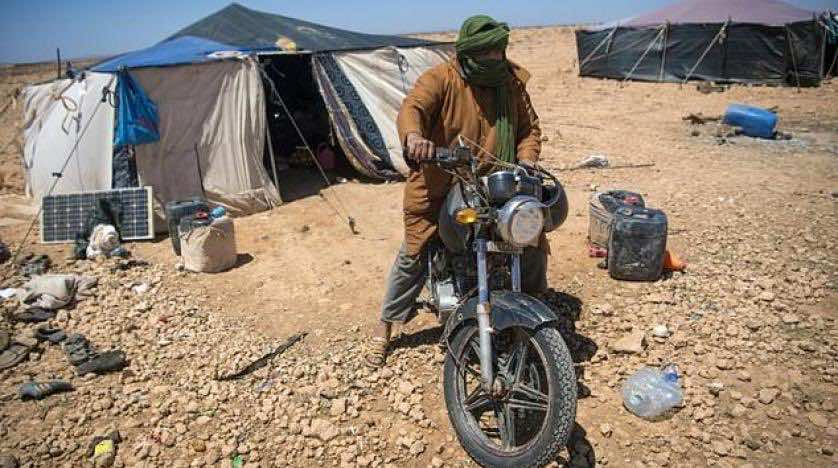
The long-term effects of climate change will be debilitating. Rural communities are some of the world’s most vulnerable populations to climate change because of their distance from cities and large scale infrastructure, their limited access to public services, and their typically high poverty rates. Because of this, rural families tend to be less resilient to fluctuations or failures in crop production, higher prices of water, or the need for fertilizers to combat land infertility or desertification.
Rural Moroccans are not the only ones whose livelihoods are challenged by climate change. Throughout northwest Africa, increasing temperatures and predicted decreases in precipitation are “expected to adversely impact crop productivity, increase livestock deaths, cripple rain-fed agriculture, diminish surface and groundwater available for irrigation, reduce fisheries production and fish quality and intensify land degradation.”
Also affecting northwest Africa, predicted extreme weather events, such as droughts or severe floods, are expected to increase in intensity and frequency and will have negative effects on all different types of farming systems. In Morocco, this is evident in the frequency of large scale droughts: Prior to the 1990s droughts occurred, on average, once every five years, but by 2020, droughts generally occur once every two years.
The increasing water scarcity associated with higher temperatures is expected to affect 80 to 100 million people throughout North Africa by 2025. This water scarcity has already contributed to land degradation and devastating droughts—as can be seen in the 2019-2020 78% rainfall deficit in the Casablanca-Settat region—and will continue to increase in severity throughout the next few decades.
The Cost of Climate Change
Throughout Morocco, only 3.3% of all land is permanent cropland. Without assistance for agricultural and land-dependent communities, maintaining the fertility of this land can be difficult.
Cropland is not the only type of land affected by climate change, though. The sensitive agro-ecological zones of Morocco’s oases, which not only serve to create revenue for local communities as popular tourist locations but also support communities’ livestock and agricultural practices, are in danger of drying up beyond use.
Likewise, seaside communities are at risk of rising sea levels and increasing soil salinization (making soil too salty to farm). With current climate change projections, two out of every three Moroccan beaches are at risk of degradation, negatively impacting the domestic and international tourist industry and also harming the fishing industry.
Impact on Migration
In 2020, climate change-induced droughts, increased temperatures, and changing weather patterns have continued to hurt Morocco’s agricultural and tourism sectors. As rural communities find it difficult to make ends meet, more and more people have left the countryside and moved to cities.
Many of these new migrants travel to cities in search of employment opportunities. In much of rural Morocco, where unemployment rates hover around 14.5%, the urban unemployment rate of 4.8% is seen as a welcome change.
As climate change continues, more and more people are expected to leave their homes for cities. While many of these migrants will send remittances home (so much so, that up to 12% of a rural family’s income may be subsidized by a city-dwelling relative), many will choose to stay, eventually bringing their families, their belongings, and their futures to the city.
National Response
In response to the effects of climate change on Morocco, the country has instituted numerous reforms to mitigate the effects of droughts and soil infertility. In addition to the institutionalization of Moroccan Agricultural Mutual Insurance (MAMDA) to assist farmers affected by drought, Morocco has instituted a new Water Saving Policy to improve water supply through building dams, developing irrigation systems, and securing the drinking water supply in rural areas.
In recognition of these efforts, in addition to the creation of environmentally friendly initiatives such as building the largest concentrated solar panel (CSP) complex in the world, in Ouarzazate, Morocco was ranked second in the world on the Climate Change Performance Index in 2018.